
Last updated November 18, 2026







Free written scope consultation - allowances, timeline, and change-order rules on paper before a single trade is scheduled
How Long Does General Contractor Take? Timelines and What to Expect
A kitchen remodel that takes eight weeks in Phoenix can take fourteen in Mesquite. Not because the contractor is slow, but because Clark County permit queues, a 90-mile supply chain from Las Vegas, and a limited pool of local trades add time that no national timeline estimate accounts for. Most homeowners are handed a number – “six to eight weeks” – without the variables that produce it. This guide gives you a realistic framework built on those local variables: what a schedule actually looks like phase by phase, where the real wait sits, and which questions expose whether a contractor is quoting you a Mesquite timeline or a national average. By the end, you’ll know how to read a project schedule and tell which delays matter.
Quick Answer
Most Mesquite home remodels take roughly 6 to 14 weeks of active construction, but the calendar from signed contract to final walkthrough runs longer once you add Mesquite permit review, material lead times from Las Vegas suppliers, and scheduling gaps in a small trade pool. A bathroom typically runs 4 to 8 weeks of work, a kitchen 8 to 14, and an addition 16 to 30 weeks or more. The honest answer is a range, not a single number, and a good contractor will walk you through every phase that produces it.
Styles & brands we work with
- Kitchen remodeling
- Bathroom remodeling
- Home additions & ADU
- Roofing
- Windows & doors
- Driveway & pavers
- Fence
Table of Contents
- Why Mesquite Timelines Differ From National Averages
- Phase-by-Phase Timeline Template for Common Projects
- Your “Start Date” vs. the Day Visible Work Begins
- How to Read a Schedule: Critical Path vs. Float
- Questions to Ask Before You Sign
- Legitimate Delays vs. Delay Language That Dodges Accountability
- Common Mistakes to Avoid
- When to Call a Professional
Why Mesquite Timelines Differ From National Averages
The national numbers you see quoted for remodeling timelines were built in metro markets: deep subcontractor benches, dozens of suppliers within a 20-minute drive, and permit offices processing hundreds of applications a day. Mesquite doesn’t work that way, and the gap is real.
Three variables shape nearly every schedule here:
- Permit queue depth. Residential permits in Mesquite route through Clark County review. During busy windows – spring especially – that queue can stretch plan review by days or weeks beyond what a metro contractor would expect.
- Supplier lead times from Las Vegas. Most specialty materials – cabinets, countertops, custom tile, fixtures – ship from the Las Vegas valley, roughly 90 miles away. That’s not far, but it means a restock or a replacement on a wrong-sized cabinet isn’t a same-afternoon fix. It’s a coordinated delivery run that has to be scheduled.
- A small local trade pool. There are fewer plumbers, electricians, and tile setters working Mesquite than in a metro. When one of them is booked, you wait for their calendar to open rather than picking from a bench of ten. A good contractor plans around the specific trades they know are available, not around an abstract idea of “the crew.”
This is the part a national timeline never tells you. The size of the job matters, but these three variables often decide whether you finish in eight weeks or twelve. If you’re early in planning, our General Contractor in Mesquite page walks through how the whole sequence fits together before we get into timing here.
Phase-by-Phase Timeline Template for Common Projects
Here’s a realistic framework for the three project types we’re asked about most in Mesquite, with the local adjustments that actually move the dates. Treat these as planning ranges, not promises – every home is different.
Bathroom remodel
- Design and selections: 1-2 weeks. Choosing tile, fixtures, and vanity now saves weeks later when a discontinued item forces a reorder from Las Vegas.
- Permit review: 1-3 weeks depending on queue depth; plumbing and electrical changes push toward the longer end.
- Demo and rough-in: 3-5 days.
- Trade coordination (plumbing, electrical, waterproofing): 1-2 weeks, the phase most sensitive to the local trade pool.
- Tile and finishes: 1-2 weeks.
- Fixtures, cleanup, walkthrough: 3-5 days.
Realistic total: 4 to 8 weeks of active work, plus the permit wait. Our Bathroom Remodeling in Mesquite page covers how we sequence these trades around a single working bathroom.
Kitchen remodel
Add cabinet lead time to the bathroom framework. KraftMaid and Wellborn cabinets typically run 3 to 6 weeks from order to delivery, and that clock starts after selections are final and the deposit clears – not after the permit. Sequencing matters here: if the cabinet order goes in before the permit is approved, you compress the timeline significantly. If it goes in after, you stack the two waits. Countertops from Cambria or Silestone add roughly 1 to 3 weeks for fabrication and install once templates are taken. Realistic total for a Mesquite kitchen: 8 to 14 weeks of active work, with the cabinet window as the hinge. See Kitchen Remodeling in Mesquite for the full ordering sequence.
Addition
Additions carry the longest permit review because of structural and site-plan scrutiny, often 3 to 6 weeks. Add foundation, framing, rough trades, insulation, drywall, finishes, and exterior work, plus exterior hardscape if it’s part of the scope. Realistic total: 16 to 30 weeks or more, and the plan-review phase is where schedules slip most often. If exterior surfaces or a patio tie into the addition, materials like Belgard pavers or James Hardie siding carry their own lead times worth confirming early.
Your “Start Date” vs. the Day Visible Work Begins
This trips up more homeowners than any other part of the process. The date on your contract that says “start” is rarely the date you see a crew swing a hammer, and that gap is normal – as long as the contractor told you about it upfront.
Here’s what typically happens between the two dates:
- Permit submission and review. Plans go to the county; nothing visible happens until approval comes back.
- Material ordering and confirmation. Cabinets, countertops, tile, and fixtures get ordered and delivery windows locked. A wrong measurement caught here saves a week later.
- Trade scheduling. In a small market, the plumber and electrician need to be booked against the permit date, not against goodwill.
- Pre-construction walkthrough. The crew walks the house, confirms protection (drop cloths, shoe covers), and agrees on quiet hours around naps and school pickups before anyone touches a wall.
Ask any contractor to separate these two dates in writing. If they can’t tell you which day permit application goes in and which day the first material arrives, the “start date” is a guess. A written price before any work starts is standard for us – and the same discipline applies to the schedule: a written sequence of milestones before the first nail.
How to Read a Schedule: Critical Path vs. Float
A project schedule is a map with some roads that, if blocked, stop the whole trip, and some that can wait an hour without consequence. Learning to tell them apart tells you which delays actually matter – and keeps you from panicking over the ones that don’t.
Critical path means tasks with zero slack. If cabinet delivery slips, tile can’t start, countertops can’t template, and the finish date moves. That’s a critical-path item.
Float means tasks with room to move. If the bathroom vanity mirror arrives two days late while the floor tile is still going in, the project finishes on time. That has float.
Here’s how to use the distinction on your own Mesquite project:
- Ask your contractor for the schedule with dependencies shown – “cabinet order, then countertop template, then install” – not just a list of phases.
- Identify the items that, if late, push the finish date. Those are your critical-path items.
- When a delay hits, ask one question: “Does this move the finish date, or is there float?” A good contractor answers immediately.
- Watch the trade-coordination phase especially. In Mesquite, a plumber’s calendar can be a critical-path item; the paint color is not.
The skill isn’t detecting every delay. It’s knowing which one is worth a phone call and which one is noise.
Questions to Ask Before You Sign
The fastest way to tell whether a contractor knows Mesquite or is quoting you a metro average is to ask questions only a locally grounded one can answer. Here are the ones that separate them:
- “What’s the current Clark County plan-review turnaround for this permit type, and how does that land on my calendar?” If they can’t name a current range, they’re guessing.
- “Which of my materials have the longest lead time, and are we ordering before or after the permit clears?” The right answer sequences ordering to overlap with permit review.
- “Which trades are critical-path on this job, and are they booked?” A local contractor knows their plumber’s and electrician’s calendars.
- “Walk me through what happens between the start date and the first day of visible work.” A real schedule has phases here; a guess has a shrug.
- “What are the top three things that could delay this, and how would you handle each?” You want named risks with named responses – not “we’ll see.”
- “Is the price I’m being quoted fixed, or does it move once work starts?” A written price before any work starts protects you from change-order creep.
If you want to feel the difference between a scripted answer and a grounded one, our Elmstead Remodeling Mesquite home page lays out how we approach these questions on every estimate.
Legitimate Delays vs. Delay Language That Dodges Accountability
Some delays are real and unavoidable. Others are a contractor’s poor planning dressed up as bad luck. Here’s how to tell them apart in writing.
Legitimate delay language names a specific cause, a specific consequence, and a specific adjustment. For example: “The Cambria countertop template revealed a wall out of square by three-quarters of an inch, so the fabricator needs an extra week to re-cut the return. Finish date moves seven days, and we’ve booked the tile setter to fill the gap.” That sentence tells you what happened, where it lands on the calendar, and what the contractor is doing.
Delay language that dodges accountability is vague and open-ended. Watch for phrases like:
- “Unforeseen conditions” with no description of the condition.
- “Supplier issues” with no named supplier, material, or new date.
- “Weather dependent” on an interior project where weather shouldn’t touch the schedule – relevant for exterior work near the Virgin River corridor, not for a bathroom.
- “Trade availability” used as a blanket excuse, when the same trade was on the schedule from the start and should’ve been booked then.
- Any delay notice with no revised finish date attached.
Ask for delays in writing with a revised milestone, not a revised feeling. A contractor who plans well shouldn’t be surprised often; when they are, the written record should be precise. Our full range of project types – from whole-home work to the specific remodels above – runs on the same standard: named causes, written adjustments, and a 365-Day Done Right Promise that keeps us accountable after the last walkthrough, not just during the build.
Common Mistakes to Avoid
- Accepting a national timeline without Mesquite adjustments. If a contractor quotes “six weeks” without mentioning permit review or Las Vegas lead times, the number isn’t grounded in your market. Ask them to break it down.
- Ordering materials before the permit is approved, or too long after. The first stacks waits; the second misses the overlap window. The right move is to sequence ordering to run alongside plan review, and a good contractor plans this on the schedule.
- Not asking which trades are critical-path. In a small market, a single booked plumber can move a finish date. Knowing which trades matter lets you plan around their calendars, not against them.
- Confusing “start date” with “first day of visible work.” The gap between them is normal. Not knowing what fills it is the mistake.
- Ignoring the clean-up and household-protection plan. Families with children and pets need the drop cloths, shoe covers, quiet hours, and clean-up photo spelled out before work starts – not after the first dusty day.
- Letting vague delay language pass. “Unforeseen conditions” without a named condition and a revised finish date is a red flag. Insist on written specifics.
- Not making sure the price is written before work starts. An estimate that grows after the crew arrives turns a timeline problem into a budget problem. Get the price in writing, before demolition day.
When to Call a Professional
Call a professional general contractor before you commit to a schedule or sign a single order. The scenarios where it matters most: when a permit is required (most kitchen, bathroom, and addition work), when materials need to be sequenced against a permit timeline, when a project touches plumbing or electrical rough-in, and when the calendar – not the budget – is the real constraint. Planning a remodel around a school year, a baby’s arrival, or a holiday means the schedule has to be right from the start, and that means understanding Mesquite’s variables before the first order goes in.
Elmstead Remodeling Mesquite offers free estimates in Mesquite – call (833) 620-6606 for a written price before any work starts and a schedule you can actually plan around.
See the difference
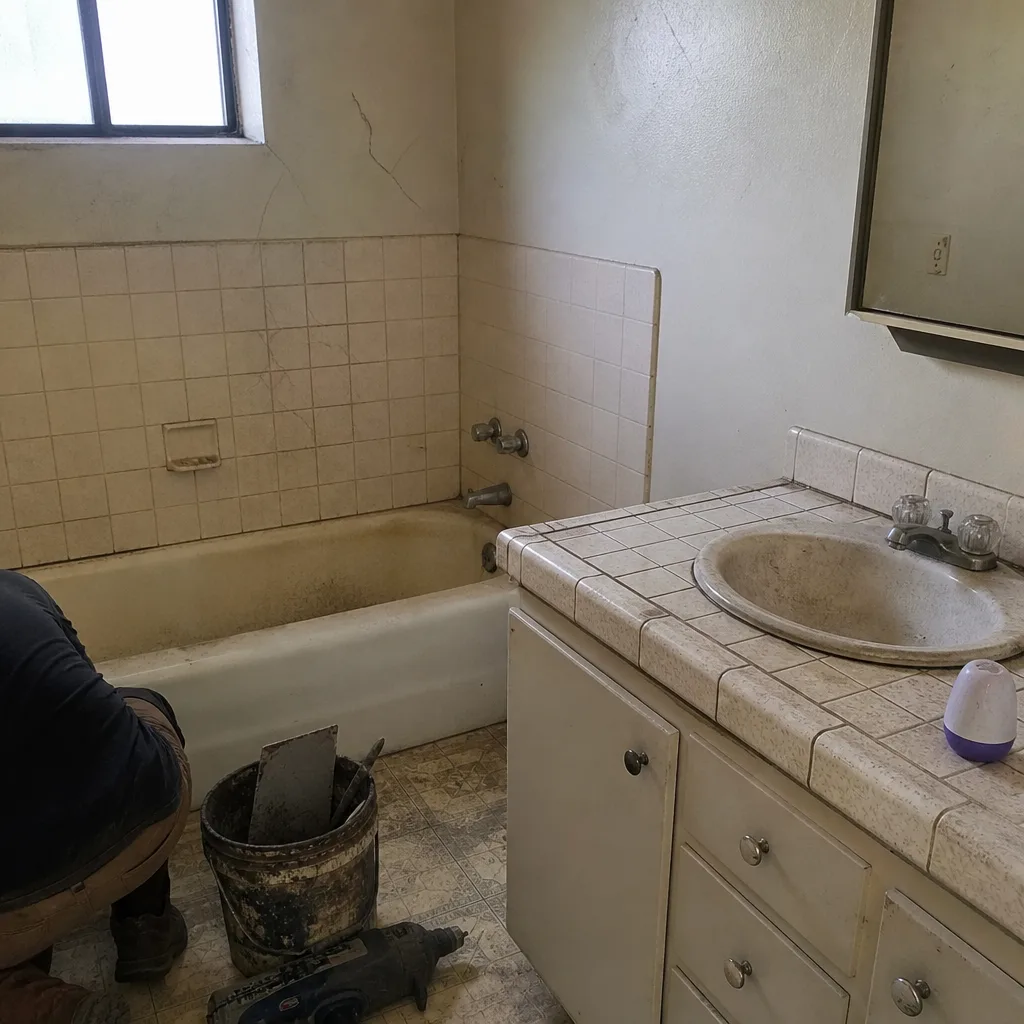 Before
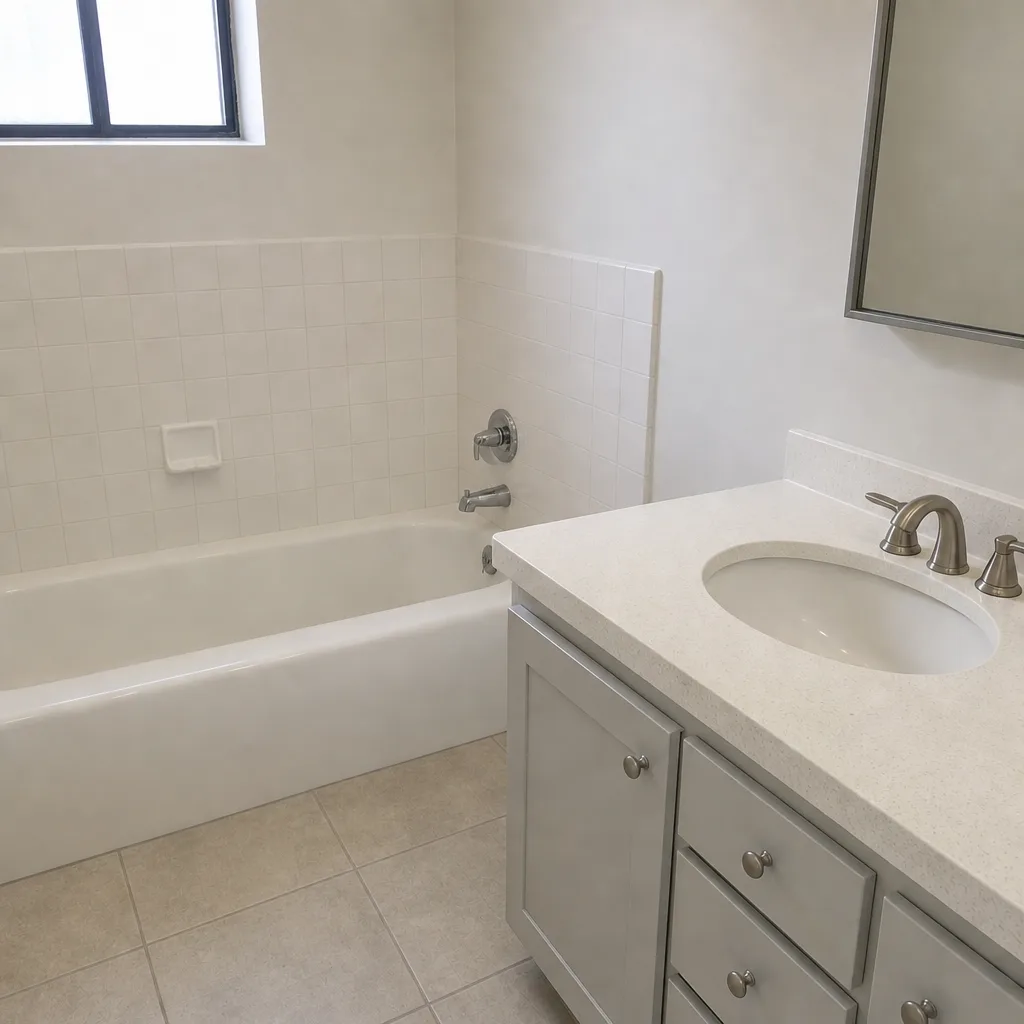 After
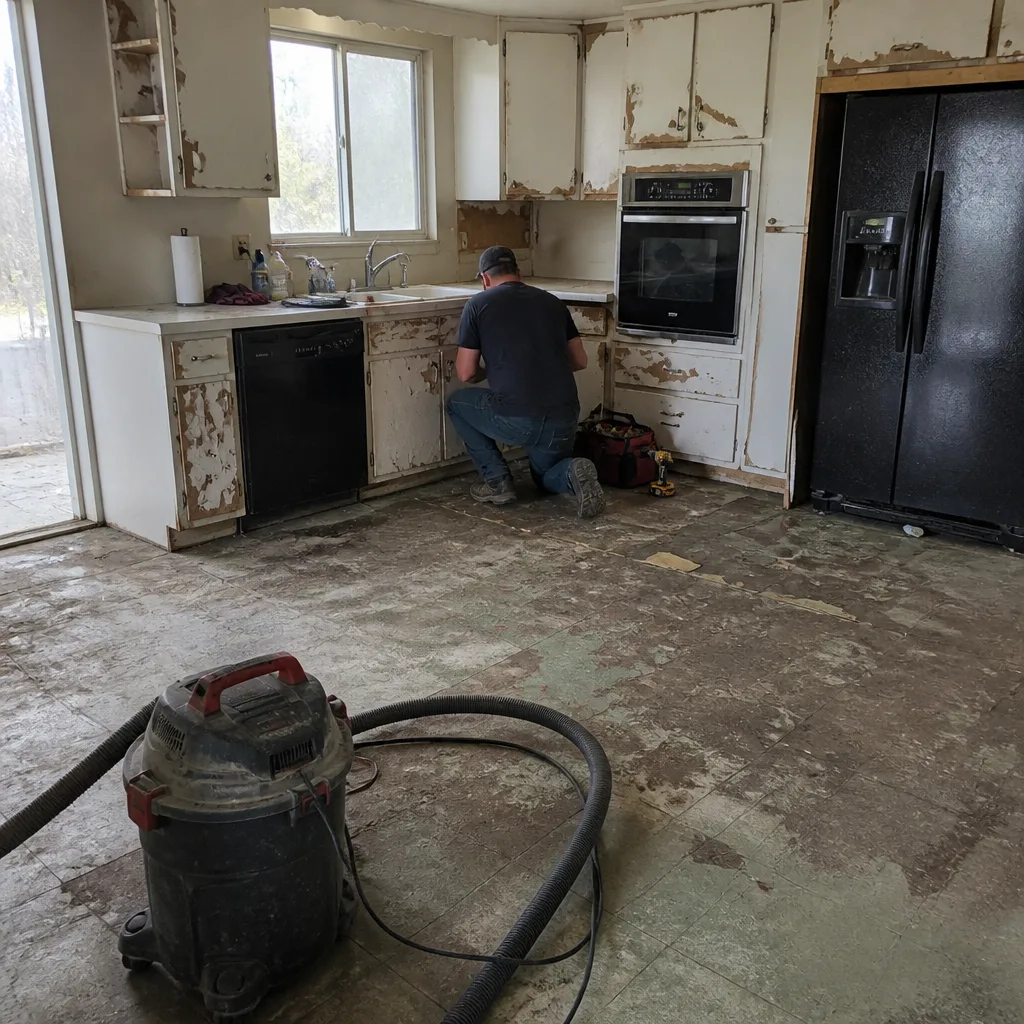 Before
 After
 Before
 After
Frequently Asked Questions

A home remodel in Mesquite typically runs 6 to 14 weeks of active construction, with kitchens and additions toward the top of that range and bathrooms toward the bottom, plus permit review and material lead time. Add the Clark County plan-review window and Las Vegas supplier delivery time and the calendar from contract to final walkthrough is longer. Call (833) 620-6606 for an exact timeline built around your project – estimates are free.
Three factors: permit queue depth through Clark County, material lead times from Las Vegas suppliers about 90 miles away, and a smaller local trade pool that limits how fast plumbers, electricians, and tile setters can be scheduled. None of these is a sign of a slow contractor – they’re market conditions a good contractor plans around and tells you about upfront.
Costs vary widely by project type and scope, so any single number is a range. What matters is getting a written price before any work starts – every project should come with a line-item quote rather than an estimate that grows once the crew arrives. Call (833) 620-6606 for a free estimate with a written price.
Usually not. The overlap between permit review and material ordering is where the real time savings sit, and that sequencing is best managed by the contractor, who knows the lead times and the fabricators. Self-ordering often creates a timing mismatch that costs more than it saves. Ask how the contractor plans to overlap ordering with permit review instead.
It shouldn’t. A written price before any work starts protects you from change-order creep, and a reputable contractor stands behind it. If something genuinely changes – a wall out of square, a hidden plumbing issue – the change should be written, costed, and approved before work continues. Call (833) 620-6606 for a free estimate with a written price.
A legitimate delay comes in writing with a named cause, a consequence, and a revised finish date. Vague phrases like “unforeseen conditions” or “supplier issues” without specifics are a red flag. Ask for the revised milestone in writing and confirm whether the delay moves the finish date or has float. If it’s not in writing, it didn’t happen.
The Bottom Line
Timelines in Mesquite aren’t set by the size of the job alone. They’re shaped by Clark County permit queues, Las Vegas supplier lead times, and the availability of a small trade pool – and a good contractor tells you all three before you sign. Read the schedule, separate critical-path items from float, and ask the six questions above before committing. Get a written price before any work starts, and expect a written schedule with the same discipline. That combination – grounded timeline, written price, clean work, and accountability after the last walkthrough – is what turns a remodeling project from a leap of faith into a plan you can trust.
Written by the team at Elmstead Remodeling Mesquite.