Last updated November 18, 2026




Free written scope consultation - allowances, timeline, and change-order rules on paper before a single trade is scheduled
How to Hire a Construction Contractor in Mesquite: A Step-by-Step Guide
A Nevada contractor’s license is public record. It takes about 30 seconds to verify on the Nevada State Contractors Board website. Yet complaint data from the NSCB shows that fewer than one in five homeowners actually check that record before signing a contract. That gap between what is available and what families actually do is where most construction trouble starts. This guide shows you what to verify, what to read inside the contract, what to ask about daily site protocols, and which written protections to require before anyone steps through your door in Mesquite. It is written for households with children and pets who care as much about how the house is left as about the finished result.
Quick Answer
To hire a construction contractor in Mesquite, verify the contractor’s Nevada State Contractors Board license and classification on the NSCB website, request a written line-item bid with fixed prices instead of allowances, and require a contract that defines quiet hours, dust containment, daily cleanup, pet-safe products, and a written change-order trigger. Compare at least three bids on identical line items, then read the contract clause by clause before signing anything.
Styles & brands we work with
- Kitchen remodeling
- Bathroom remodeling
- Home additions & ADU
- Roofing
- Windows & doors
- Driveway & pavers
- Fence
Table of Contents
- Step 1: Verify the License on the Nevada State Contractors Board Website
- Step 2: Interview Contractors With a Written Question Template
- Step 3: Read Every Bid Line by Line
- Step 4: Require the Five Contract Clauses That Protect Families
- Mesquite-Specific Red Flags: Vegas Wholesalers and Delay Risk
- What a Realistic Timeline Looks Like
- Daily Site Protocols: What to Ask Before Day One
- Common Mistakes to Avoid
Step 1: Verify the License on the Nevada State Contractors Board Website
Start before you talk to anyone. The Nevada State Contractors Board runs a free license lookup at nvcontractorsboard.com. Type in the contractor’s name or license number, then read three things: the license status, the classification, and any disciplinary history attached to the record.
- License status. “Active” is the only status you should accept. “Expired,” “suspended,” “revoked,” and “inactive” all mean the contractor cannot legally take your job right now.
- Classification. Nevada classifies licenses by work type. A general engineering or general building classification covers broad structural work. A specialty classification (A, B, C-series and beyond) limits the contractor to that trade. A contractor licensed as C-3 for concrete should not be doing your full kitchen remodel, even if they offer.
- Disciplinary history. The NSCB posts complaints, citations, and settlements. One old citation is not disqualifying. A pattern of complaints within the last few years is.
- Monetary limit. Nevada assigns each license a bid limit and a contract limit. If a contractor’s limit is below the size of your project, the license does not cover it.
Write down the license number, classification, and limit on a single sheet of paper before your first interview. It is the first line in the question template we get to in the next section, and it keeps every conversation on the same footing.
Step 2: Interview Contractors With a Written Question Template
Most homeowners ask different questions to different contractors without meaning to, and end up comparing answers that do not line up. A written question template solves that. Print one page and bring it to every interview. Grade every contractor on the same criteria, in the same order. Here is the template we use ourselves when evaluating subcontractors on projects in Mesquite:
- License and insurance. What is your NSCB license number, classification, and contract limit? Who is your general liability carrier, and can you show a certificate of insurance named to this address?
- Workers’ compensation. Do you carry workers’ comp for every person who will set foot on the property? Ask for the certificate.
- Written price. Will I receive a written price for the full scope before any work begins, with no estimates that grow after the crew arrives?
- Site protocols. How will your crew protect floors, doorways, and furniture? Do you use shoe covers and drop cloths inside the house on every visit, and is that included in the price?
- Quiet hours. Can we agree on quiet tools during our children’s nap times and school hours?
- Cleanup standard. What is your daily cleanup routine, and will you photograph the clean-up before the crew leaves each day?
- Materials. Which specific products are specified in the bid, by brand and model? KraftMaid or Wellborn cabinets, Cambria or Silestone countertops, Kohler or Moen fixtures, James Hardie siding, GAF roofing – named brands with warranty paperwork the manufacturer honors directly with you.
- Change orders. What triggers a change order, and will it be quoted in writing with our sign-off before the additional work begins?
- Schedule. What is the start date, expected completion date, and how will I be told about delays?
- Post-project warranty. What written warranty travels with the finished project, and what is the process if something is not right six months from now?
If a contractor cannot answer any of these without hemming or promising to “get back to you,” note it. It is a signal about how the rest of the job will go. In our experience, the interviews that go smoothly are the ones where the contractor answers every question on the first pass, because they have done this work and thought about it carefully.
Step 3: Read Every Bid Line by Line
A bid is either a piece of information or a piece of salesmanship. The difference lives in the allowances. Here is what to look for.
An allowance is a placeholder number in the bid. The line reads something like “Tile allowance: $1,800.” That $1,800 is not a price. It is a guess at what you might spend, and if the tile you actually select costs $3,400, the difference is a change order – meaning a bill that arrives mid-project, after demolition, when you are committed.
A fixed price names the product and the cost together: “Tile: 120 square feet of [brand and model], $3,400, installed.” That is a price. Compare the two forms across the whole bid and you will see the real difference between a contractor who will say $48,000 and hold to it, and one who says $42,000 and arrives at $51,000 halfway through.
Read every line for the following:
- Allowances. Count them. More than two or three in a bid is a warning sign. Ask for named product and fixed price on each.
- Specified brands. KraftMaid, Wellborn, Cambria, Silestone, Kohler, Moen, Grohe, Schluter, James Hardie, and GAF are all names you can research independently and whose warranties travel with the finished project. Generic “cabinet grade” or “high-end fixture” language has no meaning.
- Permits and inspections. Are permits listed as a cost line? Who pulls them? Who covers the inspection fees? The bid should say.
- Demolition and hauling. Are these line items separate, and are the disposal fees included?
- Cleanup and protection. Drop cloths, shoe covers, plastic containment: are these named and included in the price, or are they add-ons?
- Payment schedule. A reasonable schedule ties payments to milestones (rough-in complete, cabinets installed, final walkthrough). A schedule with a large deposit upfront and a big balance at completion with nothing in between is a warning sign.
- Line item I do not understand. Ask. Any contractor who will not walk you through every line is telling you something.
Compare three bids on identical line items and you have real information. Compare three bids on different line items and you have three numbers that do not mean anything in relation to each other. Our team at Elmstead Remodeling Mesquite provides the written price before work starts, so you can see the difference between a real estimate and a starting number.
Step 4: Require the Five Contract Clauses That Protect Families
A standard contractor contract covers scope, payment, and schedule. It does not, on its own, cover how the home is treated while the work is happening. For a household with children and pets, that is the half that matters most. Here are the five clauses to add – or to confirm are already in the contract – before you sign.
- Defined quiet hours. A clause that says the crew will use quiet tools during the hours you name. Homes with children in Mesquite, where the summers push kids indoors for long stretches, feel this difference most in July and August. Name the school pick-up window, the nap times, the tuck-in window. Get it in writing.
- Dust containment method. A clause specifying how the work area is sealed off from the rest of the house – plastic sheeting and zippered doorways are standard, and a HEPA negative-air machine is worth asking about for larger jobs. “We keep it clean” is not a method. Plastic sheeting taped to the door frame is.
- Daily cleanup standard. A clause that describes the end-of-day expectation: sweep or vacuum the work area, clear the path to the front door, and photograph the clean-up before the crew leaves. The photo should reach you the same day.
- Pet-safe product list. A clause listing the products the crew will use and their pet-safety status: low-VOC paint, low-VOC adhesives, and finishes chosen so the dog and cat are not in contact with anything harmful. Where there is a choice, the choice belongs in writing.
- Change-order price trigger. A clause stating that no change order proceeds without a written quote and your written signature. No handshake additions, no “we discovered something, we will just do it.” The written quote comes first, every time.
Ask every contractor whether they can include these five clauses word for word. The answer will separate the contractors who treat a home like a home from the ones who see a site. If you want a reference point, the general contractor in Mesquite page on our site walks through how we schedule and stage the work around a family’s daily life.
Mesquite-Specific Red Flags: Vegas Wholesalers and Delay Risk
Mesquite sits about 80 miles northeast of Las Vegas, which makes the material supply chain matter more here than it does in a bigger metro. Many contractors in the Mesquite market source cabinets, countertops, and fixtures from Las Vegas wholesalers. That is legitimate, but it turns a local remodel into a two-hour supply chain, and the risk of that supply chain has to be assigned to somebody. In our experience, the invoice tells you who.
Red flags that show up specifically in the Mesquite market:
- Lead times not in the contract. The bid says “delivery by the end of the month.” The contract should say a specific date and name who absorbs the cost if it slips. If the contractor holds you responsible for supplier delays, you have just absorbed their risk.
- Last-minute brand substitutions. The bid lists Wellborn cabinets. The truck arrives with a brand you have never heard of. A fixed-price, named-brand bid prevents this. A generic “cabinet grade” bid does not.
- Extending a Mesquite job without local storage. If materials must sit somewhere between delivery and installation, ask where. Materials that arrive while a jobsite is not ready end up stacked in your garage or on your patio for weeks.
- No insulation for the Mojave summer. Summertime exterior work in Mesquite can require early-morning start times and material handling adapted to the heat. Ask how the crew schedules the work around the summer temperatures around Mesquite. The answer should be specific.
- Unfamiliar with Mesquite permitting. The City of Mesquite issues its own building permits. Ask which permits your remodel requires, who pulls them, and who meets the inspector on site. A contractor who talks about Clark County permitting without addressing the City of Mesquite process has not done the work here.
What a Realistic Timeline Looks Like
Contractors who rush timelines to win a bid create a different set of problems later. Here are the ranges that match a well-run project in Mesquite, from first phone call to final walkthrough.
- Initial estimate and written bid: 3 to 10 business days, depending on scope.
- Permit approval: 2 to 6 weeks for most residential remodels, longer for structural changes. The City of Mesquite handles the review.
- Bathroom remodel: 3 to 6 weeks of active construction, a bit longer if tile is custom or the layout moves.
- Kitchen remodel: 5 to 10 weeks, driven largely by cabinet lead time – KraftMaid and Wellborn both quote weeks, not days.
- Whole-home remodel: 3 to 6 months or more, depending on scope and whether the family is living in the house during the work.
When you are comparing contractors, a bid that promises shorter than everyone else should be questioned, not celebrated. Ask what the contractor is skipping or compressing to hit that timeline. Sometimes it is a real efficiency, sometimes it is a material substitution, sometimes it is the missing weeks at the end when the punch list gets pushed onto you. For a closer breakdown by project type, our bathroom remodeling in Mesquite page lists the standard scope and time on a full bath.
Daily Site Protocols: What to Ask Before Day One
The crew is in your house for weeks. What happens on any given Tuesday afternoon is as important as the tile pattern. Ask each contractor to describe their daily protocols, in concrete terms, before day one.
- Arrival. What time does the crew arrive, and will they call or text first? Ask for a fixed daily window so you can plan pickup and drop-off and the school run.
- Floor and furniture protection. Drop cloths on traffic paths, shoe covers at the door, and a clear plan for what gets covered and what gets moved. Ask the crew to ask before moving anything that belongs to you – a piano, a bookshelf, a breakable on the mantel are all in the wrong hands if they get moved without a word.
- Bathroom access. Your family needs at least one functional bathroom per phase. Ask how the crew will sequence so you are never without running water overnight.
- Quiet hours. Confirm the loud work window (framing, tile saws, demolition) so it does not overlap with a child’s nap or a parent’s work call. In our work with families in Mesquite, we schedule the loud work in the morning and quieter installs in the afternoon. It keeps the household sane.
- Pets. How will the crew secure the front door so a pet does not slip out? Who is the point of contact if a pet gets startled? Where will the crew keep materials so a curious dog does not get into them? A crew that asks these questions has done this before.
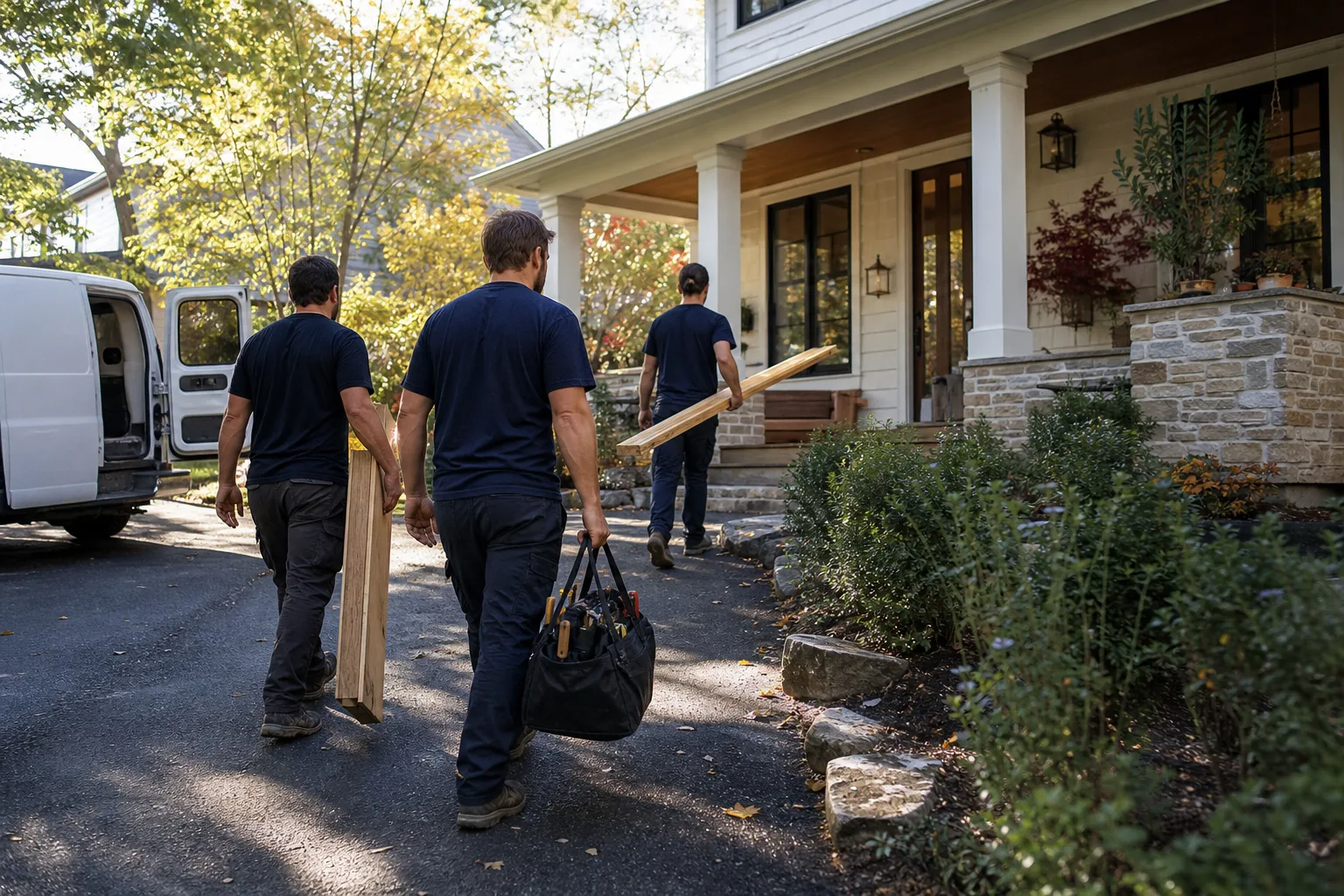
- End of day. Every job should end with a sweep, a photo of the clean-up, and a short message about what was done and what comes next. That is the standard we hold ourselves to on every Elmstead project, and it is the standard you should hold every contractor to.
Get the answers in writing. Protocols that are discussed only verbally are protocols that disappear the first week.
Common Mistakes to Avoid
- Not checking the NSCB record. Fewer than one in five homeowners check the Nevada State Contractors Board license record before signing. It takes 30 seconds at nvcontractorsboard.com and it verifies the classification, the limit, and any complaint history.
- Accepting the lowest bid without reading it. The lowest number is often the highest final total. It gets there through allowances, change orders, and specifications that leave room for cheaper substitutions after the contract is signed.
- Skipping the written price. Any agreement that says “we’ll work out the price as we go” is a blank check. Insist on the full written price before any work begins. No exceptions.
- Not verifying insurance for workers on site. General liability protects the property. Workers’ comp protects the people on your porch roof. Ask for both, current, named to your address.
- Trusting a verbal protocol. “We’ll keep it clean” is not a protocol. “Plastic sheeting on the doorways, shoe covers inside, drop cloths on the whole traffic path, photo of the clean-up before we leave” is a protocol. It also belongs in the contract.
- Signing a contract with no post-project warranty. A warranty six months or a year after the work is finished tells you how confident the contractor is. A written 365-Day Done Right Promise, where the contractor makes it right if something is not right, is what to look for.
- Not asking who shows up. Some bids are written by one person and staffed by seasonal labor sourced through an app. Ask who will be on site – background-checked, uniformed, on payroll – and get that in the contract.
- Ordering materials from a Vegas wholesaler without a delay clause. If the contractor relies on a Las Vegas supply chain, ask who eats the cost of a two-week slip. If the answer is you, get the clause fixed.
See the difference
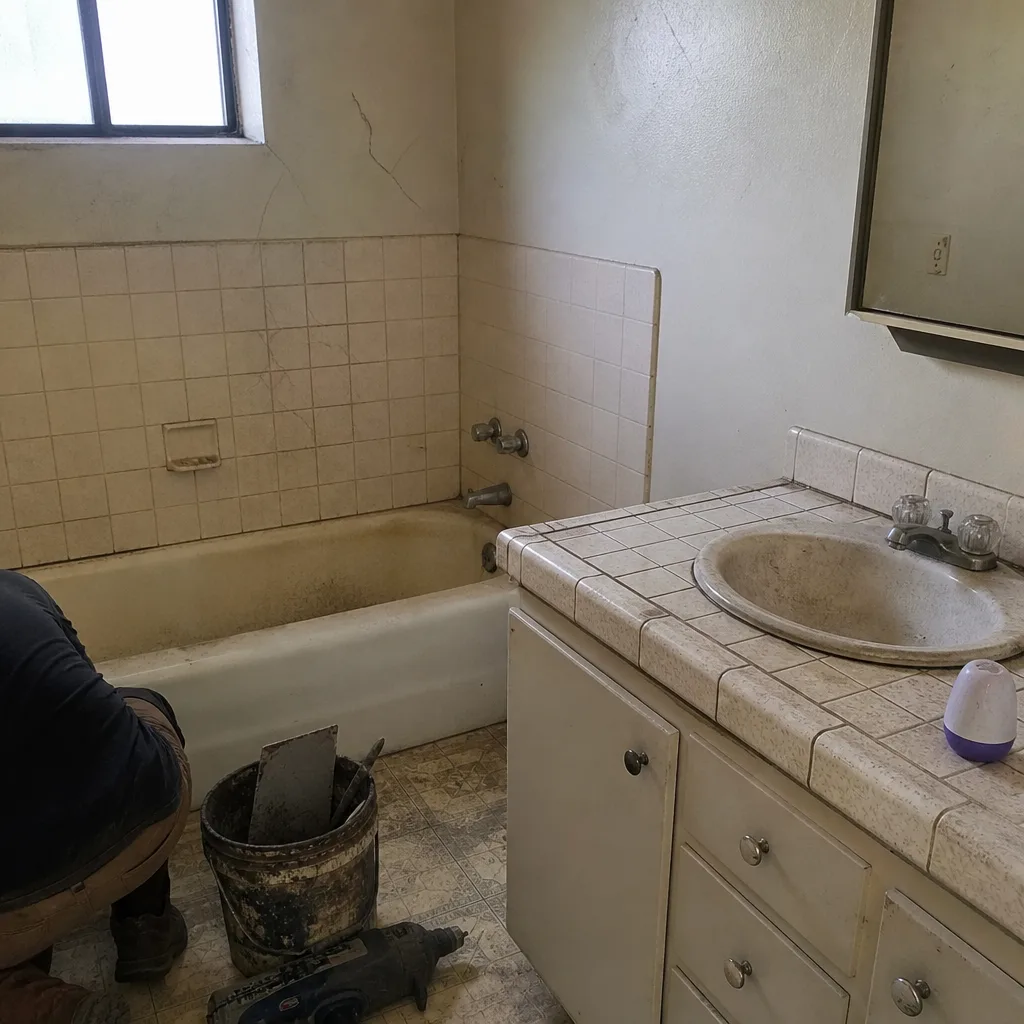 Before
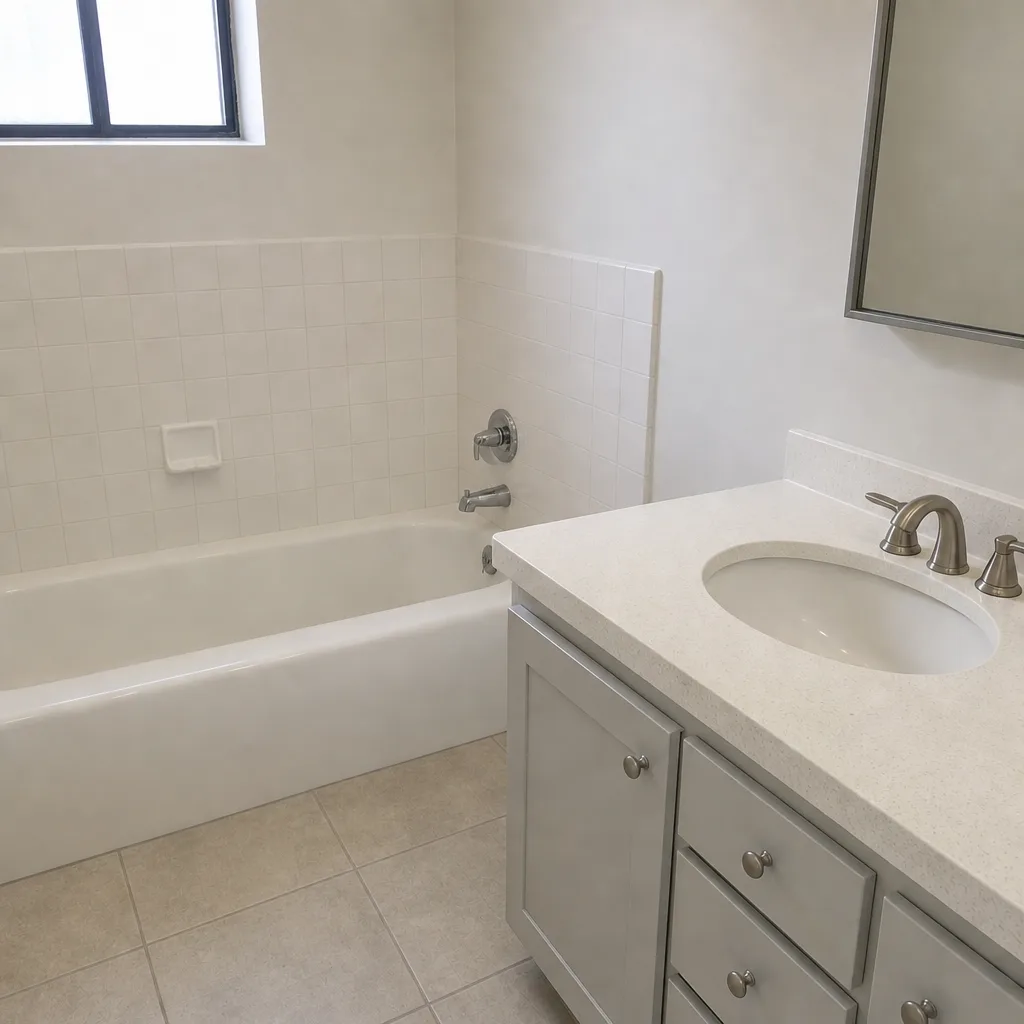 After
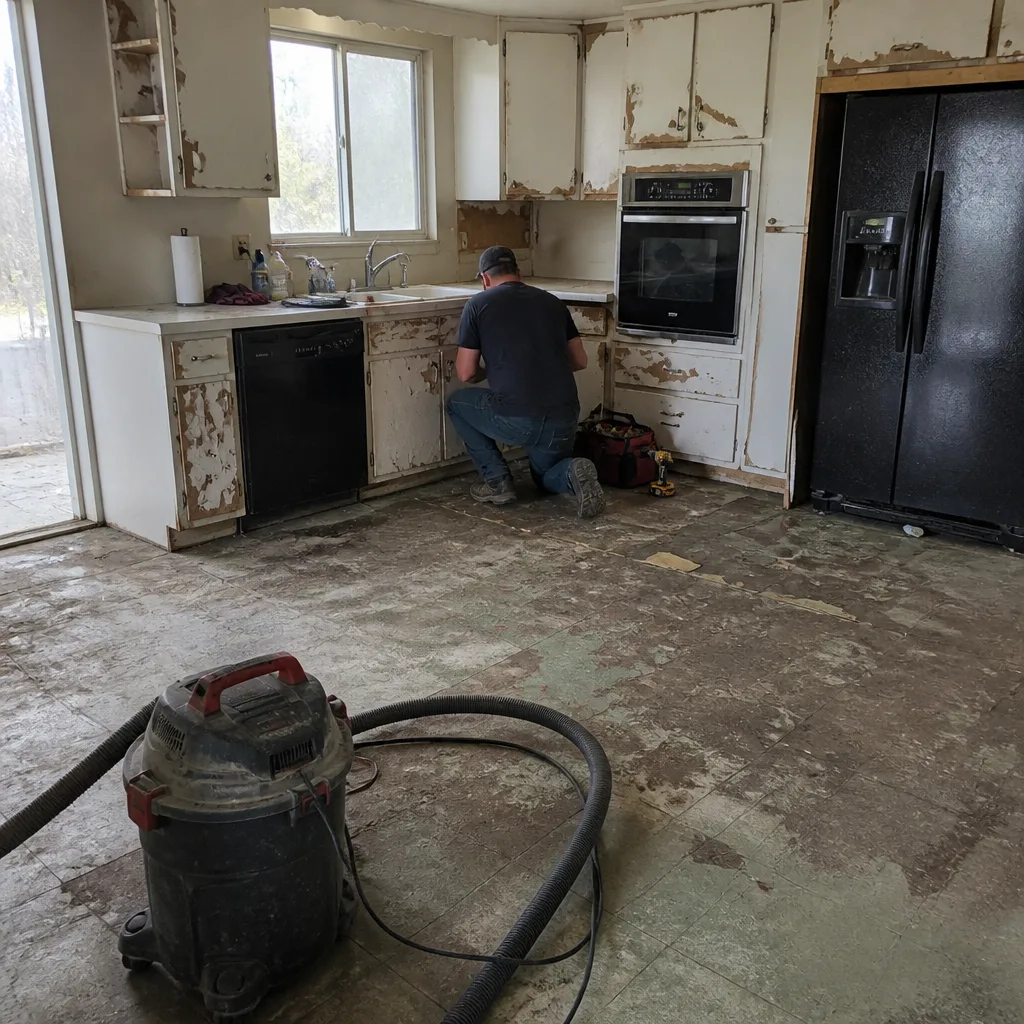 Before
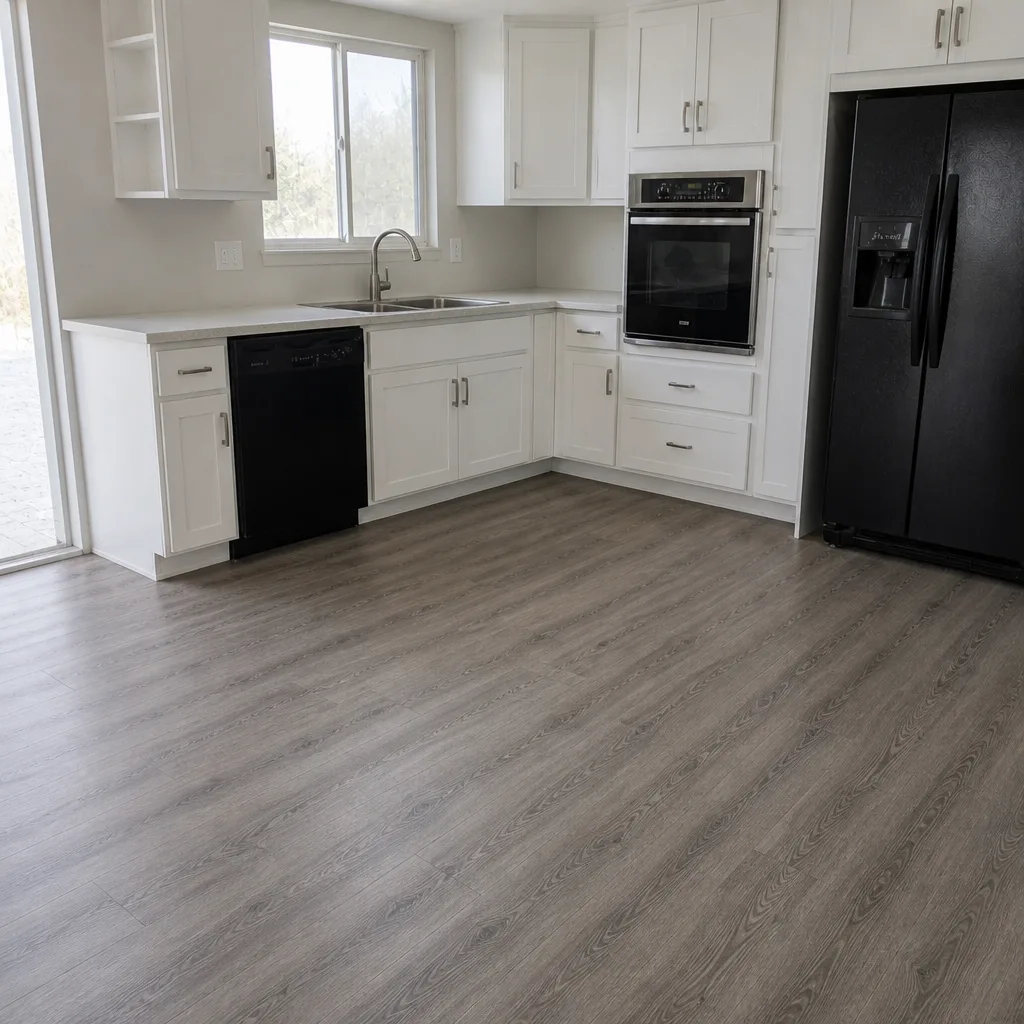 After
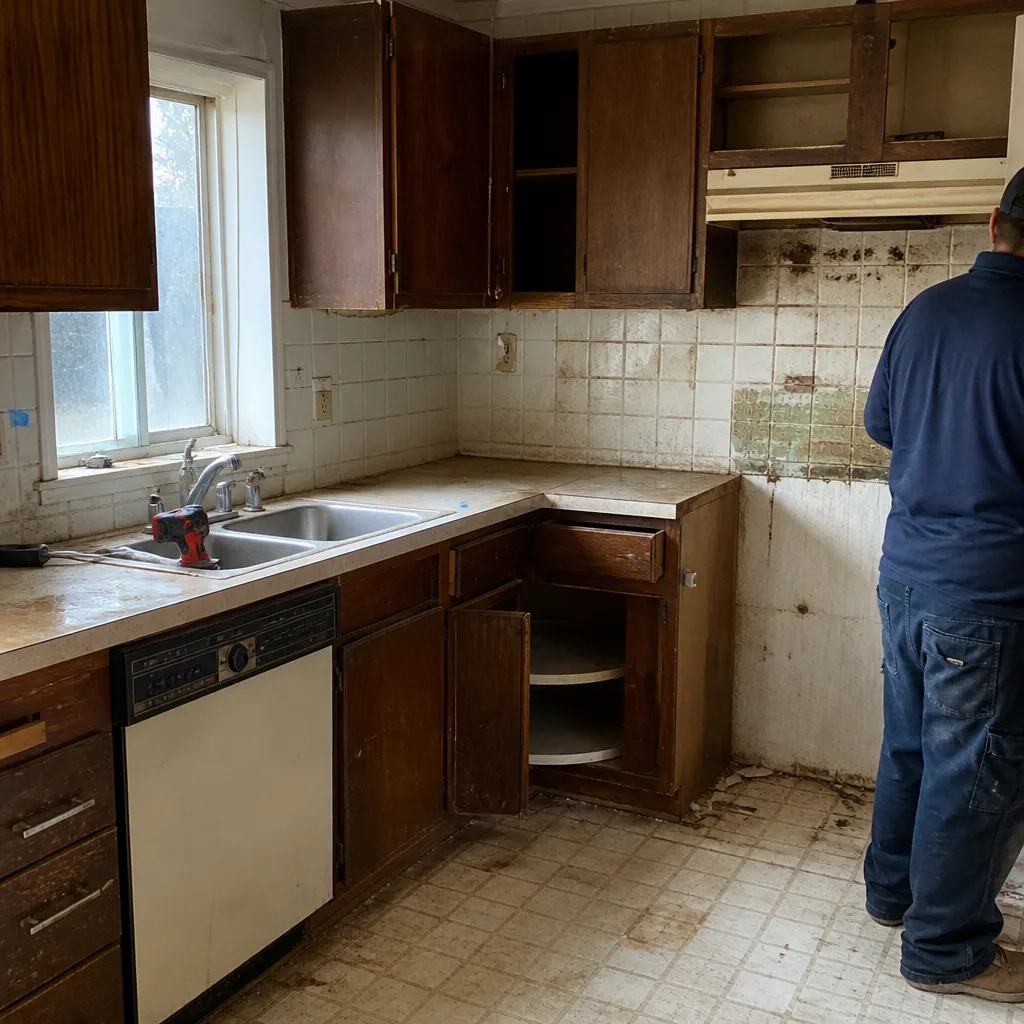 Before
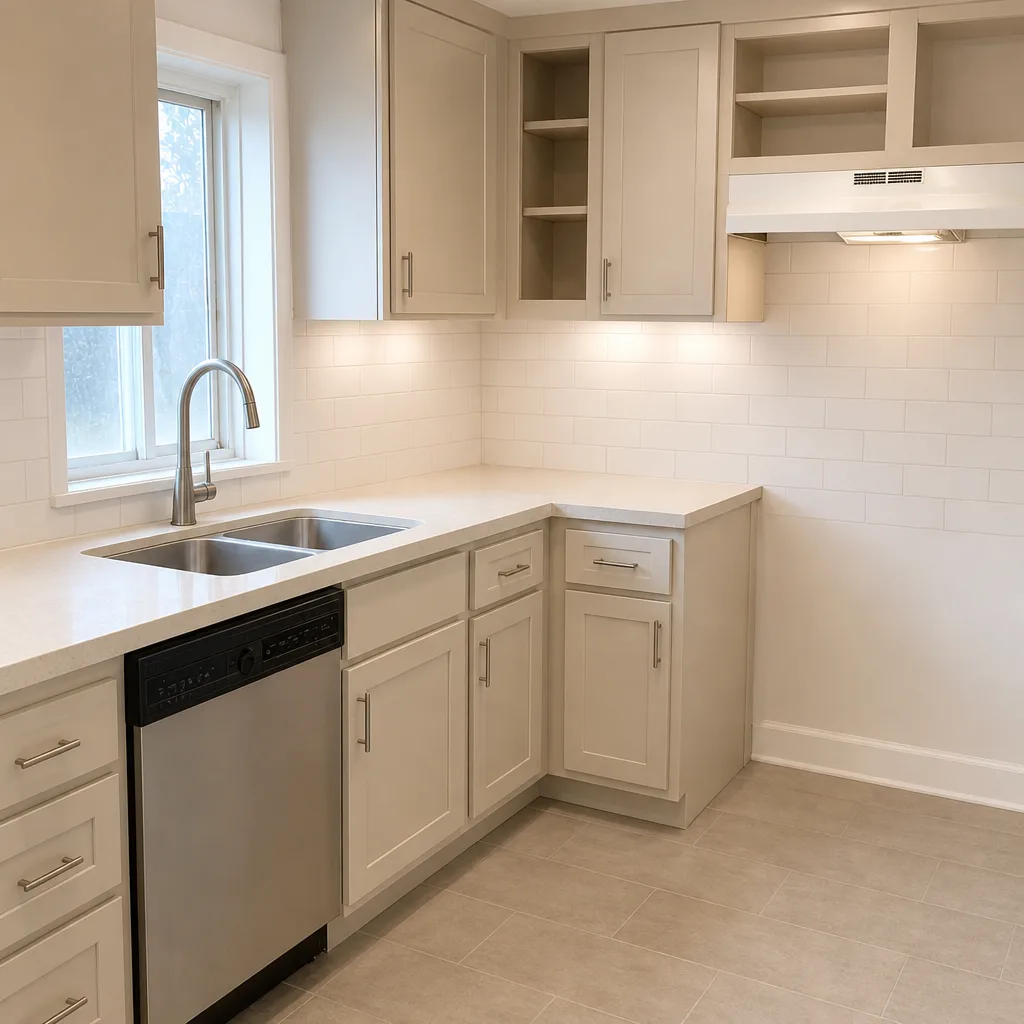 After
When to Call a Professional

Some projects are DIY-friendly. A bathroom fan replacement, a new light fixture, a fresh coat of paint on a bedroom wall. But certain work needs a licensed, insured, background-checked professional every time: anything that touches the electrical panel or household wiring; anything involving gas lines or gas appliances; anything that requires structural change, moving a load-bearing wall, or opening the roof; anything requiring a permit and inspection; and any tall exterior work where the ladder or the pitch introduces real fall risk. Those are the categories where the DIY shortcut becomes an insurance problem, a code problem, or a safety problem.
If your project fits any of the above, or if you simply want a written, fixed-price bid you can hold a contractor to, Elmstead Remodeling Mesquite offers free estimates in Mesquite. Every project starts with a written price before any work begins, shoe covers and drop cloths from the first visit, and a 365-Day Done Right Promise stamped on the finished job. Call (833) 620-6606 to schedule your free estimate.
Frequently Asked Questions
There is no single price for hiring a contractor, because the price depends entirely on the project scope. A bathroom remodel in the Mesquite market typically runs $18,000 to $45,000. A kitchen remodel runs $30,000 to $90,000 depending on cabinet line, countertop material, and whether the layout moves. Whole-home remodeling varies widely by square footage and scope. What matters more than the number is the form it takes: a written, fixed price for a named scope, before work begins. Call (833) 620-6606 for a free estimate on your specific project – written, line-item, and no surprises.
Go to nvcontractorsboard.com and look up the contractor by name or license number. Read the status (active is the only acceptable status), the classification (it must match the work you are hiring for), the monetary limit (it must exceed your contract amount), and the disciplinary history (a pattern of complaints is a warning). Save a screenshot of the result. If the contractor is not listed, or the classification does not match the work, do not proceed. Call (833) 620-6606 if you want to see how our own verification process works before your estimate.
An allowance is a placeholder – a number that gets resolved after demolition, when you are committed and have less leverage. A fixed price names the product and the cost together and holds. Allowances usually lead to change orders, and change orders usually lead up. A fixed-price bid with named brands (KraftMaid, Wellborn, Cambria, Silestone, Kohler, Moen, James Hardie) lets you compare bids on identical terms and know your final cost before work begins. Call (833) 620-6606 for a written fixed-price estimate.
A standard contract covers scope, payment, and timeline. A contract built for a family adds five clauses: defined quiet hours, dust containment method, daily cleanup standard with photos, a written pet-safe product list, and a change-order price trigger requiring your written signature. Ask for all five in writing. A contractor who resists adding them is telling you how the job will actually go. Our estimate process includes these clauses on every project – call (833) 620-6606 to schedule yours.
Bathroom remodels run three to six weeks of active construction. Kitchen remodels run five to ten weeks, driven mostly by cabinet lead times. Whole-home remodels run three to six months or more, depending on scope. Add two to six weeks for City of Mesquite permit review before construction starts. Any bid that promises materially shorter timelines than these should be questioned – ask the contractor what they are skipping to make the number work. Call (833) 620-6606 to talk through the timeline for your specific project.
The 365-Day Done Right Promise means that if something we finished is not right within a year of completion, we make it right. That is a written commitment from the contractor, and it tells you something a warranty certificate rarely does: the contractor expects to stand behind the finished product a full season cycle later. When you are comparing bids, ask every contractor the same question – what happens if something is not right six months from now – and listen to the answer. Call (833) 620-6606 for a free estimate and we will walk you through how the promise works on every project.
The Bottom Line

Hiring a construction contractor in Mesquite comes down to a small set of steps done in the right order: verify the NSCB license, interview from a written template, read every bid line by line, insist on the five clauses that protect your family, and ask the hard questions about supply chain, timeline, and post-project warranty before any work begins. Getting these things right takes a few hours on your end. Getting them wrong takes months to untangle. Families with children and pets deserve a contractor who treats the house like a home: drop cloths and shoe covers from the first visit, quiet tools during rest hours, pet-safe products where there is a choice, a written price before work starts, and a photo of the clean-up before the crew leaves each day.
Whether your project is a kitchen, a bathroom, or a whole-home remodel, the next step is the same: a free, no-pressure estimate with a written price attached. Elmstead Remodeling Mesquite brings named-brand materials (KraftMaid, Wellborn, Cambria, Silestone, Kohler, Moen, James Hardie among them), background-checked and uniformed technicians, live phone coverage 24/7, and the 365-Day Done Right Promise. Our technicians have up to 21 years of experience. Call (833) 620-6606 to schedule your free estimate. For project-specific details, start with our kitchen remodeling in Mesquite page, or take a look at the full range of what we do on the Elmstead Remodeling Mesquite home page.
Written by the team at Elmstead Remodeling Mesquite.