
Last updated November 18, 2026








Free written scope consultation - allowances, timeline, and change-order rules on paper before a single trade is scheduled
Kitchen Remodeling Maintenance Schedule: What to Do and When
The undermount sink that pulls away from the granite two years after installation almost always had a warning. In most of the failures we’re called to look at, there was a hairline gap at the front edge of the sink that showed up around month eight. One bead of silicone, ten minutes, and the sink stays put. A year later that same gap lets water behind the stone, and the fix runs into the hundreds. Nobody told the homeowner to look. The warranty on most kitchen materials isn’t voided by bad luck. It’s voided by skipped maintenance steps that take under an hour a year. This guide gives you the actual calendar: what to check, clean, tighten, or reseal, and when. It’s written from Mesquite, where hard water and dry summers speed up several of these timelines.
Quick Answer
Inspect your kitchen remodel at 30 days, 90 days, 6 months, and 12 months, then move to a twice-yearly routine after year one. The highest-value tasks are checking the undermount sink seal at month 8, resealing stone countertops every 12 to 18 months, and descaling faucet aerators and disposal seals every 3 to 4 months in Mesquite’s hard water. These three items prevent the majority of warranty-voiding damage we see in kitchens across Mesquite.
Styles & brands we work with
- Kitchen remodeling
- Bathroom remodeling
- Home additions & ADU
- Roofing
- Windows & doors
- Driveway & pavers
- Fence
Table of Contents
- Why Skips Void Warranties
- The First 30 Days: What to Inspect
- 90 Days: Settling and Sealing
- The 6-Month Checkpoint
- Month 12: The Full Year Review
- Hard Water in Mesquite: A Faster Clock
- Contractor Warranty vs. Manufacturer Warranty
- Documenting for the 365-Day Promise
- Common Mistakes to Avoid
- When to Call a Professional
Why Skipped Maintenance Voids Perfectly Good Warranties
A KraftMaid cabinet door has a finish warranty measured in years. That warranty assumes the door isn’t sitting under a steam plume from a kettle every morning. A Cambria countertop carries a manufacturer warranty against staining, and that warranty assumes the surface gets cleaned with a product appropriate to it and stays sealed. Neither company sends an inspector to check. They rely on the homeowner to do the small things on a schedule, and when a claim comes in showing months of neglect, they deny it under the maintenance clause.
This is the part of a remodeling handoff that gets missed. On the day the crew packs up, the priority is the finished result: the counters are in, the sink holds, the soft-close hinges on the Wellborn drawers close with that quiet thump. What nobody walks the homeowner through is what happens at month eight when a gap appears, or what a Kohler faucet needs when the water running through it is hard. That gap between a beautiful finished kitchen and a maintainable one is where most of the expensive problems start.
In our experience across kitchens in Mesquite, a homeowner who spends about 45 minutes on the maintenance calendar over the first year avoids nearly all of the premature failures we get called out for. The rest of this guide is that calendar, filled in.
The First 30 Days: What to Inspect
The first month is about catching installation issues before they harden into damage. The materials are still settling, the caulk is still curing, and everything is under load for the first time. Use this period to establish a written baseline so you have something to compare against later.
- Check the undersides of all cabinet bases. Run your hand along the toe kick and the underside of the base cabinets. Any dampness near the dishwasher, sink, or disposal is worth photographing and reporting immediately, not waiting on.
- Open and close every drawer and cabinet door. Listen for rubbing, catching, or a soft-close hinge that thumps instead of gliding. KraftMaid and Wellborn hinges are adjustable; a rub at 30 days is a five-minute fix, a rub at 6 months can wear the finish.
- Look at the bead of silicone around the sink rim and backsplash. It should be unbroken and continuous. Note any gap, even a hairline one, with a photo and a date.
- Test the disposal for a full week of normal use. No rattle, no slow drain. A slow drain at 30 days is usually a plumbing connection that needs tightening, not a disposal problem.
- Check the range hood for even airflow at every fan speed. If it runs oddly quiet on high, the duct connection behind the cabinet should be checked before the cabinets settle fully.
Take dated photos of each item. This is the baseline that makes the rest of the schedule meaningful, and it’s the same set of photos you’ll want if you ever need to file a claim under the 365-Day Done Right Promise.
90 Days: Settling, Silicone, and the First Deep Seal
By the 90-day mark, the house has been through a full seasonal cycle in Mesquite, which means the wood and stone have moved. Dry desert air shrinks cabinet frames and countertop edges in ways that a wetter climate wouldn’t. This is the checkpoint where most of the “settling” issues show up.
What to check at 90 days:
- Every caulk line in the kitchen: backsplash to counter, sink rim, and the seam where a stone counter meets an upper cabinet or wall. Any gap, even 1mm, gets re-caulked with 100% silicone appropriate for the surface (GE Silicone II Kitchen & Bath is common, and a neutral-cure silicone is safer over stone because acetoxy-cure can etch polished surfaces).
- Every soft-close hinge. Clean the hinge with a dry microfiber cloth or a slightly damp one, never a wet rag. The finish on soft-close dampeners on Moen and Blum-style hinges is fine with a mild soap solution, but oil-based cleaners will leave a film that attracts dust and eventually gums the mechanism.
- The drawer slides and the toe kick grille of the range hood. A shop vac with a brush attachment clears dust from the slide tracks without solvent.
- The garbage disposal seal. In Mesquite, hard water builds a mineral ring under the flange faster than most people expect. Flush the disposal with a half cup of white vinegar, let it sit 20 minutes, then run cold water and the disposal for 15 seconds. Do this every 3 to 4 months.
Notice that all of this runs on schedule whether or not you’ve had a service call. The 90-day checkpoint is where the homeowner’s diligence either starts or doesn’t.
The 6-Month Checkpoint
Six months is the halfway point of the 365-Day Done Right Promise, and it’s the moment to look for anything that’s slowly going wrong rather than catastrophically failing. This is where you want to be thorough, because the second half of the promise window is your best window for getting things fixed without cost.
Here’s the 6-month inspection as a checklist:
- The undermount sink. Look at the front edge for the hairline gap we described. If you see one, that’s the warning. Report it and let us re-seal with silicone – the ten-minute fix. A gap that’s allowed to grow for months is where the granite starts to pull away, and that’s the expensive version.
- Countertop edges and seams. Cambria and Silestone are non-porous, but seams and edges can collect oils and stains over six months of cooking. Wipe each seam with a damp cloth, then check for darkening. A professional reseal is typically annual on natural stone, and every 18 months on quartz.
- Every drawer front and door front. Check alignment. If a door sags by month 6, the hinge has either loosened or the frame has dried a bit more than expected. Both are adjustable, but don’t wait until month 12.
- The range hood filter. Replace or clean according to the manual. A clogged filter reduces airflow and forces the fan to work harder, which shortens the motor’s life.
- Faucet aerators and the sprayer head. In Mesquite, mineral buildup inside a Grohe or Kohler aerator happens noticeably faster than the manufacturer’s maintenance schedule assumes. Remove, soak in vinegar 30 minutes, rinse, and reinstall every 3 to 4 months to keep water pressure steady and prevent the cartridge from straining.
Hard Water in Mesquite: A Faster Clock on Two Parts
Mesquite’s water runs hard, which means two specific components of your kitchen need maintenance on a schedule that’s shorter than the manufacturer’s general recommendation. This is a local reality that most kitchen maintenance guides don’t mention, and it matters because both failures show up as “warranty claim” when they’re actually “skipped maintenance.”
Part one: faucet aerators. The screens inside Kohler and Moen aerators collect calcium and magnesium scale. When they’re restricted, water pressure drops and the cartridge works harder. Change or soak the aerator every 3 months, and check for scale rings on the O-rings. O-rings that have dried and cracked need replacing before they leak under the counter.
Part two: garbage disposal seals. The rubber gasket at the top of a disposal can dry and crack faster in Mesquite’s low humidity. Run the disposal with a full cup of water and a small amount of dish soap once a week to keep the seal pliable. Once every three months, descale with vinegar as described above. If you notice a slow drain or smell at the seal, address it before the seal fully fails – a leaking disposal seal is a cabinet-floor problem within weeks.
If you’re considering a kitchen remodel in Mesquite and haven’t yet, this is exactly the kind of local-specific installation detail we build into a kitchen remodeling in Mesquite plan from the start.
Contractor Warranty vs. Manufacturer Warranty: Two Different Clocks
Here’s the split most homeowners don’t realize until a claim is denied. Your contractor’s workmanship warranty and the manufacturer’s product warranty run on different timelines, cover different things, and get voided by different behaviors.
Contractor workmanship warranty: covers installation. If the sink pulls away because it was installed with the wrong adhesive, that’s workmanship. If a cabinet door was hung out of square and won’t close, that’s workmanship. This is the 365-Day Done Right Promise on an Elmstead project – if it’s not done right after the job is complete, we make it right.
Manufacturer warranty: covers the product itself. If a Wellborn drawer slide fails mechanically, or a Cambria countertop chips under normal use where the material should have held up, the manufacturer covers it. These warranties usually require proof of purchase, proof of proper installation, and proof of proper maintenance.
The two overlap for the first 12 months. That overlap is why the first year is the most important. After 12 months, workmanship is no longer on the table, and the manufacturer’s schedule takes over for the next several years. If a problem was going to show up from installation, it almost always shows up inside the first year – which is why the schedule in this guide front-loads the checks.
Every project we complete includes a written record of the products installed and the manufacturer’s warranty terms, so you know exactly which clock you’re on for which part. When you work with the general contractor in Mesquite on a kitchen, that handoff of documentation is included, not something you have to ask for.
Month 12: The Full Year Review Before the Window Closes
Month 12 is your last best look before the workmanship window closes. Walk the kitchen like an inspector, room by room, on a Friday afternoon when you have an hour.
- Photograph every seam, joint, and seal. Countertop edges, sink rims, backsplash lines, cabinet-to-wall junctions, and the range hood penetration.
- Test every moving part. Every drawer, every door, every hinge, every pull-out, the disposal, the faucet in both hot and cold, the sprayer, the hood on every fan speed.
- Look under the sink. Any moisture, mineral staining, or discoloration on the cabinet base indicates a slow leak you haven’t noticed.
- Compare against your month-30-day baseline photos. Anything that has shifted, darkened, or opened up since the baseline is a reportable item if you’re still inside the promise window.
- List the manufacturer warranty details for each product: cabinet brand, countertop brand, fixture brand, and the warranty terms in your paperwork.
Send the list, with photos, before month 12 ends. This isn’t a formality – it’s the difference between a fix under warranty and a repair you pay for.
Documenting for the 365-Day Done Right Promise
The Promise is straightforward: if it’s not done right after the job is complete, we make it right. The way a homeowner protects that promise is simple documentation. Keep a folder – digital or paper – with dated photos at 30 days, 90 days, 6 months, and 12 months. Note the date and what you saw. If something needs reporting, a three-line note and a photo is enough.
What we want from you isn’t perfect documentation. It’s a heads-up while we can still fix what’s wrong. A hinge that’s been rubbing for four months is harder to correct cleanly than one that started rubbing last week. If you’re reading this and you’re not sure whether your kitchen is inside the promise window, call us and we’ll look at your project date and tell you. The answer is often still yes.
For a full view of how a kitchen gets built so that the maintenance is manageable in the first place, our Elmstead Remodeling Mesquite home page lays out how we approach a project from the demolition forward.
Common Mistakes to Avoid
- Using the wrong cleaner on soft-close hinges. Oil-based polish leaves a film that gums the dampener. Use a mild soap solution on a barely damp cloth, then dry. Two minutes, twice a year.
- Assuming “sealed” stone never needs resealing. Cambria and Silestone are engineered quartz and don’t need traditional stone sealing, but the seams and edges still collect oils. Wipe and inspect every 6 months, and have seams professionally checked at 12 months.
- Ignoring the sink gap past month 8. This is the single most common cause of the expensive repair we described at the top. If you see a gap, call for the ten-minute fix.
- Waiting on hard-water buildup until the faucet stops flowing. In Mesquite, aerator and disposal seal maintenance every 3 to 4 months keeps water flowing and cartridges last longer. Annual maintenance is too late for these parts in our water.
- Cleaning disposal parts with chemical drain cleaner. Drain cleaner degrades the rubber seal and can void the disposal warranty. Vinegar and cold water is what the seal wants.
- Throwing away the manufacturer paperwork. Every Wellborn, Cambria, Kohler, Moen, and Grohe product has a warranty and a maintenance clause. Keep the paperwork in a folder.
- Treating the 365-Day Done Right Promise as automatic without reporting. The Promise covers workmanship, but it needs to be invoked. Document and report before month 12.
When to Call a Professional
Most of the schedule above is doable with a rag, a bottle of vinegar, and a phone camera. Call a professional when the problem crosses from maintenance into repair – and never take on the parts that involve water lines, gas connections, or electrical work behind a cabinet. Those are licensed-trade tasks, not homeowner tasks, and attempting them is how a small leak becomes a flooded cabinet floor.
Specific times to call:
- A sink gap that’s larger than a hairline or has already let water behind the stone
- Any moisture or softness at the cabinet base under the sink
- A disposal that leaks at the seal, not just drains slowly
- A range hood that’s lost airflow after a filter cleaning
- Any electrical outlet, switch, or line that’s showing heat or discoloration
- Cabinet doors or drawers that no longer align after adjustment
When the fix turns out to be bigger than maintenance, we want to know. Elmstead Remodeling Mesquite offers free estimates in Mesquite – call (833) 620-6606. The local professional we connect you with is licensed and insured as the state requires, and every quote is written before any work starts.
See the difference
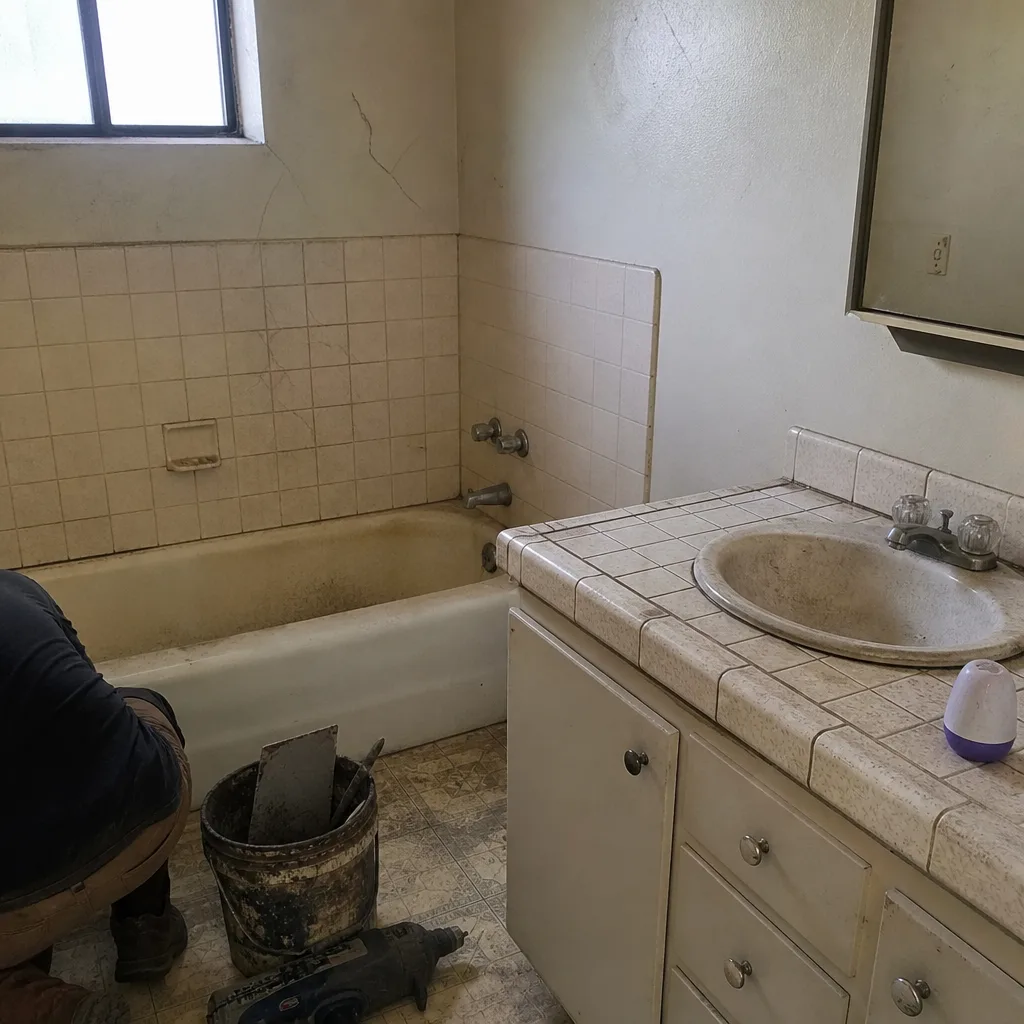 Before
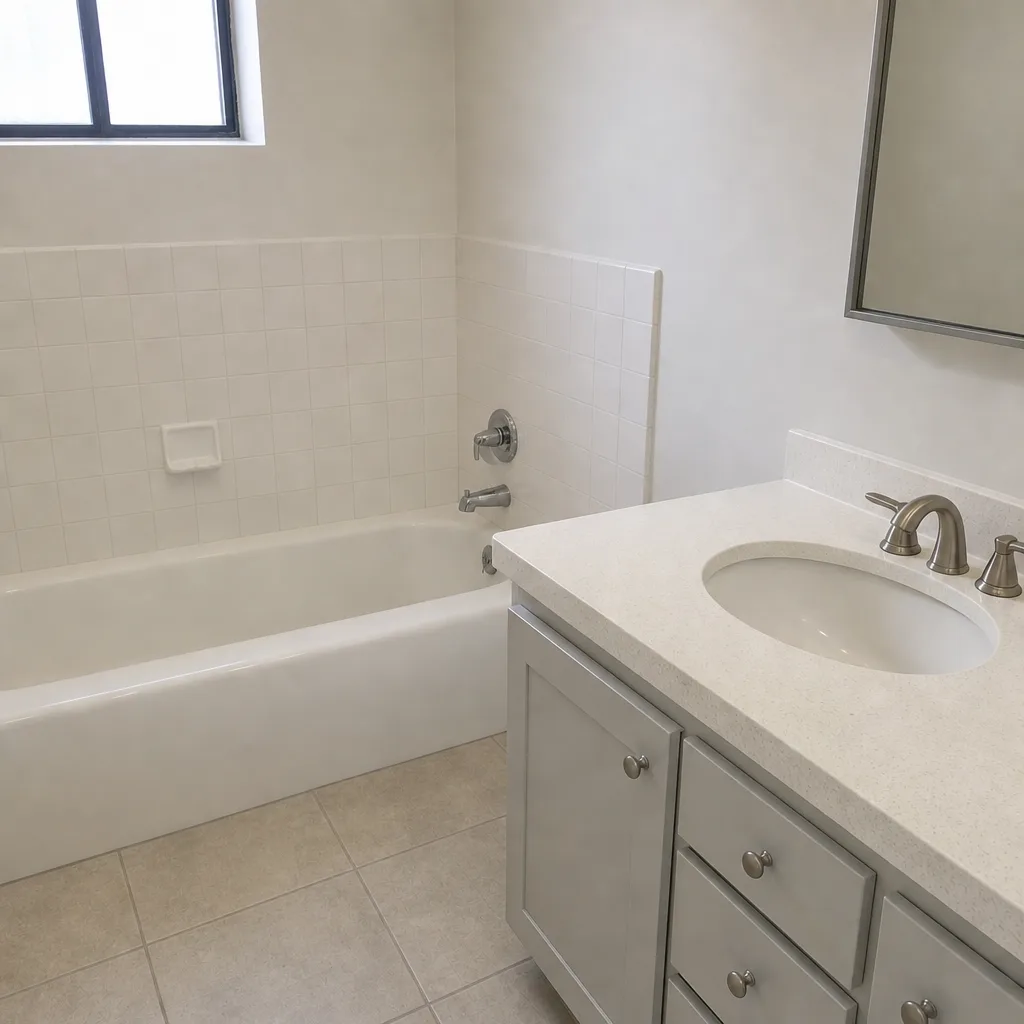 After
 Before
 After
 Before
 After
Frequently Asked Questions

Reseal engineered quartz countertops like Cambria and Silestone every 12 to 18 months at the seams and edges, and have a professional inspect the seams at the 12-month mark. Natural stone counters may need resealing every 12 months. Mesquite’s dry air stresses sealant faster, so monthly visual inspections at the seams are worth adding.
Using a cleaner not intended for the surface. Oil-based cleaners on soft-close hinges, acidic cleaners on some stone, and chemical drain cleaner in a disposal are the three most common. Each manufacturer’s warranty has a maintenance clause, and using an unsuitable product is grounds for denial. Read the product manual for each fixture and cabinet brand before you reach for a bottle.
Start checking the front edge of the sink at month 6, and inspect it carefully at month 8. If you see a hairline gap, call it in – a re-seal with silicone takes about ten minutes and prevents the stone from separating. This is the single most common repair we’re called for in a kitchen that’s a couple of years old.
Mesquite’s hard water means descaling faucet aerators and disposal seals every 3 to 4 months rather than the annual check most faucet manuals suggest. The mineral buildup restricts water flow, strains the cartridge, and dries out the disposal seal. A quarterly vinegar soak is the fix.
Workmanship on any completed Elmstead project. If it’s not done right after the job is complete, we make it right. The promise runs for 365 days from completion. To use it, document the issue with dated photos and report it before the window closes. No owner needs to track it – the project file has your start and end dates.
Yes, once a year, ideally at the 12-month mark of a new kitchen, then annually after. A professional visit checks the seams, the undermount, the disposal seal, the faucet and aerator, and the cabinet alignment. It’s also the moment to review which manufacturer warranties are still active. Call (833) 620-6606 for a free estimate on any repair the visit turns up.
For families who also plan to update a second room, the bathroom remodeling in Mesquite team runs a similar maintenance handoff on fixtures, tile, and seals.
The Bottom Line
A kitchen remodel is a big investment that stays healthy on about 45 minutes of maintenance a year, done on a schedule: 30 days, 90 days, 6 months, 12 months, then twice a year after. The single highest-value check is the undermount sink gap at month 8. The second is quarterly descaling of the aerator and disposal seal in Mesquite’s hard water. Everything else – the hinge cleaning, the seam inspections, the seam reseals – is small, cheap, and doesn’t require a professional. What does require a professional is any moisture at the cabinet base, a sink gap that’s already grown, or anything electrical. Report issues inside the 365-Day Done Right Promise window with a photo and a date; that’s how you use the promise, and it’s what we want from every family whose kitchen we build.
Elmstead Remodeling Mesquite is a Cedarwell company, and every project is governed by the Cedarwell Care Promise: written price before any work starts, shoe covers and drop cloths on every visit, quiet tools during family rest hours where possible, a photo of the clean-up before the crew leaves, and a live person answering the phone around the clock. Named-brand materials include KraftMaid and Wellborn cabinets, Cambria, Silestone, and Caesarstone countertops, Kohler, Moen, and Grohe fixtures, and Schluter and James Hardie building materials. If you’re ready to plan a kitchen or you have a maintenance question on a kitchen we’ve already completed, call (833) 620-6606 for a free estimate.
Written by the team at Elmstead Remodeling Mesquite.