
Last updated November 18, 2026








Free written scope consultation - allowances, timeline, and change-order rules on paper before a single trade is scheduled
Home Remodeling Troubleshooting: Common Problems and How to Fix Them
A ceiling crack above a freshly remodeled bathroom can come from three different trades. It might be a tape joint that the drywall finisher left too thin. It might be framing that settled a quarter inch after the new exhaust fan went in. Or it might be vibration from the fan itself, transmitted through a hanger that was never isolated. From the floor, all three look the same. From a warranty conversation, they’re not remotely the same. This guide teaches you to read the symptom, trace it back to the trade that owns it, and ask the right question of the right person. We’ve walked through hundreds of these in Mesquite, and the pattern holds: whole-home problems are almost always coordination failures, not bad work from one crew.
Quick Answer
Most home remodeling problems that surface weeks or months after completion trace back to a coordination failure between trades, not a single contractor doing poor work. The fix starts with identifying which trade owns the surface or system showing the symptom: drywall, framing, plumbing, electrical, tile, cabinetry, or HVAC. Once you know the owner, the conversation becomes specific, the fix becomes faster, and warranty claims get resolved instead of deflected.
Styles & brands we work with
- Kitchen remodeling
- Bathroom remodeling
- Home additions & ADU
- Roofing
- Windows & doors
- Driveway & pavers
- Fence
Table of Contents
- The Symptom-to-Cause Diagnostic Tree
- Understanding Trade Ownership: Who Owns What
- Mesquite-Specific Problems That Show Up at 60 to 90 Days
- The Documentation That Protects You in Every Conversation
- Cracks, Gaps, and Sticking Doors: Reading the Clues
- Moisture Spots and What They Actually Mean
- Inconsistent Heating and Cooling After a Remodel
- What a 365-Day Promise Covers on Multi-Trade Work
The Symptom-to-Cause Diagnostic Tree
Before you call anyone, spend five minutes with the symptom. Ask three questions: where is it, when did it appear, and does it change with temperature or time of day. The answers narrow the owner fast.
- A crack that runs along a straight line: drywall tape joint. The finisher owns it.
- A crack that spiderwebs from a corner: framing movement or settling. The framer or the general contractor owns it.
- A gap at the trim-to-wall joint that opens and closes: thermal expansion. Seasonal, often not a defect.
- A door that sticks only in summer: humidity or slab movement. Could be framing, could be the door installer.
- A moisture spot under a fixture: plumbing. The plumber owns it, even if the tile setter cut the hole.
- Grout cracking only at floor transitions: substrate movement between two different materials. The tile setter and the framer share this one.
- A room that’s hot in summer and cold in winter after a remodel: HVAC ductwork, not the insulation contractor.
Write these observations down with the date and a photo. When you call for service, that record is the difference between a two-minute diagnosis and a three-week back-and-forth. This is the same discipline a General Contractor in Mesquite uses to route a warranty call to the right sub on day one rather than week two. In our experience, homeowners who arrive with a labeled photo and a short timeline get faster resolutions than homeowners who describe the problem in words alone.
Understanding Trade Ownership: Who Owns What
Trade ownership is the concept that every surface and every system in your finished home has exactly one responsible trade. When a problem shows up, the surface that’s visible is not always the surface that’s owned. A crack in paint is not the painter’s problem if the drywall moved underneath it.
- Framing: structural movement, floor squeaks, door openings that change dimension
- Drywall: tape joints, corner bead, screw pops, texture
- Plumbing: every water line, drain, and fixture connection, plus the wall cut to reach them
- Electrical: every circuit, box, switch, and fixture
- HVAC: ductwork, returns, register placement, and airflow balance
- Tile: grout, substrate, waterproofing membrane, and the transition to adjacent flooring
- Cabinetry: alignment, door swing, drawer glide, and the attachment to the wall
- General contractor: the coordination between all of the above, and the warranty conversation that follows
The last item matters most in a whole-home project. A Elmstead Remodeling Mesquite home remodel passes through a dozen hands. The general contractor’s job is not to be the best drywall finisher in the room. It’s to be the one person who knows which trade owns which symptom, and to make the call on your behalf. In Mesquite, we’ve found that the fastest warranty resolutions happen when the homeowner has one name and one number for the coordination, not eight separate subs to call individually. When you get the trade ownership wrong, you call the painter about a framing problem, and you lose three weeks.
Mesquite-Specific Problems That Show Up at 60 to 90 Days
Mesquite sits at roughly 1,600 feet in the Mojave Desert, with summer highs routinely above 105°F and winter nights that dip into the 30s. That swing is the single biggest driver of post-remodel callbacks in this town, and the problems cluster between the second and third month after completion. Here’s what we see, and why.
Thermal Expansion Gaps in Trim Work
Wood trim expands and contracts roughly 0.0005 inches per inch of length per degree Fahrenheit. On a 12-foot baseboard in a room that swings 70 degrees between summer and winter, that’s about half an inch of movement. The gap you’re seeing at the corner is not a defect. It’s the material doing what wood does. A good finish carpenter installs trim with a small expansion allowance at the joint, or miter-cuts the corners so the gap hides inside the shadow line.
Grout Cracking at Floor Transitions
Tile and the adjacent flooring expand at different rates. When the tile crew grouts tight to a hardwood or luxury vinyl transition without a flexible sealant joint, the grout cracks before the season turns. The fix is not regrout. It’s cutting out that one line and replacing it with a color-matched flexible sealant, which is a thirty-minute job for a tile setter who knows to do it.
Hard Water Deposits on New Fixtures
Mesquite’s water runs hard, and new fixtures show it within weeks. Chrome and brushed nickel finishes cloud, and shower glass fogs along the bottom edge. The brands that hold up here are the ones with solid surface protection: Grohe fixtures with their StarLight finish, Moen with LifeShine, and American Standard’s EverClean surfaces. A monthly wipe with a mild vinegar solution keeps them clear. A Bathroom Remodeling in Mesquite project that specifies Grohe or Moen finishes from the start saves the homeowner a call at month four.
The Documentation That Protects You in Every Conversation
The homeowner with the best paperwork wins the warranty conversation. Not because they’re right and the other homeowner is wrong, but because they can point to a spec, a date, and a photo instead of recalling a vague impression.
- Pre-completion photos of every wall and ceiling. Before the drywall went up. These show the plumbing and electrical rough-in, and they’re worth more than any written description.
- Material spec sheets. Model numbers, finish codes, and serial numbers for every fixture, appliance, and finish. A Kohler faucet has a specific cartridge, and you’ll want to know which one.
- Warranty cards, registered. Most manufacturer warranties require registration within 30 days. Note the expiration date on your calendar.
- Permit close-out documents. The signed inspection card from the city of Mesquite. This is your proof the work passed code, and it matters if you ever sell the house.
- A written punch list signed by the crew. Every completed project should end with a walkthrough and a signed list of anything that needs a second visit.
- The contractor’s written price document. Not the bid, the final invoice showing what was actually charged against what was quoted.
When you call about a problem at month eight, the contractor who can pull up your rough-in photos and your spec sheet will solve it in one visit. The one who can’t will schedule a second. Every project we complete is stamped with a 365-Day Done Right Promise, and that promise is only as strong as the documentation that backs it. The photo of the clean-up we take before leaving is part of that same file, and it often settles questions about whether a scratch was there before the crew arrived.
Cracks, Gaps, and Sticking Doors: Reading the Clues
Cracks and gaps fall into two categories: active and passive. Passive means it appeared once and stopped. Active means it’s still moving. The distinction saves you a lot of money.
Hairline Drywall Cracks
A hairline crack along a tape joint that appeared in month two and hasn’t grown since is passive. It’s the house finding its new equilibrium after a wall moved. Cosmetic. A drywall finisher can fix it in an afternoon with a fresh coat of mud and texture. If it widens over a month, that’s active, and it needs a framing look before anyone touches the drywall.
Gaps at Windows and Doors
A gap between window trim and the wall, if it opens and closes seasonally, is thermal. If it stays open and gets wider, it’s either framing settlement or a window that was installed without proper shimming. The installer owns the second case. On exterior doors, check the strike plate first: a door that’s hard to latch is usually a strike alignment issue, not a sagging frame.
Sticking Interior Doors
A door that sticks only in summer is almost always humidity-driven slab swelling. A door that sticks year-round is out of square, and the framing or the installer owns it. In Mesquite, the dry climate means swelling is rare, so a sticking door here is usually a hinge-side framing issue or a slab that was hung before the wall settled.
Cracks Around a Recently Remodeled Kitchen
Cabinetry adds weight to a wall. If a wall wasn’t properly blocked during rough-in, the cabinets can pull the drywall and crack the corner. The Kitchen Remodeling in Mesquite projects that go smoothly all share one habit: blocking is specified in the plans before the cabinets go up. If you’re seeing cracks now, the fix is usually a re-blocking detail on the backside of the wall, not a patch on the front.
Moisture Spots and What They Actually Mean
A moisture spot on a ceiling or wall is a symptom, not a diagnosis. It could be a plumbing leak, a condensate drip from the HVAC, a roof flashing issue, or condensation on a cold pipe inside the wall. Trace it before you patch it.
- Mark the edge with a pencil and write the date. If the spot grows, it’s active.
- Check below the fixture above it. A bathroom above a kitchen ceiling is the most common culprit in Mesquite homes.
- Look at the attic or crawl space. Condensate lines from the HVAC coil are a frequent but rarely checked source.
- Note the weather when the spot appears. A spot that only appears after rain points to the roof or wall envelope, not plumbing.
- Call the trade that owns the source, not the surface. If it’s plumbing, the plumber. If it’s HVAC condensate, the HVAC contractor. Patching the drywall first just hides the problem for a season.
In our experience, a moisture spot discovered within 90 days of a remodel is most often a shower valve or a supply line connection that hand-tightened but never fully torqued. Those are plumbing problems, not tile problems, and the tile setter who cut the access hole is not the trade that owns the fix. If a spot appears adjacent to a shower, a Delta or Grohe valve cartridge swap is a fifteen-minute job for a plumber. A full tile tear-out to chase the leak is a five-day job. Get the trade right and you save both.
Inconsistent Heating and Cooling After a Remodel
The room that was comfortable before the remodel and is now hot or cold is one of the most common post-project complaints, and it’s almost never an insulation problem. It’s an airflow problem.
- New wall where a return used to be: the return got covered, and the whole system is now unbalanced
- New register moved a few feet: the throw pattern no longer reaches the far wall
- Added square footage without added tonnage: the HVAC system was sized for the old house
- Duct run extended through a hot attic: the new run loses its cold air before it arrives
- New bathroom fan tied into the HVAC return: a code violation in most jurisdictions, and it pulls conditioned air out of the system
The fix is a proper load calculation (a Manual J in trade terms) and a duct design that matches it. This is HVAC work, but it’s triggered by the remodel, so the general contractor is the one who coordinates it. In Mesquite, we’ve learned to specify the return locations on the plan before the framing starts, because moving a return after drywall is a five-figure conversation. If you’re already there, the good news is that a knowledgeable HVAC contractor can often solve it with a return air path and a register swap, not a system replacement.
What a 365-Day Promise Covers on Multi-Trade Work
A 365-Day Done Right Promise means that if something isn’t done right after the project is complete, we make it right, for a full year. On a single-trade job that’s straightforward. On a whole-home remodeling project that passed through framing, plumbing, electrical, drywall, tile, cabinetry, and finish trades, it means the promise has to travel across all of those surfaces.
Here’s what the process looks like when a problem surfaces at month eight, which is exactly when thermal expansion and seasonal airflow issues tend to appear:
- You call the number and a live person answers. Not a voicemail, not a bot. That call gets logged with the date and the symptom.
- We route the call to the trade that owns the symptom. Drywall crack, framing movement, or a fixture leak: three different people, three different visits.
- We schedule around your family’s rest hours. Quiet tools during nap time and school pickups, wherever the work allows.
- We arrive in shoe covers with drop cloths. Same care as the original project, not a stripped-down warranty visit.
- We take a photo of the clean-up before we leave. The same proof we provided when the project closed out.
- If it’s not right after that visit, we come back. No argument about which trade owns the surface, no change order, no invoice.
That’s the standard we hold on every project a Cedarwell company completes. The longest-standing post-project commitment in its service area is not a marketing phrase. It’s the reason we document as carefully at the end as we do at the start. If the framing moved at month eight, the promise covers it. If the drywall tape lifted, the promise covers it. The written price you got before the work started doesn’t change because a warranty visit happened in month eight.
Common Mistakes to Avoid
- Patching the surface before diagnosing the source. Every coat of spackle over an active crack hides the symptom for a season and makes the underlying problem harder to trace. Find the owner first, then patch.
- Calling the wrong trade and assuming it’s their fault. The painter who painted the drywall didn’t cause the framing to move. Calling them wastes a week and sours the relationship with a crew you’ll need again.
- Throwing out the permit close-out card. In Mesquite, that signed inspection card is your proof the work passed code. Without it, a future buyer’s inspector has questions you can’t answer.
- Ignoring a small moisture spot because it stopped growing. A plumbing leak that stops is a leak that found a path. It hasn’t stopped. It’s drying alongside the joist it’s soaking.
- Letting a contractor back in for a warranty visit without the original documentation. Your rough-in photos, spec sheets, and clean-up photo are your leverage. Have them ready before the visit.
- Assuming thermal expansion is a defect. Gaps at trim joints that open in summer and close in winter are the material working correctly. Cutting out caulk and refilling every season makes it worse, not better.
- Accepting a verbal warranty. If the promise isn’t written down, the conversation at month eight starts from zero. A written price document and a written promise belong in the same file.
See the difference
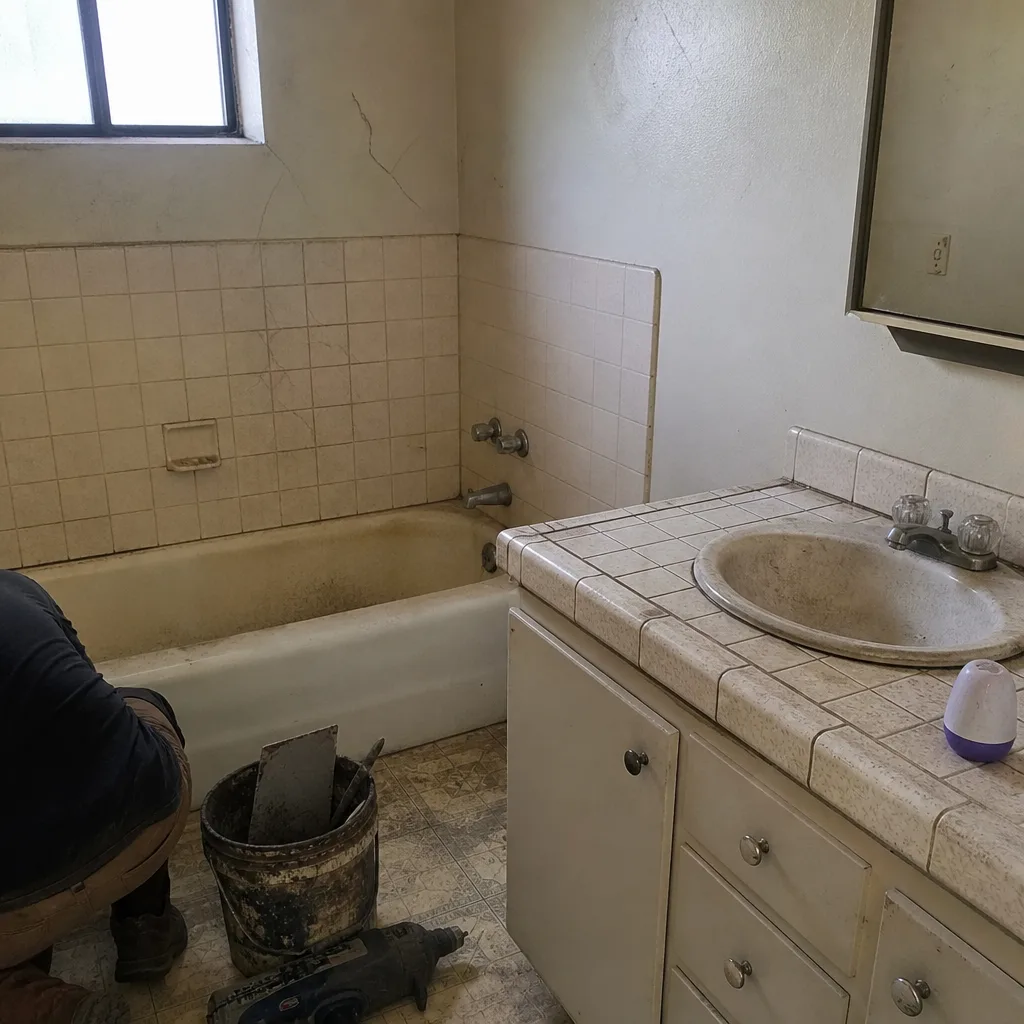 Before
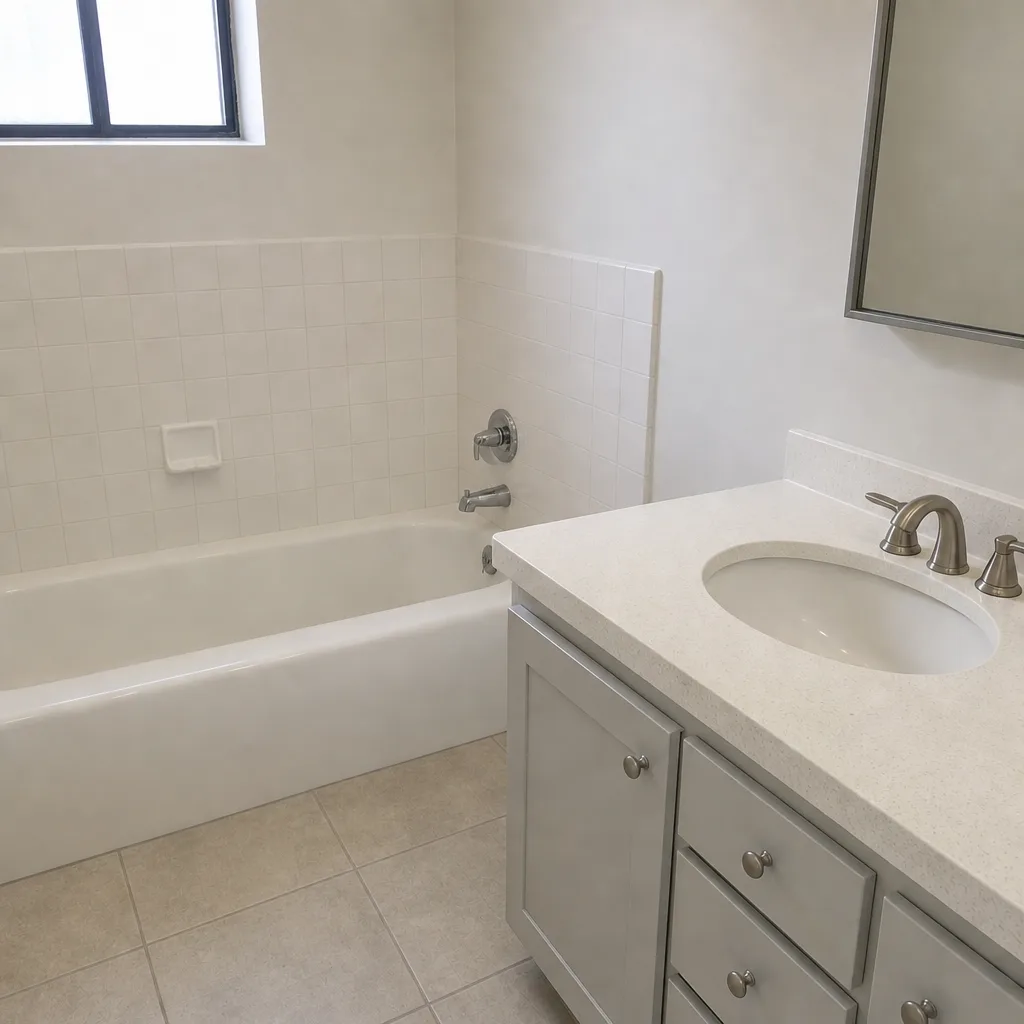 After
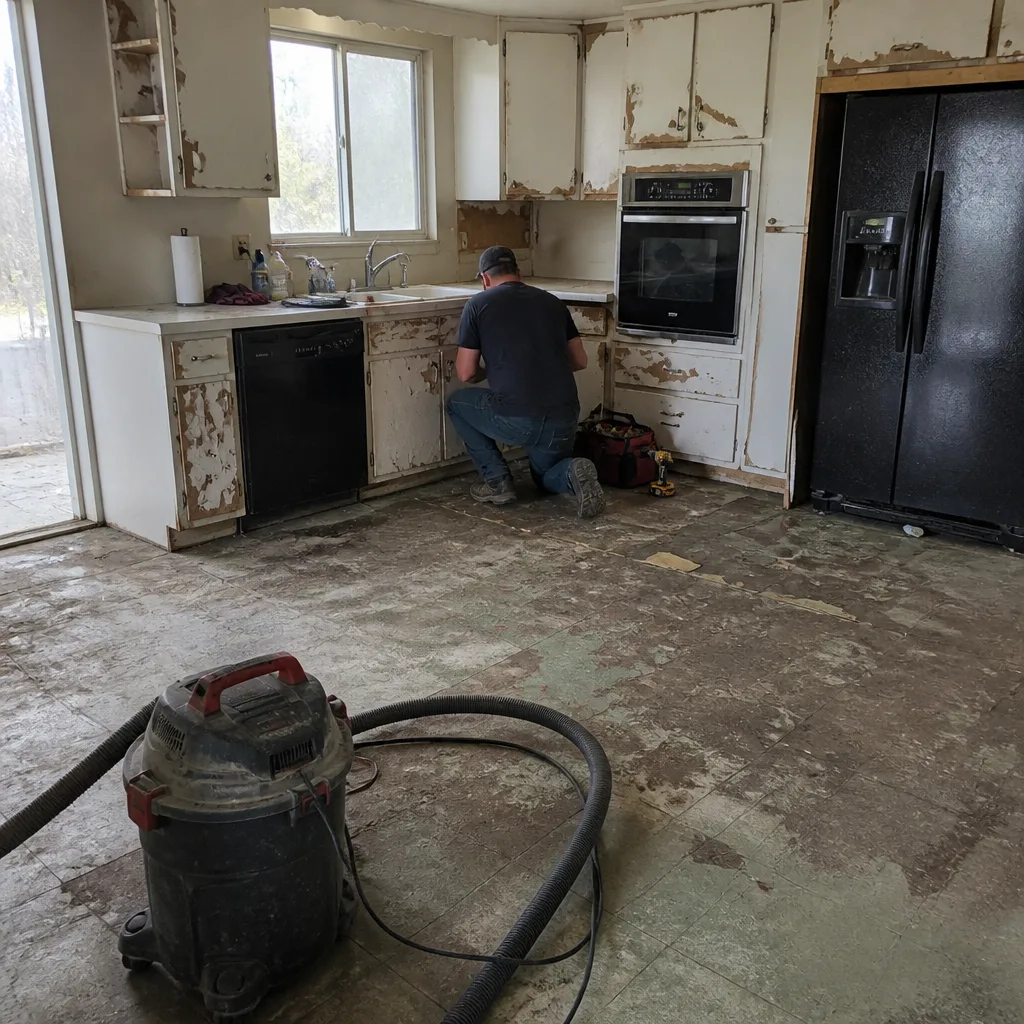 Before
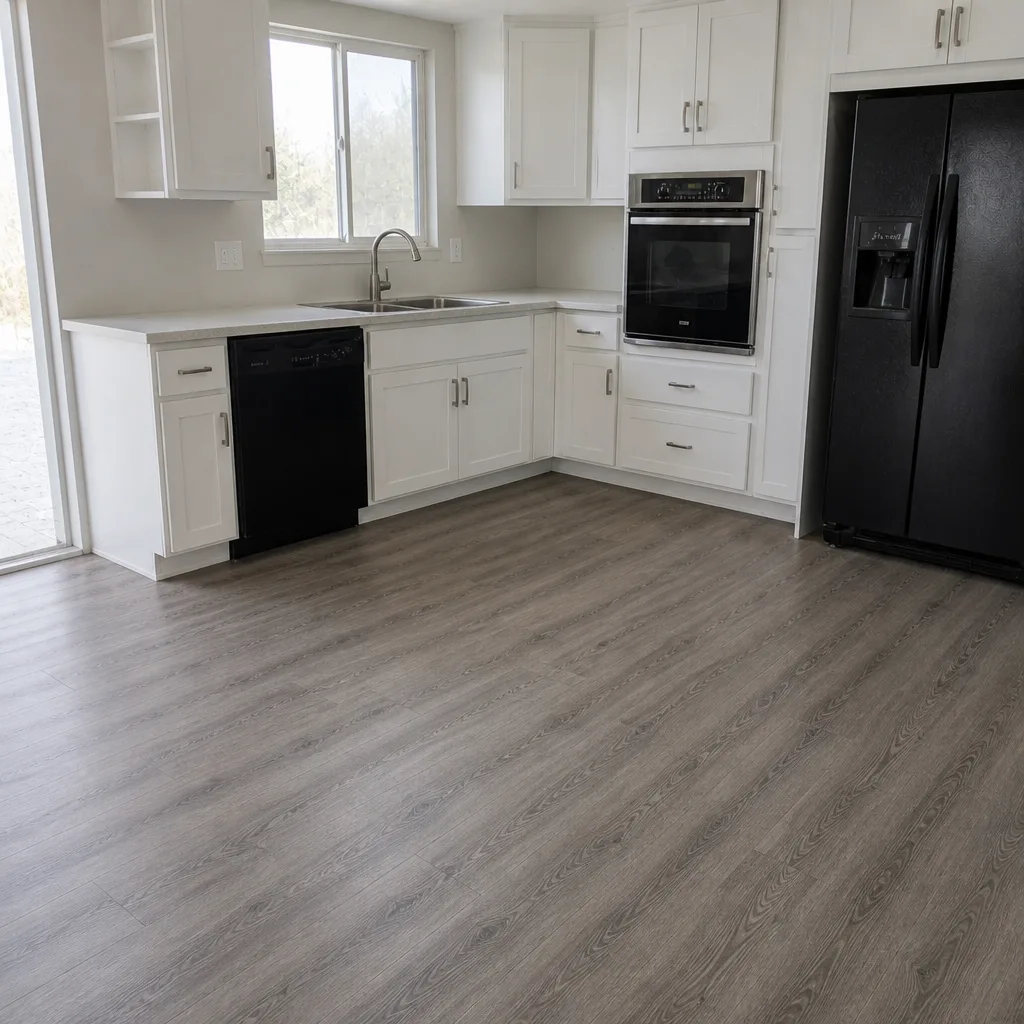 After
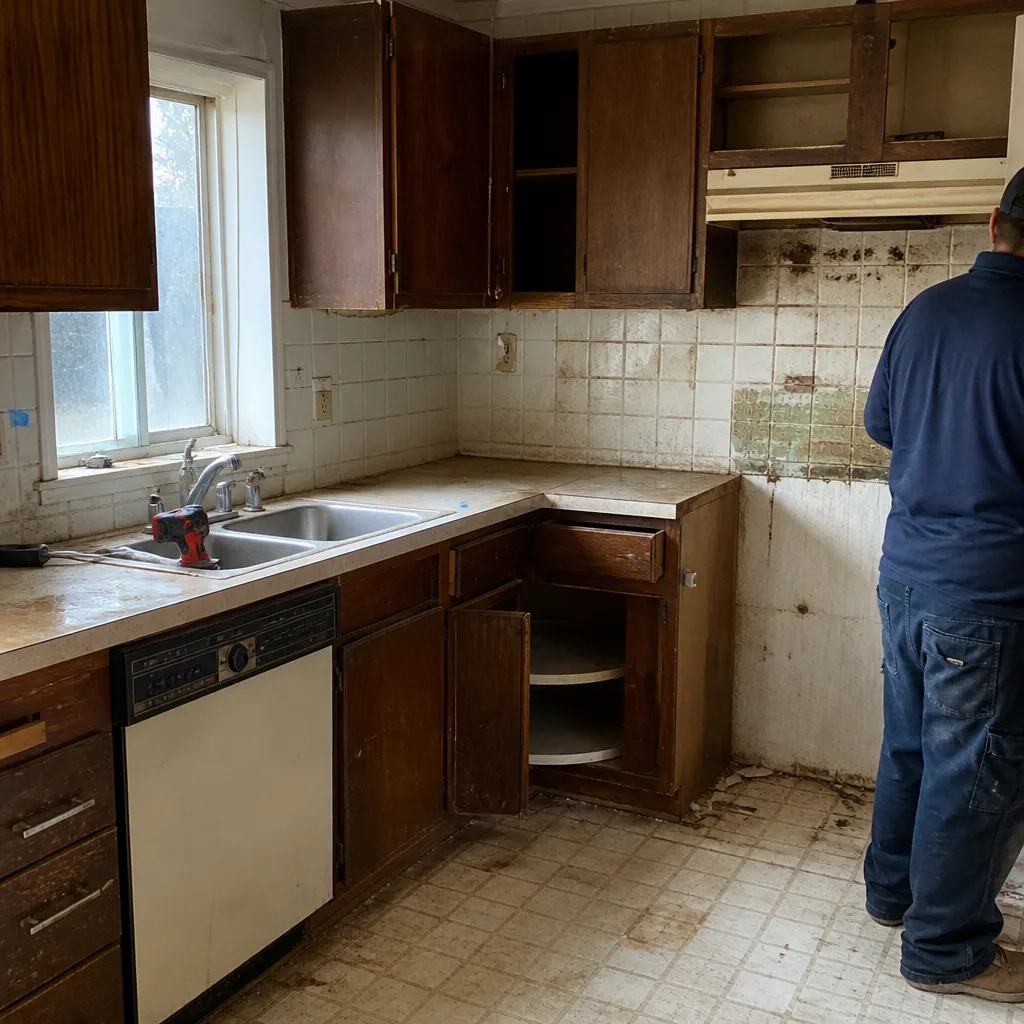 Before
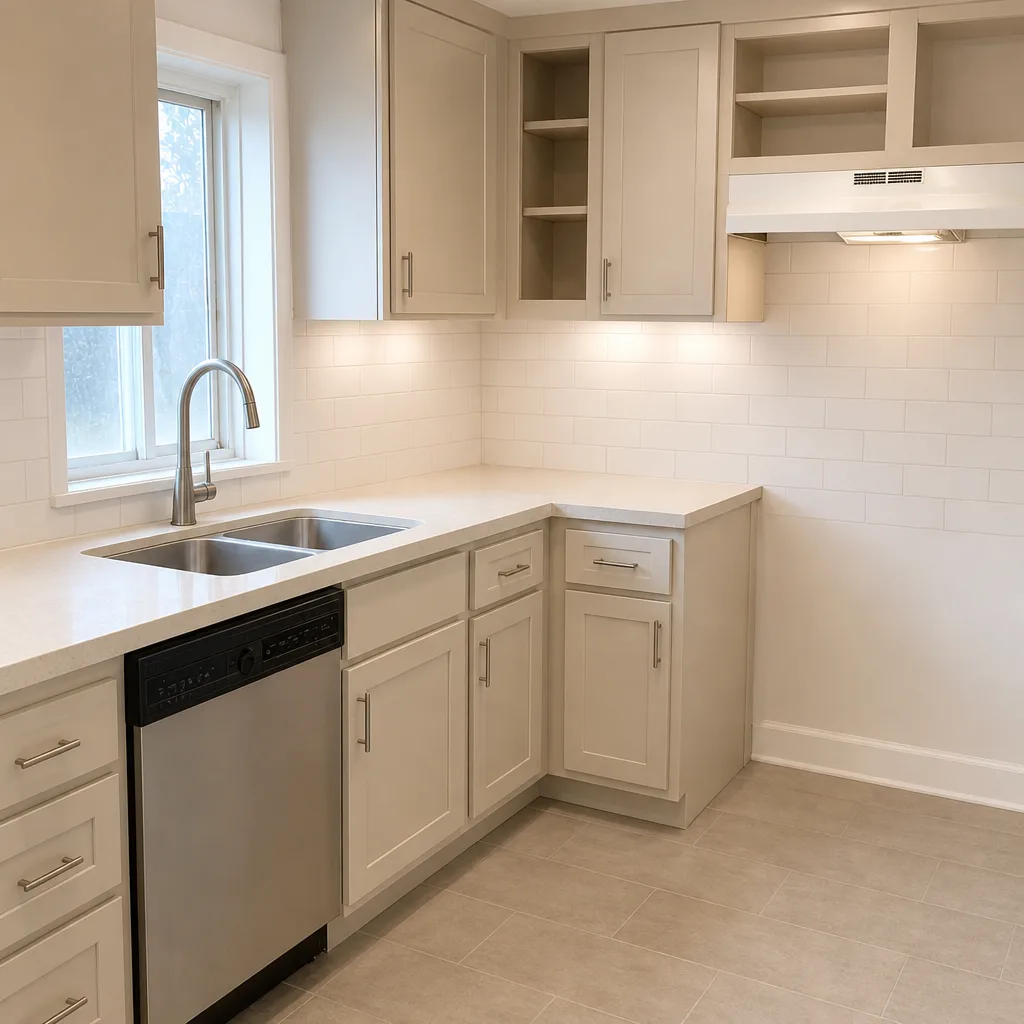 After
When to Call a Professional
Call a professional immediately when a crack widens over a two-week window, when a moisture spot grows or returns after drying, when a door or window will no longer close at all, when you smell gas or see scorched electrical, or when a room has become unusable after a remodel and no single trade will claim the problem. For anything under 90 days from completion, call the general contractor first, not the sub. The general contractor is the one who has the coordination record and the trade ownership map. Elmstead Remodeling Mesquite offers free estimates in Mesquite and answers the phone with a live person around the clock, including weekends, because the moment a problem feels urgent is rarely during business hours. Call (833) 620-6606 to schedule your free estimate. Background-checked, uniformed technicians arrive with shoe covers and drop cloths, and the written price comes before any work starts.
Frequently Asked Questions

A crack that appears at month three is usually a drywall tape joint that was finished too thin, or framing that settled after the new exhaust fan went in. In Mesquite, the seasonal temperature swing accelerates both. The right first call is to the general contractor who coordinated the project, not the painter. Call (833) 620-6606 for a free estimate on the repair and a same-week diagnostic visit.
The plumber who made the connection, even if the tile setter or cabinet installer cut the access hole. Trace the leak to the supply line or drain, not the surface. The trade that owns the water owns the fix. Call (833) 620-6606 to schedule a free estimate if you’re outside the original project’s warranty window.
Not usually. Wood trim expands and contracts with the seasonal temperature swing, which in Mesquite can be 70 degrees between summer and winter. A half-inch gap at a 12-foot baseboard corner is normal movement, not a defect. If the gap closes in winter, it’s thermal.
Cosmetic drywall crack repair in Mesquite typically runs $150 to $350 for a single location, including texture match and paint. A crack with an underlying framing cause runs higher, often $400 to $900, because the fix involves re-blocking or shim work before the drywall is patched. Call (833) 620-6606 for an exact quote, and estimates are free.
Not on our projects. Every Elmstead Remodeling Mesquite project, including the repair visit, gets a written price before any work starts, and that number doesn’t move because the crew found something unexpected. The written price covers the scope you agreed to, and any change requires your sign-off before we touch a tool.
Cosmetic drywall and paint don’t require a permit. Plumbing and electrical repairs usually do, and in Mesquite any repair that opens a wall to reach a supply line or a circuit needs an inspection. Ask before the work starts, and get the close-out card at the end. Call (833) 620-6606 if you’re unsure which category your repair falls into.
The Bottom Line
Almost every post-remodel problem is a coordination issue wearing a surface disguise. The crack is not the drywall finisher’s fault. The gap is not the trim carpenter’s fault. The cold room is not the insulation contractor’s fault. They’re each a symptom of two trades meeting at a joint that wasn’t specified carefully enough, and the fix starts with identifying which trade owns the surface and which trade owns the system behind it. Get that right, and the conversation moves from vague frustration to a specific request that any good contractor can act on. Keep your documentation, keep your photos, keep your written price, and keep one name to call. That’s the whole game.
Elmstead Remodeling Mesquite is a Cedarwell company. Every project we take on comes with the Cedarwell Care Promise: shoe covers and drop cloths on every visit, quiet tools during family rest hours where possible, pet-safe product choices where available, and a photo of the clean-up before the crew leaves. Cabinets come from KraftMaid and Wellborn, countertops from Cambria and Silestone, fixtures from Kohler, Moen, and Grohe, and exteriors from James Hardie. Materials you can look up by name, from manufacturers whose warranties travel with the finished project. Our technicians have up to 21 years of experience. If something isn’t done right after we’ve completed a project, the 365-Day Done Right Promise means we make it right. Call (833) 620-6606 to schedule your free estimate. A live person answers, day or night.
Written by the team at Elmstead Remodeling Mesquite.