
Last updated November 18, 2026








Free written scope consultation - allowances, timeline, and change-order rules on paper before a single trade is scheduled
General Contractor Warning Signs Every Homeowner Should Know
The contractor who says “we don’t need all that paperwork between us” is not offering you a simpler process. He’s removing the documentation that would protect you if anything goes wrong with his work, his crew, or his suppliers. That single sentence is one of the most reliable warning signs in home improvement, and it almost never sets off an alarm when a homeowner hears it, because it sounds like trust. In our experience across Mesquite, the red flags that cost families the most money and the most sleep are not the obvious ones. They’re the procedural gaps that look like flexibility. This guide names the specific contract, communication, and site-behavior red flags that experienced homeowners recognize too late, so you can spot them before you sign.
Quick Answer
The most important general contractor warning signs are procedural, not dramatic: no written contract with a fixed scope and price, resistance to putting allowances or payment schedules in writing, no proof of subcontractor licensing, and a site where materials sit unprotected on finished floors. A contractor who avoids documentation is a contractor without a system for protecting your home or your money, and that gap shows up later as change orders, delays, and workmanship problems. Hiring slowly and verifying carefully is the cheapest insurance a homeowner can buy.
Styles & brands we work with
- Kitchen remodeling
- Bathroom remodeling
- Home additions & ADU
- Roofing
- Windows & doors
- Driveway & pavers
- Fence
Table of Contents
- Why “We Don’t Need Paperwork” Is the First Warning Sign
- The Five Things That Must Be in a Written Contract Before Work Starts
- Site Behavior Red Flags That Predict Workmanship Problems
- Communication Patterns That Signal a Contractor Is Overextended
- How to Verify Subcontractors Are Licensed in Nevada
- Real Allowances vs. Lowball Allowances
- Payment Schedule and Deposit Red Flags
- A Step-by-Step Verification Checklist
Why “We Don’t Need Paperwork” Is the First Warning Sign
When a general contractor waves off a written agreement, he isn’t signaling that you have a special relationship. He’s signaling that the terms of the job live only in his memory and yours. Six weeks later, when the tile you discussed doesn’t match what arrived, there is nothing to point to. When the schedule slips, there’s no baseline. When a subcontractor damages a plumbing line, there’s no clause saying who pays for the repair. Every honest disagreement becomes a negotiation you can lose.
Paperwork is not bureaucracy. It’s the map of the job. A written scope tells everyone what is and isn’t included. A written price removes the ambiguity that makes change orders feel like ambushes. A written payment schedule ties money to milestones instead of to the contractor’s cash-flow needs. Documentation also creates a record that protects both sides if a dispute ever escalates to a licensing board or a court. A contractor who refuses that record is asking you to trust his character with no way to check it later.
In Mesquite, we run into this most often with small renovation jobs where the homeowner and contractor know each other through a neighbor or a church group. Familiarity feels like a substitute for a contract. It isn’t. The homeowner who documents a $12,000 bathroom remodel the same way he’d document a $60,000 kitchen is the homeowner who sleeps well through the project. If a contractor resists a written agreement, treat that as a final answer about how the rest of the job will go, not a small quirk you can work around.
The Five Things That Must Be in a Written Contract Before Work Starts
A legitimate general contractor will put all five of the following in writing without being asked. If you have to argue for any one of them, that’s the warning sign. If a contractor can’t produce them, walk away, no matter how good the price sounds.
- A detailed scope of work. Not “remodel bathroom” but the specific materials, brands, model numbers, tile sizes, fixture finishes, and quantities. A scope that says “install vanity” tells you nothing about whether the vanity is a KraftMaid cabinet or an unmarked box from a discount warehouse.
- A fixed price or a clearly itemized cost breakdown. If allowances are used, each one needs a stated dollar figure and a description of exactly what that figure covers. An allowance for lighting at $150 is a red flag when the fixtures on your Pinterest board run $400 each.
- A payment schedule tied to milestones. Deposits should be modest, and progress payments should follow completed phases of work you can see and inspect, not a calendar. A contractor who wants a big upfront deposit and a large payment at “rough-in complete” is shifting risk to you.
- A start date and completion timeframe. Written dates create accountability. Verbal dates disappear. Mesquite’s summer heat means exterior work can slow dramatically in July and August, so a realistic contractor will account for that in the schedule rather than promising a June finish that everyone knows is impossible.
- Warranty terms, licensing information, and a change-order process. The contract should state in writing how warranty claims are handled, name the contractor’s Nevada license number, and describe how changes will be priced and approved. If change requests only happen over the phone, they’re a setup for inflated charges you can’t contest.
The written price and the written scope are also the reason we at Elmstead Remodeling give a written price before any work starts on every project, not as a premium service but as the baseline. Our General Contractor in Mesquite page lists what a full project plan looks like before a crew ever walks through your door.
Site Behavior Red Flags That Predict Workmanship Problems
The way a crew treats your home during the job is the same way it treats the finished work. A site with no visible cleanliness protocol is a site where care is improvised, and care that is improvised is care that doesn’t survive a busy week. In our experience, these are the site behaviors that reliably predict workmanship problems:
- No daily cleanup. If debris, packaging, and offcuts pile up for days, the crew is either understaffed or has no routine. Both mean small errors go unnoticed and uncovered.
- Materials stored directly on finished floors. Cabinets, tile boxes, and lumber stacked on a just-finished bathroom floor or a new quartz countertop will cause scratches and stress cracks. Look for drop cloths, ram board, or protective sheeting under all stored materials.
- No visible drop cloth or masking protocol. Trim, doorframes, hardware, and appliances should be taped or covered before any sanding, painting, or cutting happens nearby. If the crew starts work without covering, ask why.
- Sawdust and dust trails. A careful crew sets up plastic sheeting and a dust barrier at work-zone boundaries and vacuums at the end of each day. A crew that leaves a dust trail into your kitchen or hallway is not going to sweep up properly when the job is finished.
- No footwear discipline. Shoe covers or dedicated work shoes should be non-negotiable. If the crew tracks in Mesa View or Sun City driveway grit on day one, that’s a preview of the last week of the job.
Families with small children and pets feel these gaps fastest. A toddler crawling on a floor covered in construction dust, or a dog sniffing at an open solvent can, is a real safety concern, not a small inconvenience. That’s why we treat shoe covers, drop cloths, quiet tools during nap hours, and pet-safe product choices where available as part of the job rather than add-ons, and why we send a photo of the clean-up before the crew leaves on every visit. You can see the full approach on our Elmstead Remodeling Mesquite home page.
Communication Patterns That Signal a Contractor Is Overextended
How a contractor communicates before the job starts is how he’ll communicate when a problem comes up mid-project. A contractor who takes three days to answer a simple scheduling question before you’ve signed is a contractor who will take five days to answer when a rejected inspection holds up your project. These patterns are worth watching:
- Calls and texts answered inconsistently. Some contractors are reliable on Tuesday and silent on Thursday because they’re juggling too many active jobs to keep up with messages. The pattern is the tell.
- Change requests handled in person only. A contractor who insists on talking through a change request but won’t put it in writing is preparing to inflate it later. Every legitimate change request deserves a written fix-it price before you approve it.
- Schedule questions answered vaguely. “We should be out there by the week after next” is not a schedule. A well-organized contractor can tell you which projects are open, what the critical path is, and when your crew will actually arrive.
- A different person answers every time. If you can’t identify who is running your job, you can’t expect accountability when something slips. Ask for one point of contact and confirm that person’s role in writing.
- No written updates on larger projects. For anything longer than a few weeks, ask for a weekly update in writing. A contractor who refuses this has no visibility into his own job.
Communication discipline is mostly a function of staffing and systems, which is why we answer the phone with a live person 24/7 and not a voicemail box or automated system. When you call Mesquite residents who have worked with us, they describe reaching a person, not a queue. That’s the smallest, cheapest thing a contractor can offer, and it’s also the thing that vanishes first when a contractor gets overextended.
How to Verify Subcontractors Are Licensed in Nevada
Most general contractors in Nevada don’t do electrical, plumbing, or HVAC work with their own employees. They subcontract it. That’s normal. What’s not normal is a general contractor who can’t show you that his subcontractors are separately licensed for the trades they perform. If a subcontractor isn’t properly licensed and an accident or injury happens on your property, your homeowner’s insurance and you can be left exposed to liability that should have rested with the contractor.
Nevada requires contractors and each licensed trade to hold a separate license through the Nevada State Contractors Board. The verification is not complex, but it does need to happen before work starts, not after:
- Ask the general contractor for a written list of subcontractors who will work on your job, including each trade.
- Look up each subcontractor on the Nevada State Contractors Board website by license number or business name.
- Confirm the license is active, is for the correct trade classification, and has no recent disciplinary history.
- Ask the general contractor to confirm in the contract that all subcontractors are licensed and carry their own liability and workers’ compensation coverage.
- Verify with the subcontractors themselves if anything seems unclear. A legitimate electrical subcontractor won’t be embarrassed to show you his license number.
For families with young kids, this matters beyond the contract. Unlicensed work often shows up later as code issues that require opening a finished wall. A shared bathroom remodel in Mesquite gone wrong on the electrical side can mean water damage behind tile before anyone realizes the GFCI protection wasn’t installed correctly. Our Bathroom Remodeling in Mesquite page lists the trade licensing we require before any tile is laid.
Real Allowances vs. Lowball Allowances Used to Win the Job
An allowance is a written placeholder in a bid for a material that hasn’t been selected yet, like tile, cabinetry, or fixtures. A legitimate allowance reflects real market prices for the quality level you’re discussing. A lowball allowance is a bid mechanic. It’s a small number entered to bring the total price down so the bid looks competitive, with the plan that the actual selections will come in far higher and the difference will get billed as a change order or an “upgrade.”
Here’s how to spot the difference before you sign:
- Compare the allowance figure to real products. If the vanity allowance is $400 but the KraftMaid cabinet model you’re picturing sells for $1,100, the allowance is fictional. That $700 gap will appear as a change order later.
- Ask for allowance per unit, not lump-sum. $8 per square foot for tile is verifiable. A $2,000 lump sum for a 150-square-foot bathroom floor is not, because it hides the per-unit math.
- Demand that allowances be itemized in writing. Each allowance should name the material category, the dollar amount, and the brand or quality tier it corresponds to. A bid that lumps “fixtures and finishes” into one number is hiding the real cost.
- Compare total allowances across bids. A bid that is $6,000 cheaper than the next closest bid but has allowances half the size isn’t cheaper. It’s a bid that will grow. The real price after selection is usually higher, sometimes far higher, than the honest bid sitting next to it.
This is why our pricing works the other way. We quote with real products from named partners, including cabinets from KraftMaid and Wellborn, countertops from Cambria, Silestone, and brands you can look up yourself, and fixtures from Kohler, Moen, and Grohe. You can price the exact models in the bid before signing, and the price you sign is the price that stays. If a Mesquite homeowner hands us three bids and wants help reading them, we’ll sit down with the allowances line by line. Call (833) 620-6606 and we’ll walk through it.
Payment Schedule and Deposit Red Flags
Payment terms are where most of the real financial damage happens, and most of it happens before the homeowner realizes there’s a problem. The deposit that seems small upfront can hide progress payments that get ahead of the actual work. A few clear principles keep you protected:
- Deposits should be modest. Ten to twenty percent is standard for a residential project. A contractor demanding 40 percent or more upfront is using your money to fund a job he hasn’t started, which means your money is funding his cash flow, not your work.
- Payments should follow completed milestones. A “rough-in complete” payment should come after the rough-in is complete and inspected, not two days before the plumber is scheduled.
- Never pay in cash without a receipt. If a contractor resists writing a receipt for a cash payment, he’s not documenting the money, and that receipt is the only proof you have if a dispute arises later.
- Pay by check or card, not by wire or personal payment app to a stranger’s account. Card and check payments create a record. A wire to a personal account gives you no recourse if the contractor disappears or the work doesn’t start.
- Hold back final payment until the punch list is done. Ten percent retained until punch-list completion is a reasonable norm. A contractor who won’t accept that arrangement is a contractor without confidence in his own finish work.
For a $40,000 kitchen remodel in Mesquite, the difference between a good payment schedule and a bad one can mean the difference between a project that closes cleanly and one that drags on while the contractor chases cash elsewhere. Our Kitchen Remodeling in Mesquite page breaks down how we structure pricing, and the 365-Day Done Right Promise is written into the completion terms rather than promised verbally.
A Step-by-Step Verification Checklist
Before you sign a general contractor for any project, run this list. It takes about an hour and it’s the single best protection you have.
- Verify the license. Look up the contractor and each subcontractor on the Nevada State Contractors Board website.
- Verify the insurance. Ask for a certificate of insurance and call the carrier to confirm it’s current. Liability and workers’ comp are both required.
- Ask for three references from the last 12 months, and call them. Ask specifically about change orders and clean-up.
- Read the contract line by line. If anything is unclear, ask the contractor to rewrite it clearly before you sign.
- Confirm the written price and any allowances in the contract match the bid. The bid and the contract should match to the dollar.
- Walk a current job site if possible. Look for drop cloths, shoe covers, and a clean driveway. The site you see is the site you’ll get.
- Ask how change requests are priced and approved. Get the answer in writing in the contract.
That checklist is also the outline of how we screen contractors we bring onto Elmstead projects. Our technicians have up to 21 years of experience, and the checks that keep them safe on a job site are the same checks that keep your home safe when they walk in.
Common Mistakes to Avoid
- Signing a bid that isn’t the contract. A bid is an offer, and a contract is an agreement. If the two documents don’t match to the dollar, don’t sign. In Mesquite, where materials have to be transported over long distances from suppliers in Las Vegas, the delivered-price discrepancies compound quickly.
- Accepting verbal promises about scheduling or finish dates. If the date isn’t in writing, it doesn’t exist. Seasonal heat in Mesquite makes some dates genuinely unrealistic, and the honest contractor will tell you that in writing.
- Choosing a bid because it’s the lowest without comparing allowances. A low total hiding low allowances will end up higher than every other bid once selections are made.
- Paying a large deposit before you have a signed contract. Money should follow documentation, not precede it.
- Skipping the subcontractor licensing check because the general contractor seemed reliable. The general contractor’s character is not a substitute for verifying each trade’s license separately.
- Letting an “easy” project run without a written scope. Small jobs are where the paperwork shortcuts happen, and they’re also where the disputes get loudest relative to the amount of money involved.
- Ignoring site behavior because the crew seemed friendly. Friendliness and care are different things. A friendly crew that stacks cabinets on a new floor is still damaging the floor.
See the difference
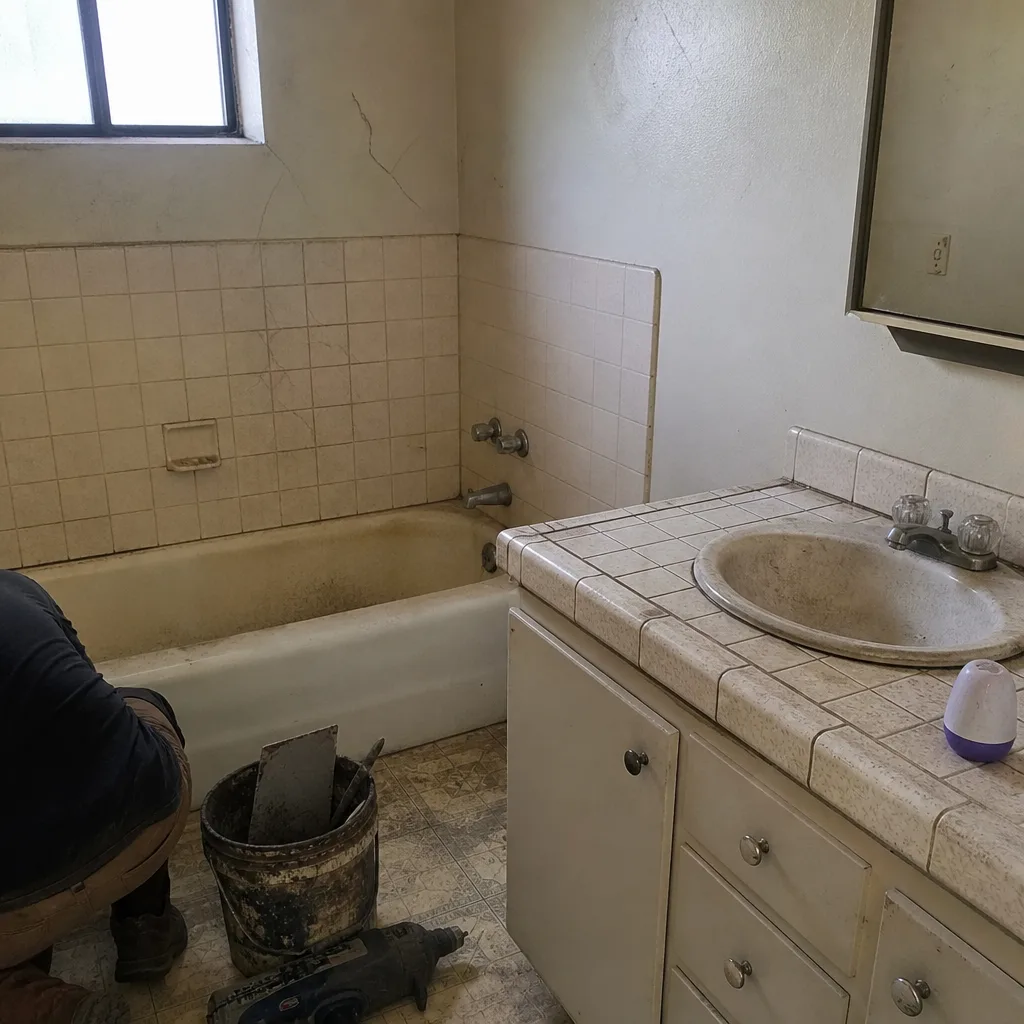 Before
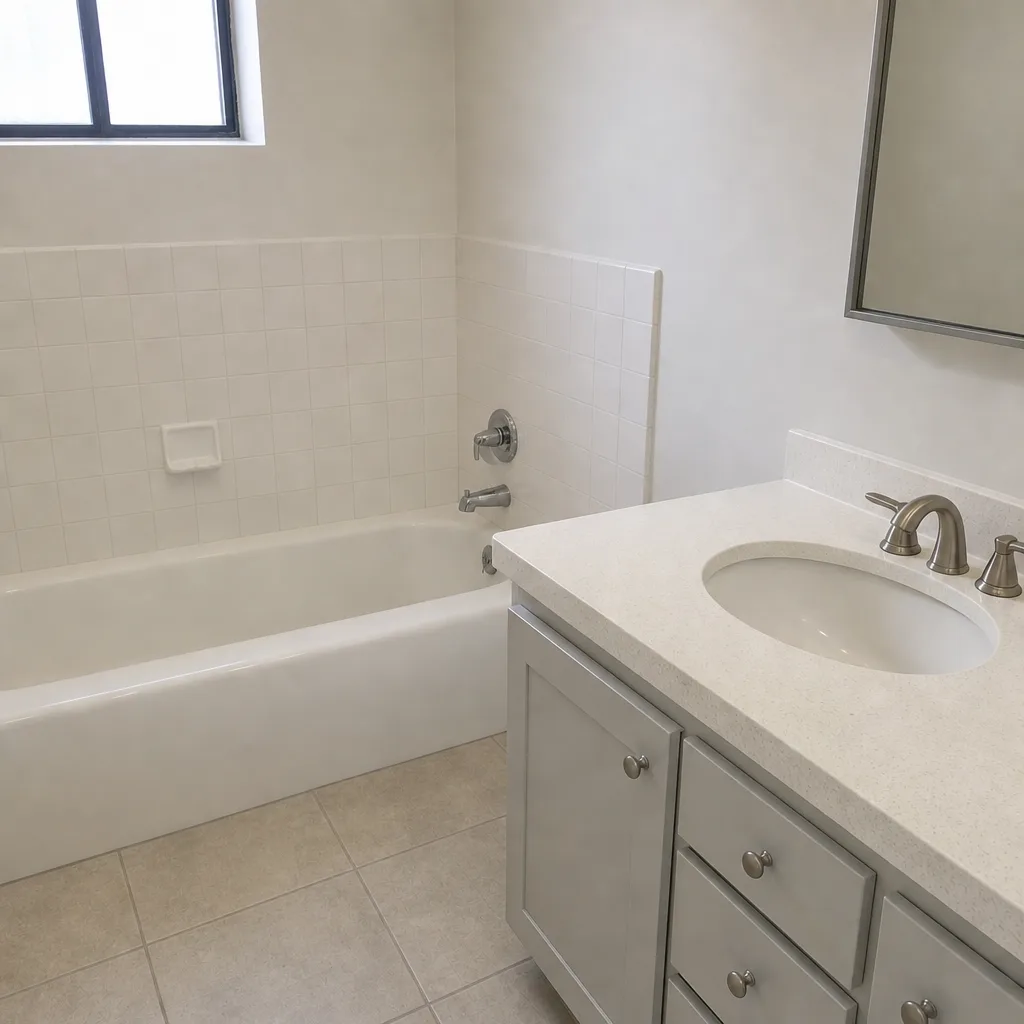 After
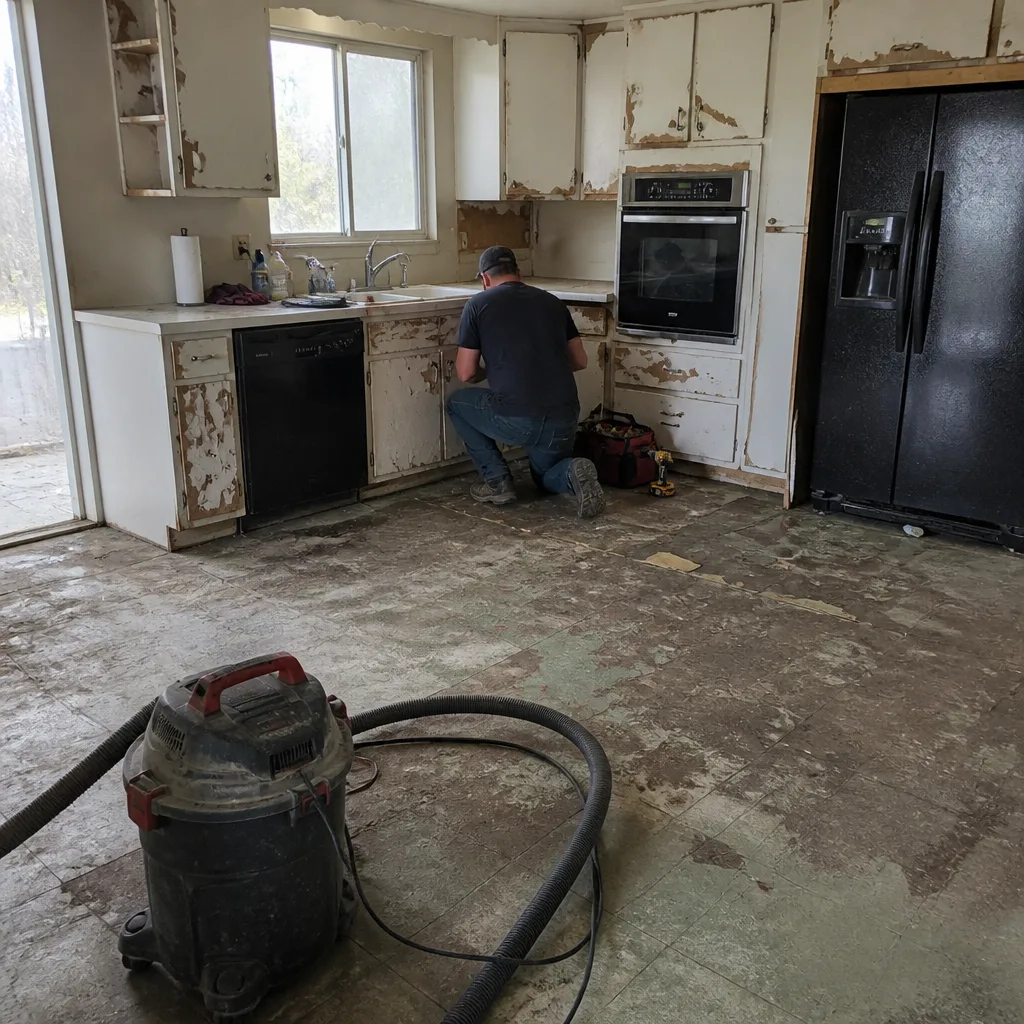 Before
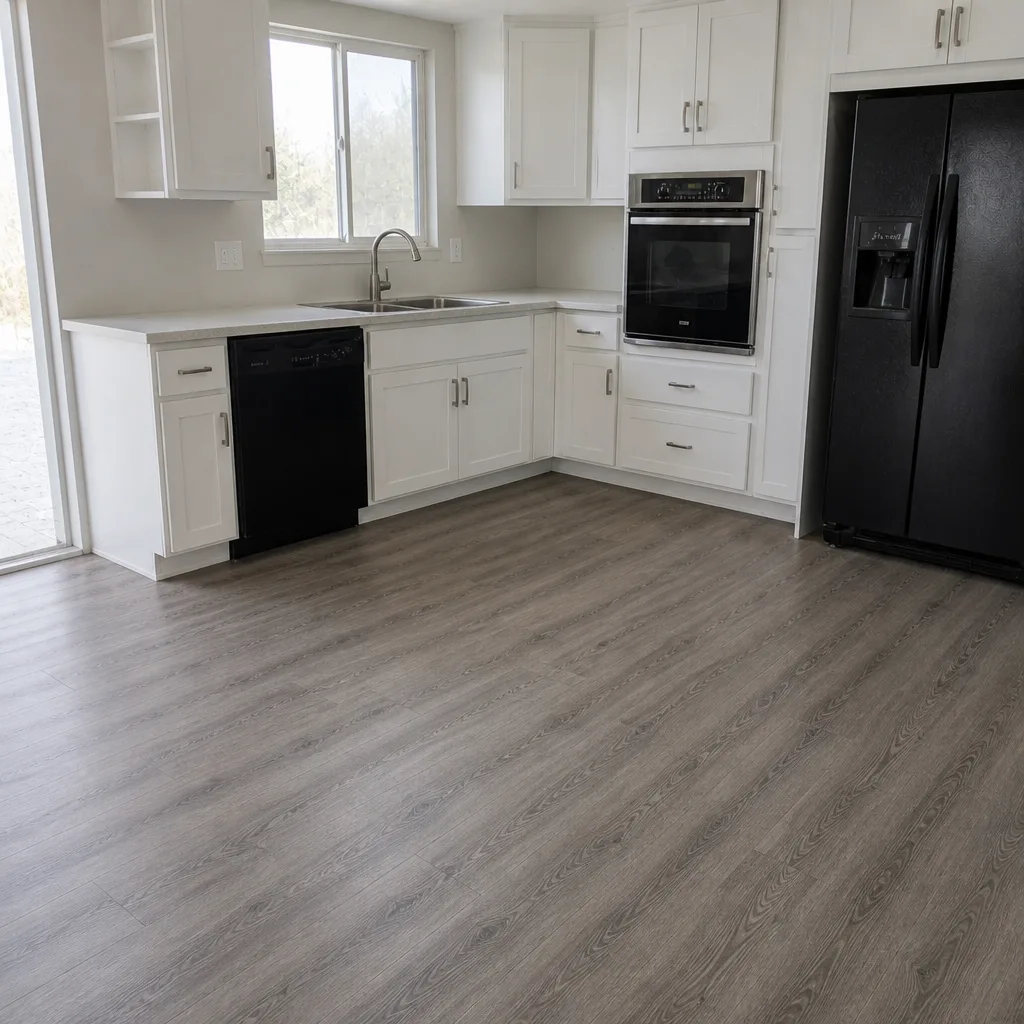 After
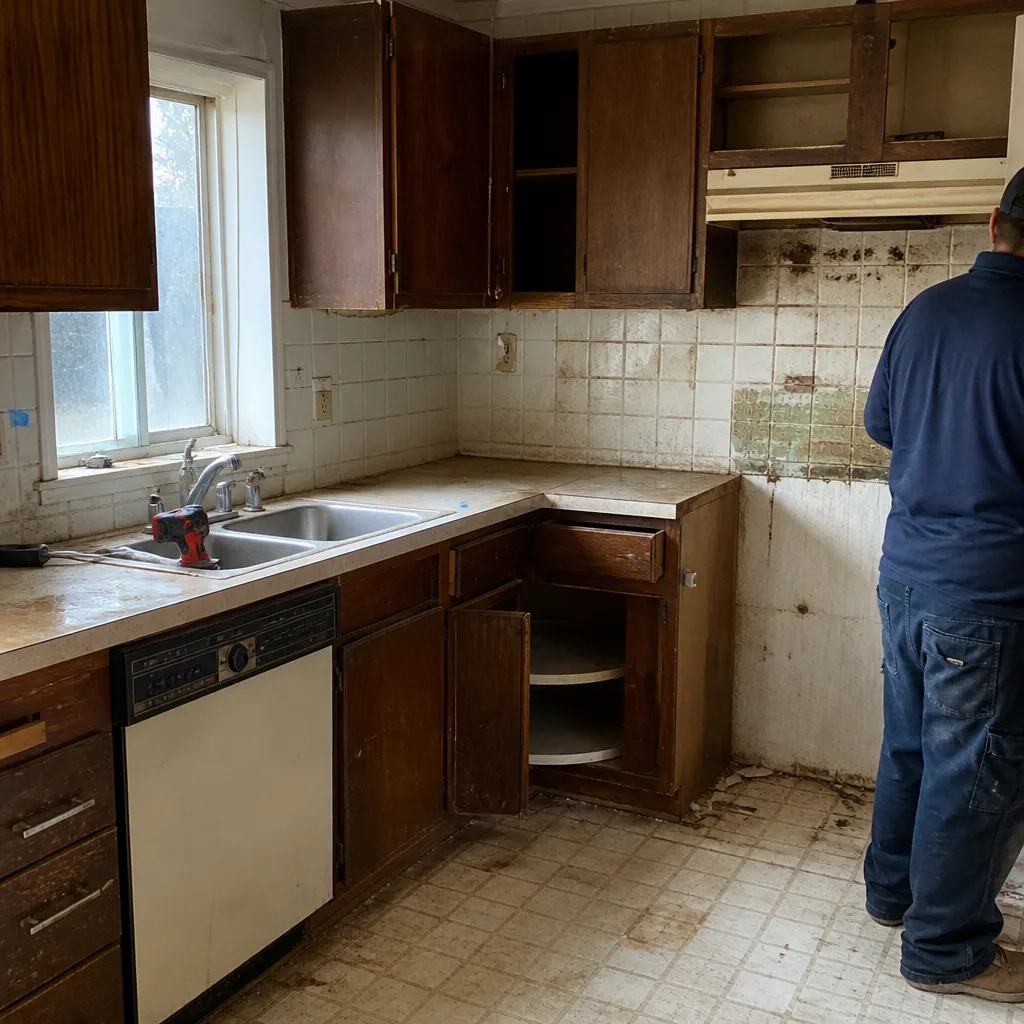 Before
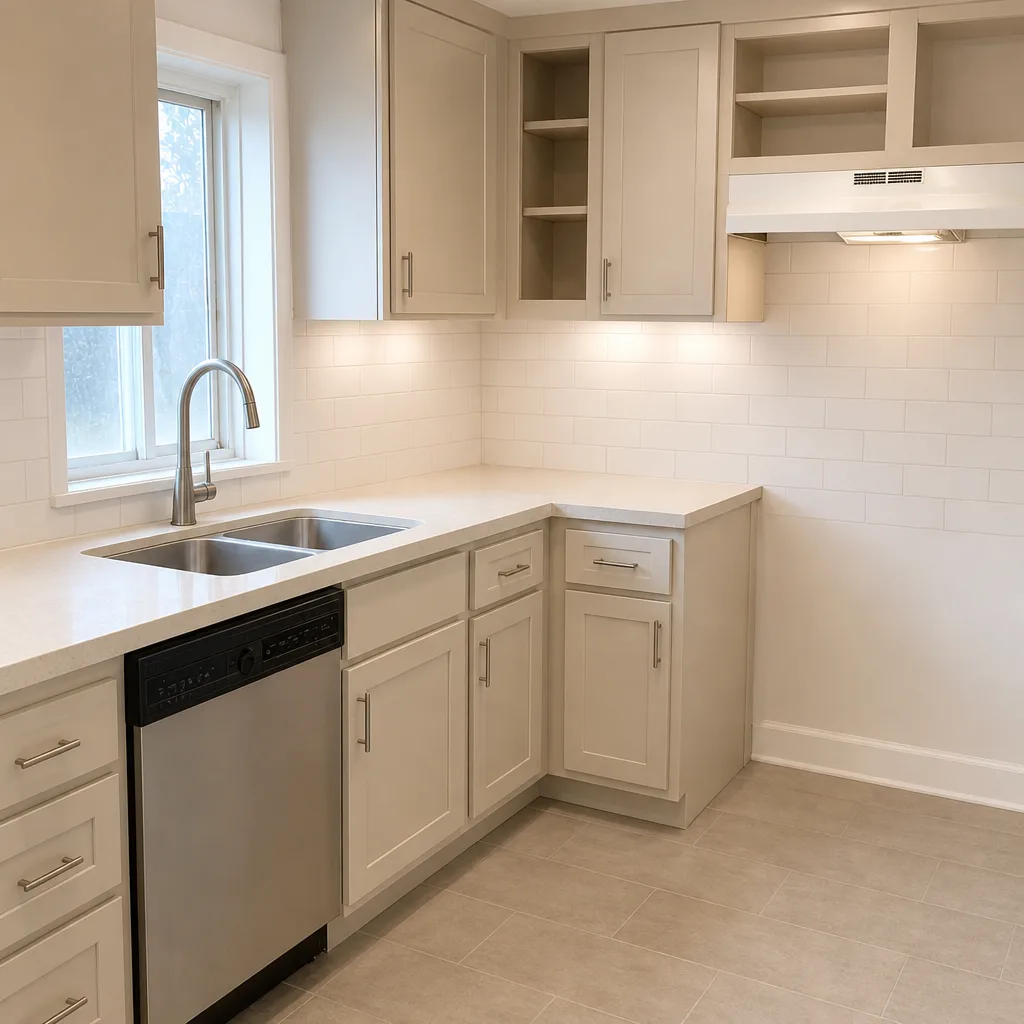 After
When to Call a Professional
Some projects are tempting to run yourself until you start pricing the consequences of a mistake. Any work touching electrical, gas, plumbing rough-in, or structural modification should go to a licensed professional, not a handyman and not a homeowner following a tutorial. Bathroom and kitchen remodels involving a permit and inspection belong with a licensed general contractor who will pull the permit and pass the inspection. Whole-home renovations, additions that expand the footprint, and exterior work governed by local code all warrant a general contractor as well.
Elmstead Remodeling Mesquite offers free estimates in Mesquite for general contracting, bathroom remodeling, kitchen remodeling, and whole-home remodeling. Call (833) 620-6606 and we’ll walk through the written price before any work starts, including a clear scope and no-hassle upfront pricing.
Frequently Asked Questions

The biggest red flag is a contractor who resists putting the scope, price, payment schedule, and warranty in writing. That resistance is not flexibility or trust, it’s the removal of the documentation that would protect you if anything goes wrong. A contractor with a functioning system will always offer the paperwork first, without being asked.
A deposit of 10 to 20 percent is standard for residential work in Mesquite, tied to a signed contract and a written payment schedule. A contractor asking for 40 percent or more upfront is using your money to fund the job rather than to start it, and that’s a serious red flag. Call (833) 620-6606 for a written quote that spells out the payment schedule before you commit.
Yes, you do. Nevada requires separate licenses for each trade, and if an unlicensed subcontractor is injured or causes damage on your property, you can be exposed to the liability that should have stayed with the contractor. Ask for a written subcontractor list and verify each license separately on the Nevada State Contractors Board website before work starts.
It shouldn’t. A legitimate bid includes a written price that reflects the actual materials and scope, with allowances that match real product prices. If the bid the contractor signs matches the contract and the allowances are realistic, there’s no reason for the price to grow after work starts. Any legitimate change should come with a written fix-it price you approve before work resumes.
A full bathroom remodel in Mesquite usually takes three to five weeks, longer if tile work and plumbing relocation are extensive. If a contractor quotes you a shorter timeline than that without simplifying the scope, or if the timeline shifts repeatedly after signing, ask to see a written schedule. Call (833) 620-6606 for a realistic timeline and a written price before any work starts.
Yes, a licensed general contractor should pull the permits for any project that requires them, including bathroom and kitchen remodels that touch plumbing or electrical. If a contractor suggests skipping the permit to save time or money, that’s a warning sign about how the rest of the job will go. Pulling the permit and passing the inspection protects the resale value of your home as much as it protects you during the remodel.
The Bottom Line
The warning signs that matter aren’t the dramatic ones. They’re the procedural gaps: no written contract, no itemized scope, no allowance detail, no confirmed subcontractor licensing, no visible site protocol. Those gaps look like flexibility and turn into change orders, delays, and damage. If a contractor won’t document the job, don’t hire him. If he will, read the paperwork line by line before you sign, and treat every verbal promise as something that needs to appear in writing. The best defense in a Mesquite remodel is a written price, a written scope, and a site you can walk during the job. Elmstead Remodeling Mesquite offers free estimates on general contracting, bathroom, kitchen, and whole-home projects.
Call (833) 620-6606 for a free estimate – a written price before any work starts, on every project, every time.
Written by the team at Elmstead Remodeling Mesquite.