Last updated November 18, 2026








Free written scope consultation - allowances, timeline, and change-order rules on paper before a single trade is scheduled
Construction Emergency Preparedness Guide for Mesquite Homes
A Mesquite home without air conditioning in July is not an inconvenience. It reaches interior temperatures dangerous for children and pets within about four hours of an HVAC failure, and that single fact reshapes what “emergency preparedness” means in the desert. Most guides hand you a checklist built for humid climates and call it done. This one is built for the emergencies that actually happen here: monsoon water pushing into stucco and foam-insulated walls, sudden cooling loss in triple-digit heat, and a breach that opens the wall cavity to 110°F air. By the end, you’ll have a ranked emergency hierarchy, a documentation checklist, a first-60-minutes water plan, and a family communication template you can fill in tonight.
Quick Answer
In Mesquite, rank your construction emergencies by time-to-damage, not by how loud they are. HVAC loss in extreme heat is a health emergency that becomes dangerous within hours, monsoon water intrusion damages wall assemblies within days if not dried, and a stucco breach weakens the building envelope over weeks. Call for the medical-risk item first, document everything with photos, and always know where your shutoffs are before you need them. Preparing now is a health decision, not just a maintenance one.
Styles & brands we work with
- Kitchen remodeling
- Bathroom remodeling
- Home additions & ADU
- Roofing
- Windows & doors
- Driveway & pavers
- Fence
Table of Contents
- The Mesquite Emergency Hierarchy: What to Call First
- HVAC Failure in Extreme Heat: A Health Emergency, Not a Comfort One
- Monsoon Water Intrusion: What to Do in the First 60 Minutes
- Stucco Breach and the Desert Wall Assembly
- The Pre-Emergency Documentation Checklist
- Nevada Contractor Emergency Call Protocols: Warranty vs. New Service
- Family Communication Plan: Two-Parent and Single-Parent Templates
The Mesquite Emergency Hierarchy: What to Call First
When three things go wrong at once during a monsoon afternoon, the order you make calls in matters as much as who you call. We rank Mesquite emergencies by time-to-damage, the window before a problem turns into a larger, costlier repair.
Here’s the hierarchy, fastest damage first:
- HVAC failure in extreme heat (dangerous within hours). Interior temperatures climb fast enough that children, elderly family members, and pets are at real risk. Treat this as a health call, not a comfort call.
- Monsoon water intrusion (damage within days). Water pushed into stucco and insulated wall cavities can sit against framing and drywall for 48 to 72 hours before visible damage appears. The clock starts the moment it enters.
- Stucco breach exposing wall cavity (damage over weeks). A crack or hole lets 110°F air and UV into the assembly, and the interior cools and heats unevenly. This is serious but rarely same-hour.
- Cosmetic or scheduling issues (no time-to-damage clock). Broken trim, a stalled project, a faucet drip that keeps a towel under it. These can wait for a scheduled visit and a written price.
In our experience across Mesquite neighborhoods, families who work the hierarchy in this order avoid most of the secondary damage that turns a small event into a five-figure remodel. The hierarchy is also what lets you stay calm: you already know what’s first.
HVAC Failure in Extreme Heat: A Health Emergency, Not a Comfort One
When a cooling system fails in Mesquite in July, the indoor temperature can climb toward danger within about four hours. That’s the number to hold onto. A house that’s 78°F at 9 a.m. can push past 95°F inside by early afternoon with no functioning air conditioning and closed windows.
What to do in the first hour, in order:
- Move children and pets to a cool room or to a relative, neighbor, or cooling center. This is the health call, and you make it before you make the service call.
- Close blinds and curtains on sun-facing windows to cut the solar load. In a Mesquite house with west-facing glass, this alone slows the climb.
- Call for HVAC service and be specific. Say “cooling failure in extreme heat, family with children and pets” so the call is prioritized correctly.
- Document the failure time and indoor temperature with a photo of a thermometer. That timestamp helps with any later warranty or insurance conversation.
Then, once the household is safe and service is scheduled, take the longer view. A sudden cooling loss often points to a component at the end of its life, and repeated failures signal a system that needs replacement before the next summer. That’s the moment a general contractor conversation belongs in the picture, since HVAC and envelope work are easier to sequence together with a General Contractor in Mesquite than as separate scramble visits.
Monsoon Water Intrusion: What to Do in the First 60 Minutes
A desert home handles water differently than a humid-climate house, and it’s why monsoon intrusion in Mesquite can be more deceptive, not less. Water that enters a stucco-clad, foam-insulated wall doesn’t soak into wood the way it does back east. It travels along the cavity, pools against a component, and hides. That’s why the first hour of response is mostly about stopping the source and starting the record, not about drying what you can see.
The first-60-minutes plan:
- Stop the water at its source. If it’s coming through a roof, window, or wall breach, do what you safely can to divert it or block it. Never stand in water near electrical fixtures.
- Photograph everything before you move a thing. Wide shots and close shots of the water line, the entry point, and the surrounding wall and floor.
- Move furniture, rugs, and electronics clear of wet areas, and lift what you can’t move onto blocks or towels.
- Note where water reappears on the interior side of the wall. In foam-insulated assemblies, the visible staining can be several feet from the actual entry.
- Call for water-intrusion assessment and tell them the wall construction: stucco with foam-insulated cavity. A crew that knows the desert wall assembly will check the cavity, not just the finish.
Here’s the counterintuitive part: because the moisture hides in the cavity, the absence of a puddle is not reassurance. If you saw water inside a Mesquite home after a storm, get it looked at before you close the wall back up. We’ve seen small monsoon events turn into framing repairs because the wall was patched over while it was still wet. Bathroom and kitchen wall assemblies share this cavity logic, which is one reason we treat a water event as a whole-house question before anyone quotes a repair.
Stucco Breach and the Desert Wall Assembly
A cracked or damaged stucco wall looks cosmetic until you think about what it’s exposed to. In Mesquite, a breach opens the wall cavity to 110°F air and intense UV, and the building envelope starts to fail from the inside out. The interior pre-monsoon is the season to fix these; the middle of a heat wave is not when you want a thermal weak point.
Signs of a breach that needs attention:
- Hairline or spiderweb cracking, especially over a two-story or large flat wall.
- Soft or hollow-sounding stucco when tapped, which can signal that the base coat has separated.
- Staining or efflorescence on the stucco surface, which can indicate moisture movement behind it.
- A visible hole, chip, or gap around a window or door frame.
On how it’s repaired: this is not a job to sand and paint over. Proper stucco repair involves removing the failed section back to sound substrate, checking the cavity for moisture, and rebuilding the layers so the assembly keeps out heat and water. The exterior products matter, and it’s why we work with named-brand manufacturers like James Hardie when a section needs replacement instead of patch. A repaired envelope that holds, from a Bathroom Remodeling in Mesquite tile job all the way out to the exterior wall, is what keeps the interior comfortable through a Mesquite summer.
The Pre-Emergency Documentation Checklist
The single fastest way to speed up every contractor visit is a folder of photos taken before anything goes wrong. A technician who knows where the shutoffs are and what the panel looks like works faster and asks fewer questions. Do this once, in daylight, and you’ll use it for years.
The checklist:
- Photograph every utility shutoff. Main water valve, water heater supply, gas meter valve if you have one, and any secondary valves under sinks.
- Photograph the electrical panel with every breaker labeled. A clear, current photo of a labeled panel is worth its weight in an emergency.
- Photograph attic and crawlspace access points from outside and inside, so a crew knows the route into the wall cavity.
- Photograph the HVAC equipment and its model plate. Model and serial numbers are what a service call needs first.
- List your brand-name materials. Cabinets from KraftMaid or Wellborn, countertops from Silestone, fixtures from Kohler or Moen. Their names are what let a contractor order the right replacement part and preserve the manufacturer warranty.
- Store the folder in two places: a shared phone album and a printed copy in a drawer.
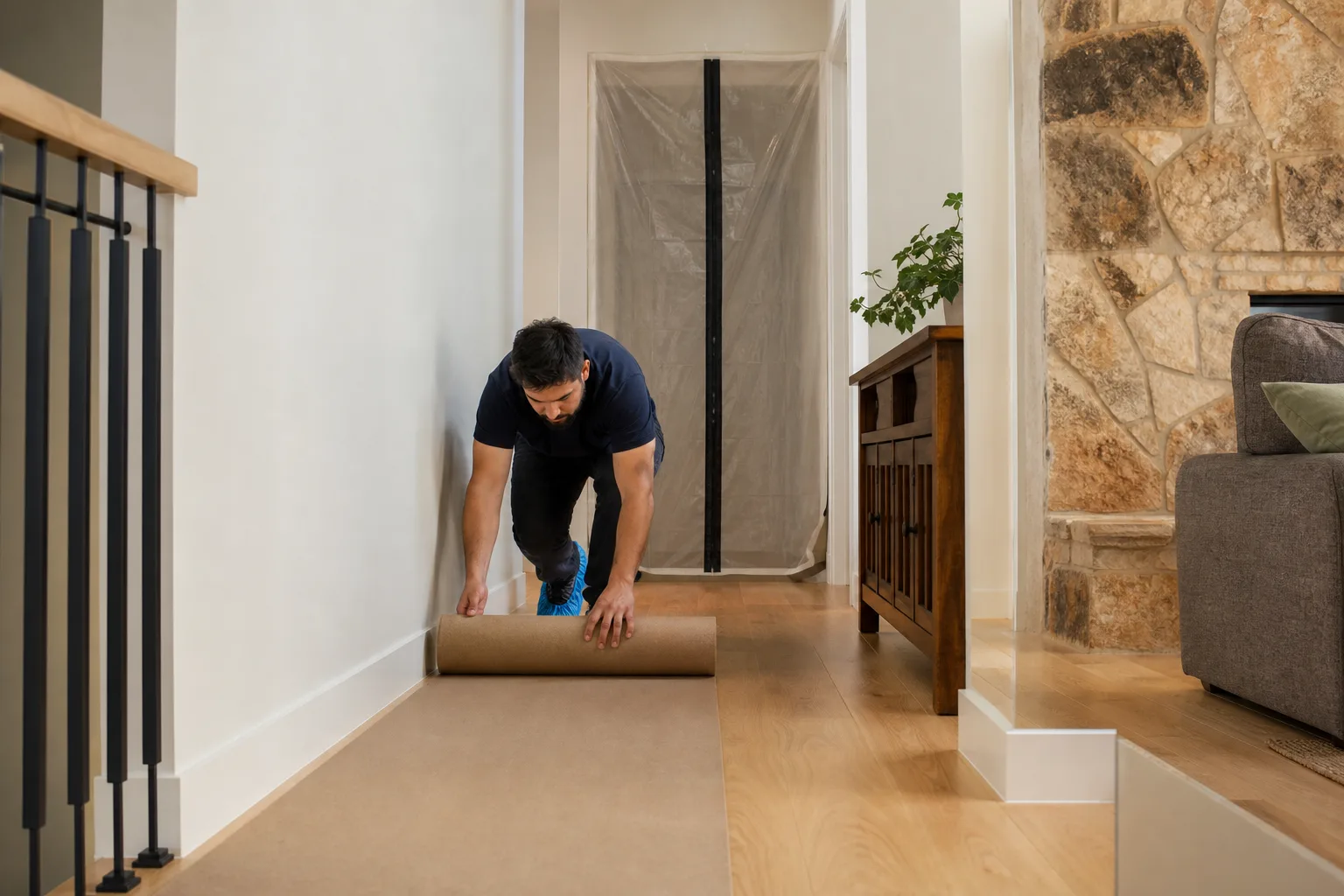
This is the kind of quiet preparation a home deserved well before it was tested, and it’s the same care we bring into the house on a planned job, drop cloths and all.
Nevada Contractor Emergency Call Protocols: Warranty vs. New Service
When you call a contractor during an emergency, knowing what’s covered under an active warranty versus what starts a new service agreement keeps the call short and the conversation honest. Here’s how it works in practice.
Under an active warranty, a licensed contractor is obligated to respond to failures of the work they performed within the covered period. If a wall they rebuilt or a system they installed fails, the response is a service visit to assess and make it right, not a new estimate. That’s the logic behind our own 365-Day Done Right Promise: if it’s not done right after the job is complete, we make it right. When you call, name the original project, the date it was completed, and what’s failing.
Outside a warranty, the emergency is a new service agreement, and the first conversation is about scope and price. That’s when a written price before any work starts matters most. A reputable local pro will give you a written price before the work begins, and that number should hold.
The legal basics:
- The contractor must be licensed to work in Nevada and to perform the specific trade involved.
- The local pro is licensed and insured as their state requires, and you can ask for that proof before work starts.
- Emergency response under a warranty is a contractual duty, not a favor, so keep the original paperwork in your documentation folder.
One word of caution: never let an emergency become a reason to skip the written price. A contractor who won’t put a number in writing before starting isn’t one you want in the house, no matter how urgent the moment feels.
Family Communication Plan: Two-Parent and Single-Parent Templates
In an actual emergency, the household that knows who does what moves faster and argues less. The template below works for a two-parent home; the single-parent version is built to be honest about needing an outside call.
For a two-parent household:
- Parent A: calls the contractor or HVAC service, gives the address, describes the problem, and stays on the line for instructions.
- Parent B: takes children and pets to a safe location (a room, a relative, a cooling center in a heat event).
- One parent (the one not on the contractor call) documents damage for insurance with photos and notes.
- Whoever arrives home first checks the shutoffs and does any safe source-stopping.
For a single-parent household:
- You call the contractor, but your first action is moving children and pets to safety. Make the call from the safe location.
- Have a named backup person on standby: a neighbor, a family member, or a friend who has agreed in advance to help with the kids and pets.
- Document after the danger is handled. The photos can wait ten minutes; the kids can’t.
Fill this in with real names, real phone numbers, and the real location of each shutoff, and print a copy for the fridge. Do it for every household member, and do it before you need it.
Common Mistakes to Avoid
We’ve seen these repeatedly, and each one is fixable in advance:
- Calling the wrong trade first. A monsoon water event at 6 p.m. gets an HVAC call when the water is still entering. Rank by time-to-damage, not by which problem is noisiest.
- Patching a wet wall. Closing up a wall that’s still wet from a monsoon hides the moisture and invites a larger framing repair. Check the cavity before the finish goes back on.
- Waiting on stucco. A small crack in June becomes a cavity full of 110°F air by August. Fix the envelope in the shoulder season, not during a heat wave.
- Skipping the written price in a hurry. Emergencies are exactly when a verbal estimate grows into a bigger bill. Get the number before the work.
- Guessing at brand names. A replacement countertop or fixture that doesn’t match the original Silestone or Moen part voids the manufacturer warranty. Photograph the model plate and keep it in the folder.
- Confusing warranty response with a free repair. A warranty covers the contractor’s own work; it doesn’t cover an unrelated failure. Read what’s covered before you call.
- Leaving the family plan in your head. In a real emergency, nobody remembers who does what. Write it down and print it.
See the difference
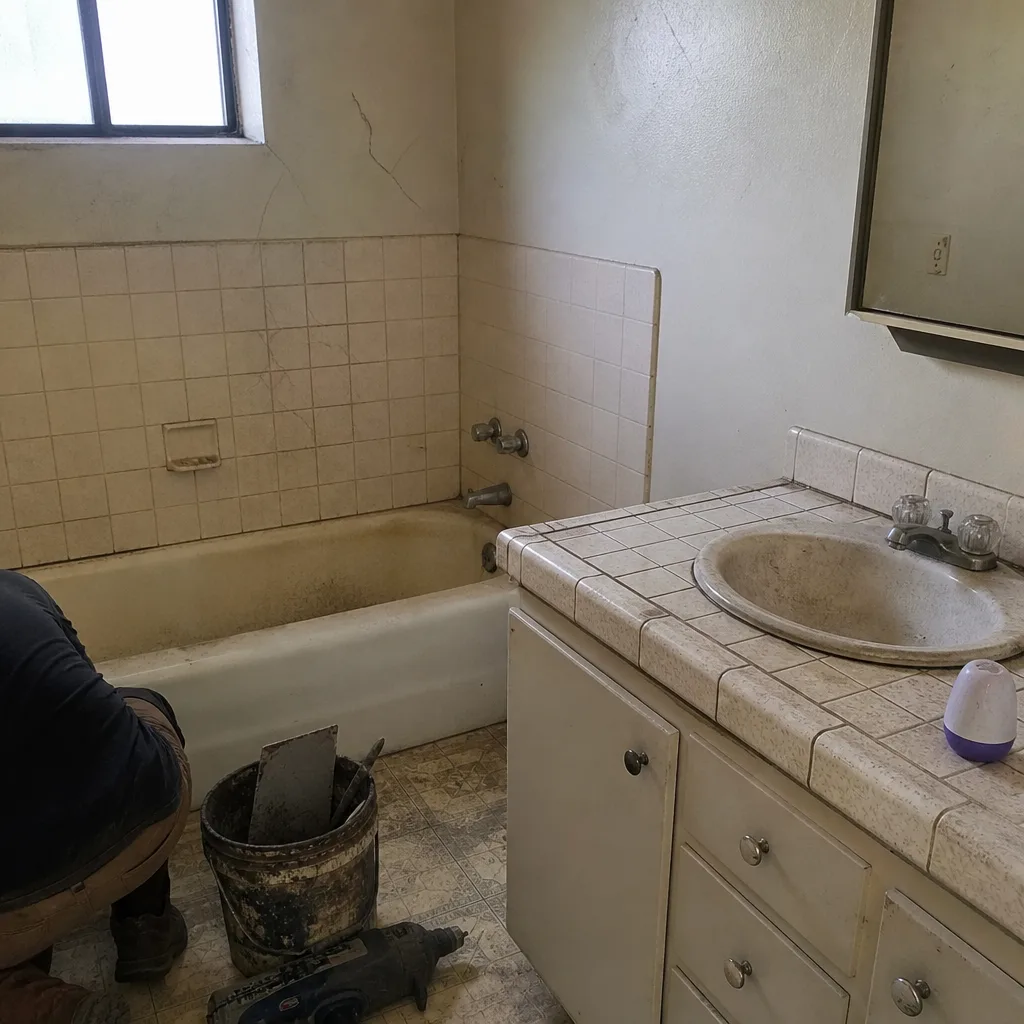 Before
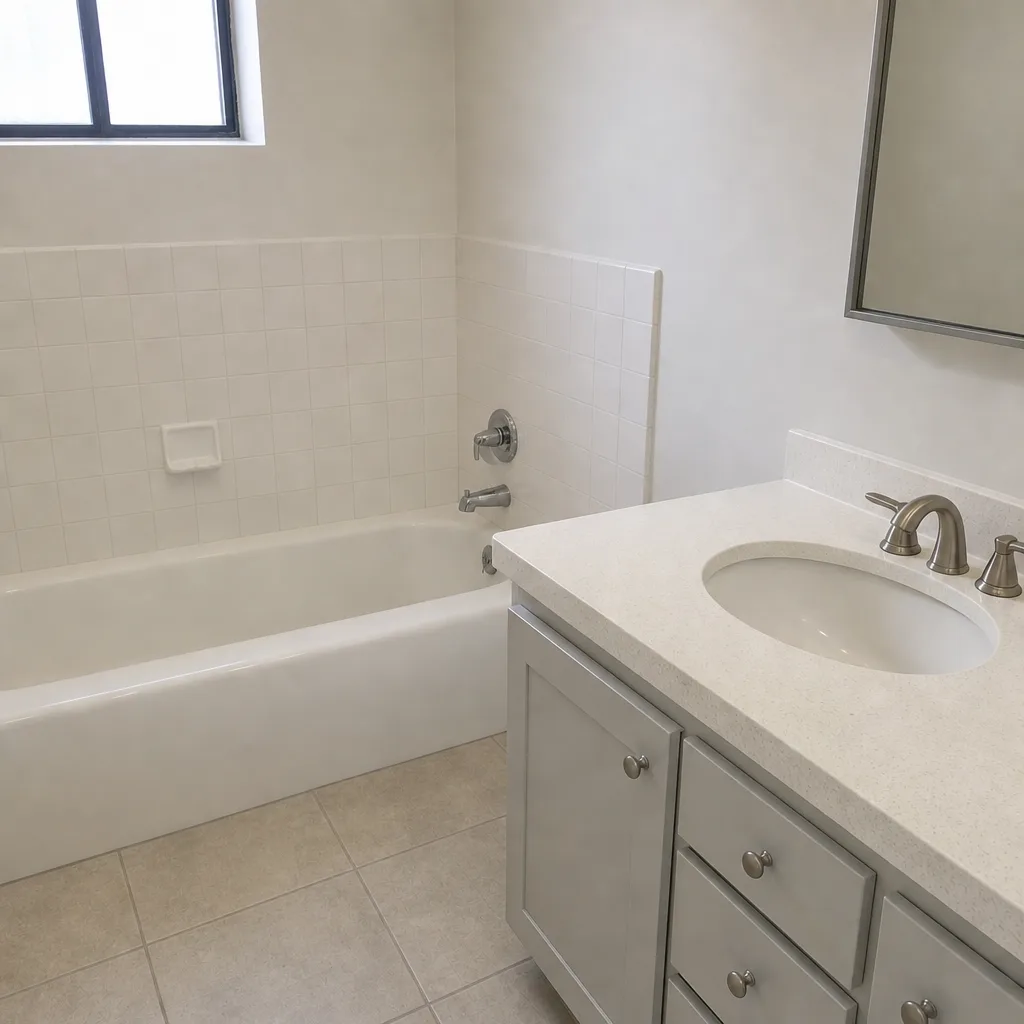 After
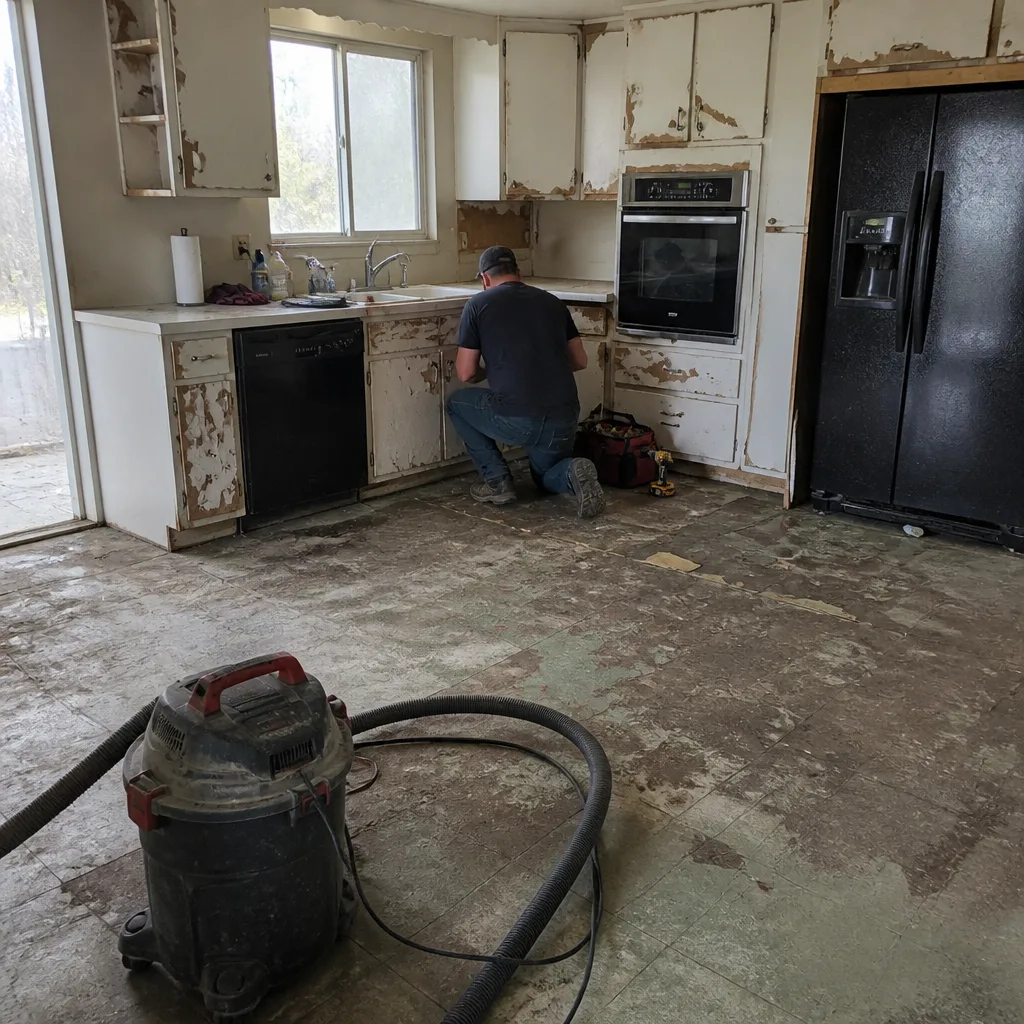 Before
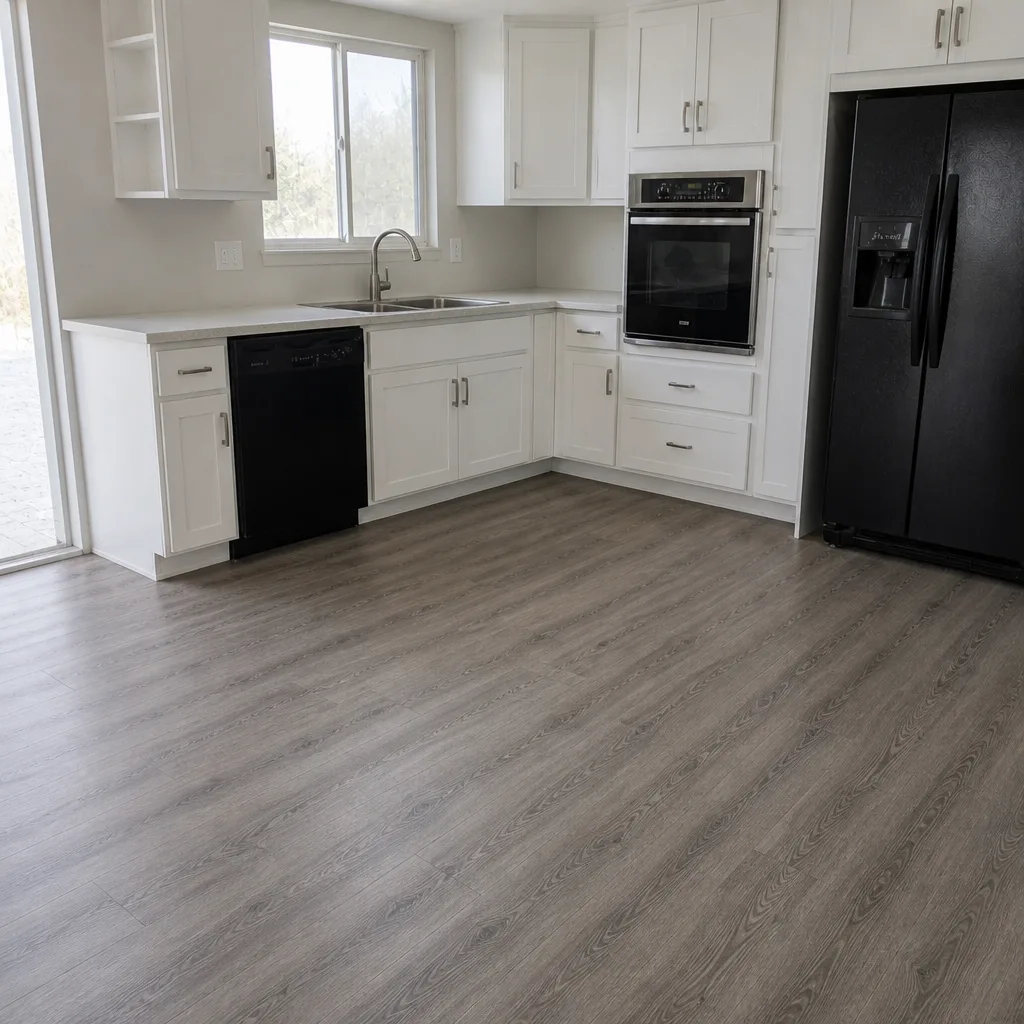 After
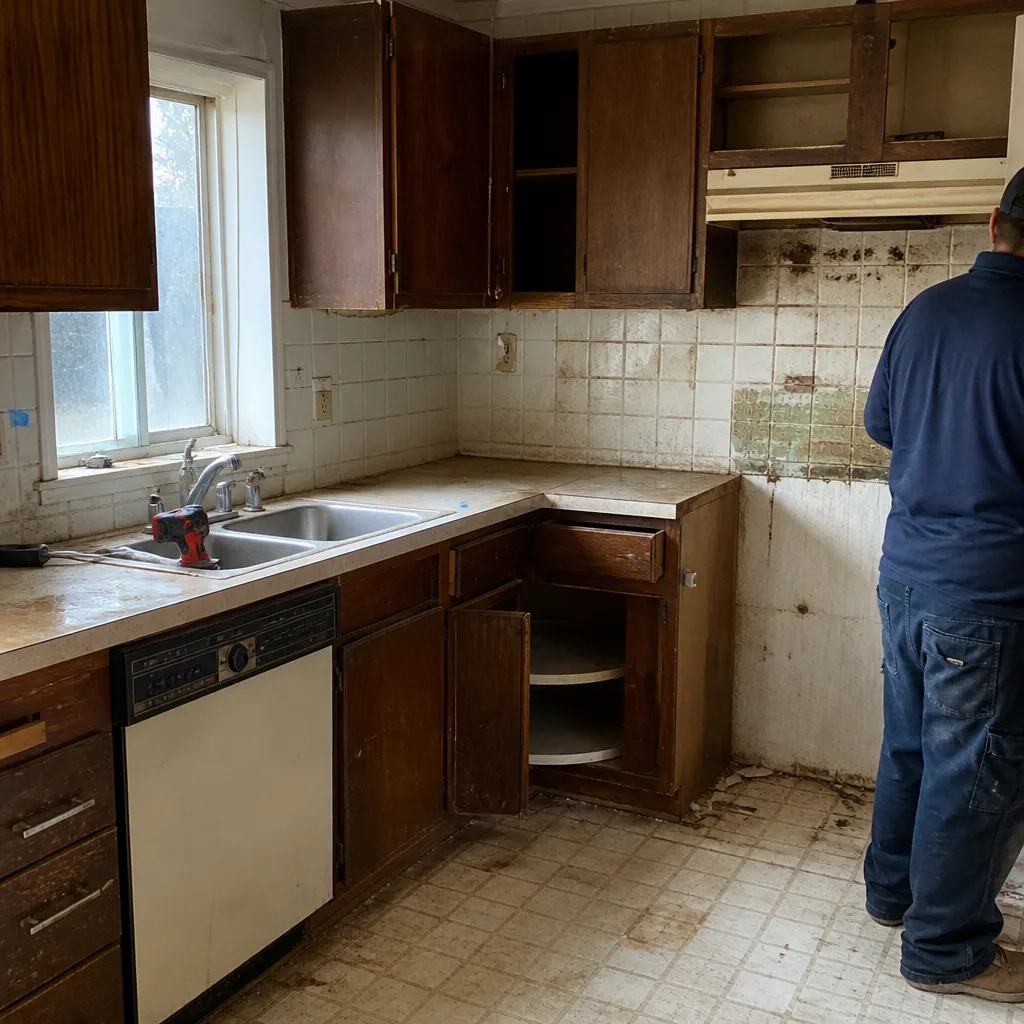 Before
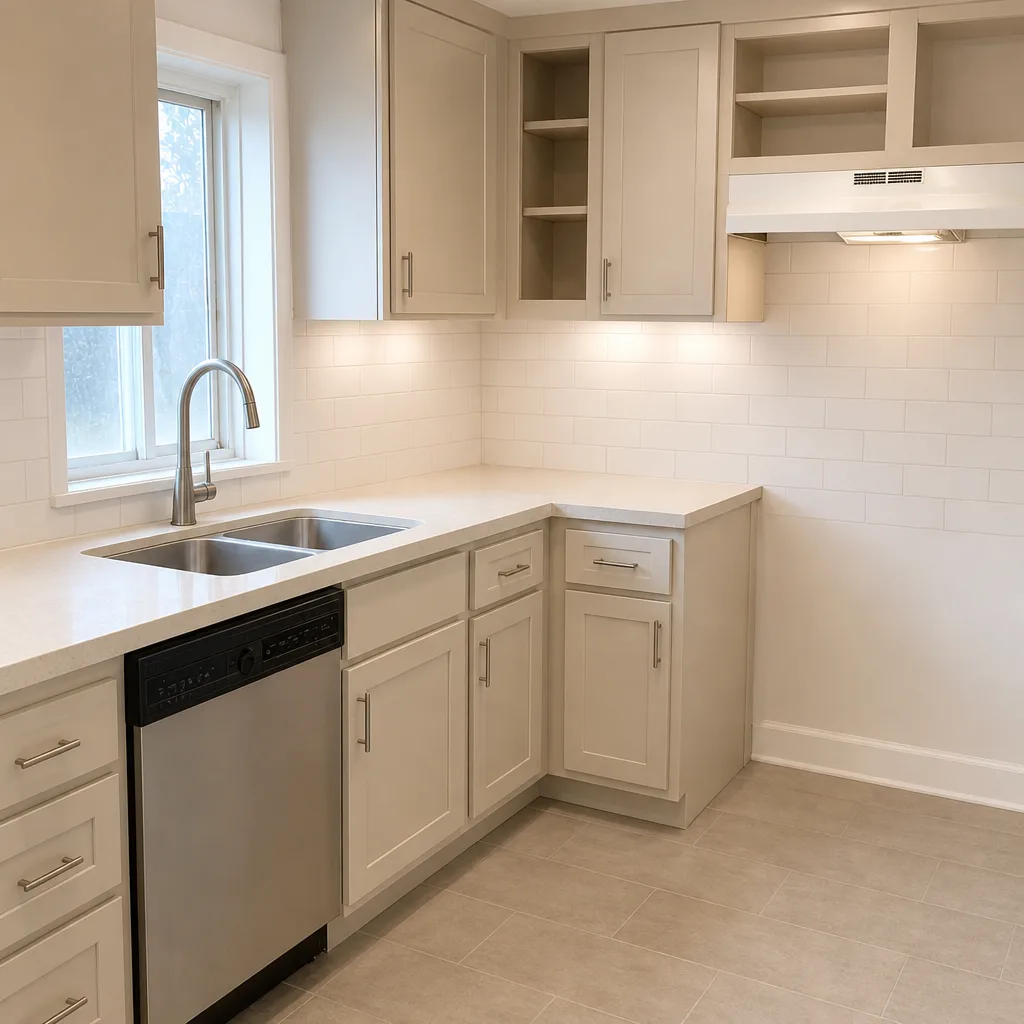 After
When to Call a Professional
Call a professional when the damage has reached the building assembly, not just the surface. A stucco breach that exposes the cavity, a monsoon intrusion that reached the interior wall, a cooling failure that signals an aging system, or any repair that requires opening a wall or pulling a permit. Those are jobs for a trained professional, and getting the help early is the cheapest path, not the most expensive. Here’s when to stop trying to triage and call. For anything on this list, Elmstead Remodeling Mesquite offers free estimates in Mesquite, so a written price is the first thing you get and the surprise is removed. Call (833) 620-6606 and a live person answers, any hour, with no voicemail and no next-business-day callback. We’ll look at the whole picture the way we’d want our own home looked at, drop cloths on the floors on every job and shoe covers at the door, and we’ll explain the price before any work starts.
If you’re planning a larger repair or a Kitchen Remodeling in Mesquite alongside the fix, the same care applies to the sequence: protect the family’s daily routine, choose materials with warranties that travel, and put the price in writing first.
Frequently Asked Questions
Call HVAC failure and medical-risk hazards first. In extreme heat, loss of cooling can push interior conditions into the danger zone for children and pets within about four hours, so the health call is first. Water intrusion and stucco breaches are serious but follow on their own time-to-damage clock, measured in days and weeks rather than hours. Call (833) 620-6606 for an exact quote on any repair, and estimates are free.
Monsoon water in a desert home hides and travels further inside the wall than it does in humid climates. Stucco-clad, foam-insulated assemblies let water move along the cavity and pool against a component, so the visible stain can be feet from the actual entry. That’s why the first hour is about stopping the source and photographing it, and why the cavity needs a professional check before the wall is closed. Call (833) 620-6606 to schedule an assessment.
A stucco crack is not usually a same-hour emergency, but leaving it through the heat season is a mistake. A breach lets 110°F air and UV into the cavity and weakens the envelope from the inside. It’s a fix-it-now-in-the-shoulder-season item, not a patch-and-paint job. Call (833) 620-6606 for a written estimate on proper stucco repair.
Emergency repair costs in Mesquite depend on the assembly involved, and the honest answer is that a written price before work starts is the number that matters, not an average. For envelope and stucco repairs we quote after assessing the cavity; for water intrusion, after checking the wall. You get a written price before any work begins, every time. Call (833) 620-6606 for a free estimate.
No. The written price is the number you’ll pay, and it doesn’t grow after the crew arrives. If a repair reveals a larger issue that genuinely changes scope, we’ll stop, explain it, and re-price in writing before continuing. That’s the whole point of the written-price promise. Call (833) 620-6606 to schedule a free estimate.
Yes. Any repair that requires a permit under Nevada requirements is permitted, and the work is inspected, not rushed through because it’s an emergency. We’ll tell you up front which parts of your repair need a permit and handle the paperwork. Call (833) 620-6606 to talk through your project and get a written estimate.
The Bottom Line
Construction emergency preparedness in Mesquite is a hierarchy, a folder, and a family plan. Rank your emergencies by time-to-damage: HVAC loss first, monsoon water second, stucco breach third. Photograph your shutoffs and panel before you need them, and know that water in a desert wall hides and travels. Get the written price before any work starts, understand what’s covered under warranty versus what’s a new service, and write down who calls the contractor, who takes the kids and pets to safety, and who documents for insurance. The households that do this tonight are the ones who stay calm when Mesquite’s desert throws a real emergency at them. Elmstead Remodeling Mesquite is here to help, with free estimates and a live person on the line at (833) 620-6606.
Written by the team at Elmstead Remodeling Mesquite.
Ready to protect your home? Visit our Elmstead Remodeling Mesquite home to see the full range of general contracting, bathroom, kitchen, and whole-home remodeling we handle, all under the Cedarwell Care Promise.