Last updated November 18, 2026



Free written scope consultation - allowances, timeline, and change-order rules on paper before a single trade is scheduled
DIY vs Professional Bathroom Remodeling: What’s Safe to Do Yourself
A homeowner who sets their own shower tile can do it perfectly and still lose the waterproofing warranty underneath it. Many membrane manufacturers require certified installers to validate their coverage, which means the most expensive part of the job, the part you can’t see after the last grout line dries, can void out even when the tile work is flawless. That’s the sharp edge of DIY bathroom work, and it’s sharper here than in most rooms because water damage hides behind the walls and moves fast. This guide gives you the honest line: what you can safely do yourself in a bathroom remodel, what you can’t, and how Nevada’s licensing rules draw that line for you. We’ve walked Mesquite homeowners through both sides of it, and we’ll show you exactly where it sits.
Quick Answer
In Nevada, you can legally handle painting, accessory installation, mirror hanging, demo, and finish work in your own bathroom. You cannot legally do the plumbing or electrical work, including moving a fixture or adding a circuit, because Nevada requires a licensed contractor for both. DIY waterproofing in a wet area is the highest-risk decision in the whole project: it’s the one phase most likely to void a warranty and the one mistake you won’t see until the ceiling below stains.
Styles & brands we work with
- Kitchen remodeling
- Bathroom remodeling
- Home additions & ADU
- Roofing
- Windows & doors
- Driveway & pavers
- Fence
Table of Contents
- What Nevada Law Actually Requires in a Bathroom
- The Tasks Homeowners Can Safely Do Themselves
- Why Waterproofing Is the Highest-Risk DIY Decision
- Moving a Fixture: When It Triggers a Permit
- Cost Breakdown: Full DIY vs Partial vs Full Professional
- The Partial-DIY Sweet Spot
- How to Talk to a Contractor About DIY Phases
What Nevada Law Actually Requires in a Bathroom
Nevada draws a clear line, and it runs through the plumbing and the electrical. State law requires licensed contractors for both. The Nevada State Contractors Board licenses the work, and plumbing and electrical each carry their own licensing and inspection process on top of that. What that means for a Mesquite homeowner is simple to state: the pipes and the wires in your bathroom remodel belong to a licensed professional. Not because the work is too hard for a careful person, but because the permit, the inspection, and the insurance all depend on it.
Permits are the practical layer here. A cosmetic remodel (paint, tile, vanity swap, new mirror) often moves forward without a permit. A remodel that moves a drain, relocates a toilet, adds a circuit, or installs a new shower valve typically does require one, and the inspection that follows is what catches the mistake nobody would have noticed for six months. Mesquite’s building department follows the state code, and a permit pulled on a bathroom remodel is not bureaucracy, it’s the reason the shower doesn’t leak into the hallway in year three.
Here’s what the state requires, plainly:
- Plumbing: Licensed plumber required for all plumbing work, including fixture replacement and any change to supply or drain lines.
- Electrical: Licensed electrician required for all electrical work, including new outlets, GFCI installation, and lighting changes.
- Permits: Required whenever the work changes the structure, moves a fixture, or adds a circuit or fixture to an existing system.
If you want the full scope of what a compliant remodel looks like, our page on Bathroom Remodeling in Mesquite walks through the phases a licensed project covers, from demo to final inspection.
The Tasks Homeowners Can Safely Do Themselves
Plenty of the work is yours for the taking if you want it. These are the jobs that don’t touch the plumbing, don’t touch the wiring, and don’t create a permit problem if you handle them personally. In our experience in Mesquite, a homeowner doing the paint and the demo can save a real chunk of labor cost without putting the finished bathroom at risk.
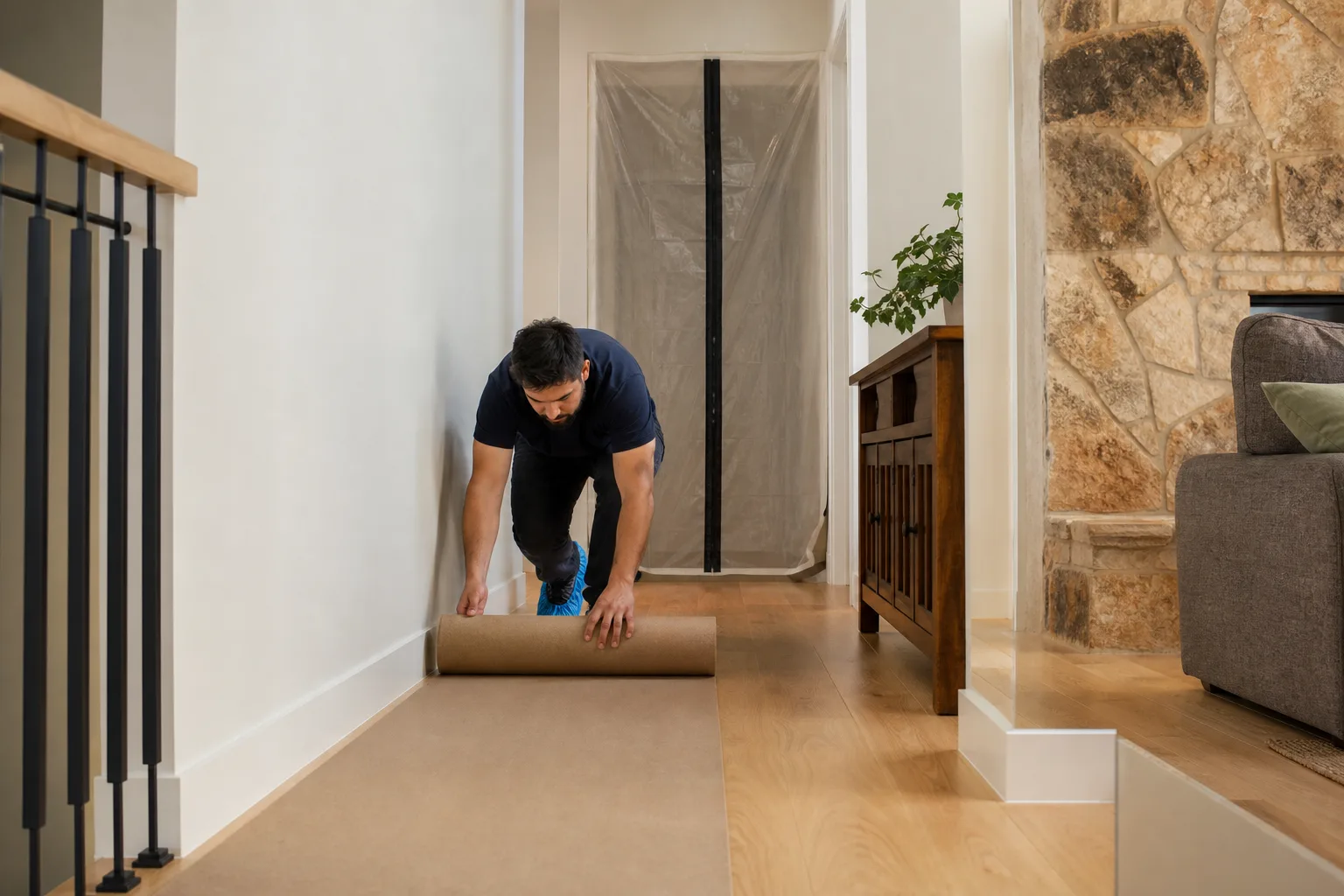
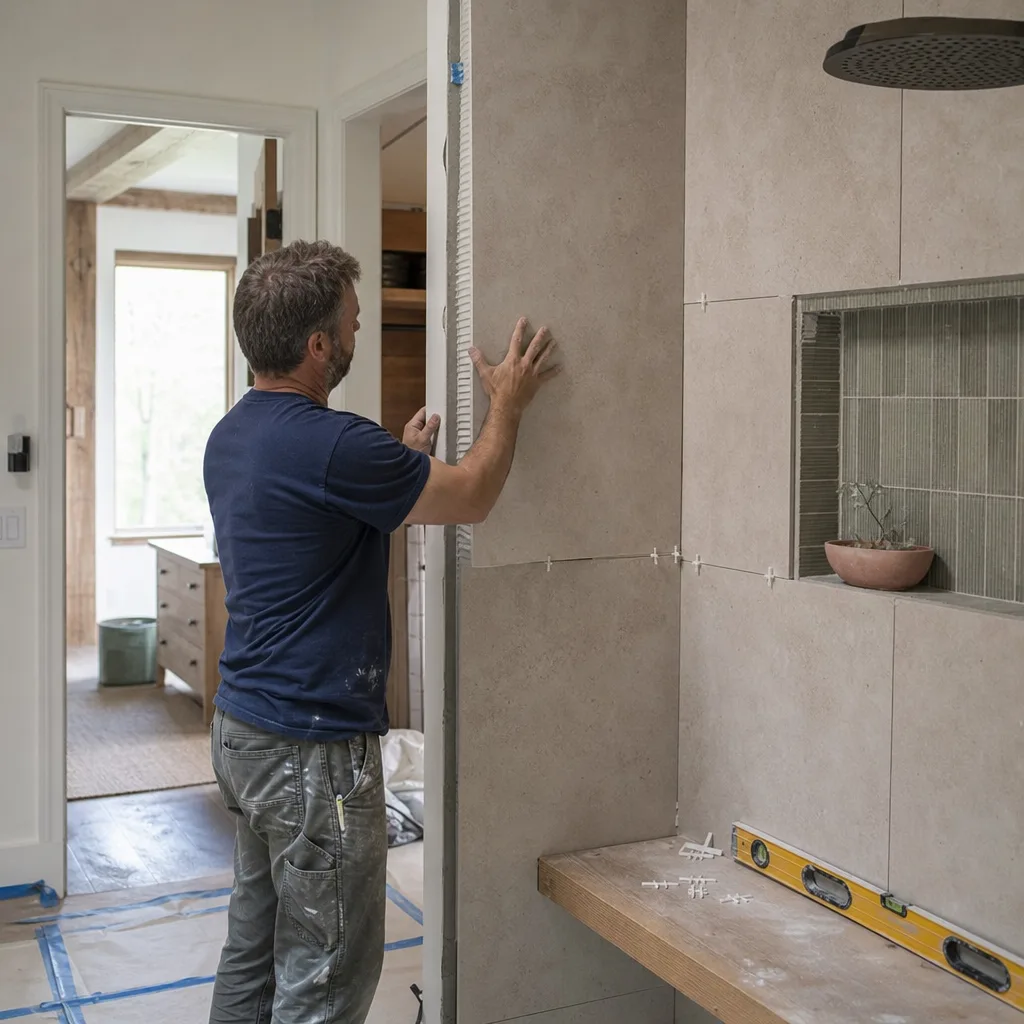
- Demo. Tearing out old tile, removing the vanity, and pulling up flooring is a legitimate weekend job. Wear eye protection, keep a shop vac running, and know where the water shutoff is before you swing a hammer.
- Painting. Walls, ceilings, and trim. This is the highest-visibility, lowest-risk task in the room. Use a bathroom-grade paint with mildew resistance.
- Accessory installation. Towel bars, robe hooks, toilet paper holders, shower shelves, and a new shower curtain rod, as long as you anchor into solid blocking or use the right hardware for the wall material.
- Mirror hanging. A vanity mirror is a two-person job but a safe one, as long as you find the studs and use hardware rated for the weight.
- Bathroom caulking. Recaulking the tub surround and the baseboards is fine to do yourself, and it’s worth doing thoroughly. Use a silicone caulk with mold resistance.
- Furnishings and finishing touches. Hardware, shelves, and the new towel set are yours.
Notice what isn’t on that list: anything that touches water or electricity. That’s not because a homeowner can’t learn to sweat a pipe. It’s because the moment you touch the plumbing, the insurance, the permit, and the warranty all change hands.
Why Waterproofing Is the Highest-Risk DIY Decision
Waterproofing is where a bathroom remodel differs from a kitchen or a bedroom. A bad paint job shows up as peeling within a month. A bad waterproofing job shows up as a soft spot in the subfloor, a moldy smell, or a water stain on the dining room ceiling, usually a year later, always after the tile is paid for and the warranty has run out. The membrane is buried. You don’t get a second look at it.
Manufacturer warranties follow installer certification, and many of the major waterproofing brands won’t honor a product warranty unless the installation is done by someone the manufacturer has certified. So the DIY shower that looks perfect on the surface can be, from a warranty standpoint, a product that doesn’t exist. That’s the risk most homeowners miss: they compare the cost of the tile set against the labor bid and skip the part where the membrane under the tile carries its own warranty, and its own requirements.
What to look for in a professional waterproofing installation:
- A licensed installer whose name appears on the manufacturer’s certified list, not just the contractor’s word that they’ve done it before.
- A specified membrane brand, named up front, and the manufacturer’s installation instructions followed as written.
- A pre-tile inspection, or at least a documented photo of the sealed pan and walls before the tile goes in.
- A flood test on the pan in a shower remodel: plug the drain, fill to the curb, let it sit, verify no leaks. It’s the one step that catches a bad pan before it becomes someone’s problem.
- A written install warranty from the installer on top of the manufacturer’s warranty.
If you want the whole-project view, Elmstead Remodeling Mesquite is a sensible place to start, and the same waterproofing standard applies to every wet area in the home, including the kitchen backsplash.
Moving a Fixture: When It Triggers a Permit
Replacing a fixture and moving one are two different things, and the difference matters for permits. A homeowner can typically replace a toilet or a vanity with a like-for-like fit without a permit, though the plumbing work still falls under the licensed-plumber requirement. But move that toilet six inches to the left, or shift the shower drain, or add a freestanding tub where the old alcove used to be, and the work changes the drain and supply lines underneath the floor. The permit requirement follows the plumbing change, not the fixture.
Here’s a simple way to think about it:
- Fixture replacement, same location: Usually no permit. Plumbing work still requires a licensed plumber.
- Fixture relocated: Permit required. Drain and supply lines change.
- New fixture (added shower, second sink, freestanding tub): Permit required, and a licensed plumber to route the new lines.
- New circuit, new outlet, new GFCI: Permit and licensed electrician required. No exceptions.
Mesquite homeowners run into this most often on tub-to-shower conversions. The fixture moves out, the drain needs reworking, and the permit is the thing that tells you the slope is right before the tile gets installed over it. If you’re planning a larger scope across the house, our General Contractor in Mesquite page covers how permits and inspections are sequenced across a full project.
Cost Breakdown: Full DIY vs Partial vs Full Professional
The numbers below are typical ranges for a Mesquite bathroom remodel in the mid-market range. Actual prices vary with bathroom size, finish level, and the condition of the plumbing and substrate once the walls are open. These are ranges, not quotes, and the hidden costs are where the real comparison lives.
| Approach | Typical Project Cost | What’s Included | Hidden Costs |
|---|---|---|---|
| Full DIY | Materials only: roughly $4,000-$9,000 | You do demo, plumbing rough-in (if licensed), electrical, waterproofing, tile, paint, fixtures | Permit delays, lost warranty on waterproofing and fixtures, redo costs, tool purchases, your labor hours |
| Partial DIY (you demo and paint) | Roughly $12,000-$20,000 | Contractor handles plumbing, electrical, waterproofing, tile, install; you save on demo and paint | Minor: mostly the time you spend on the demo and paint, and any damage to substrate during demo |
| Full Professional | Roughly $15,000-$28,000 | Design, permits, plumbing, electrical, waterproofing, tile, cabinetry, fixtures, paint, clean-up | None beyond the written price: all phases covered, all warranties in place |
The comparison most homeowners forget is the cost of a redo. A failed shower pan runs several thousand dollars to repair, plus the tile, plus the interior damage below. The savings from a full DIY approach are real, but they only survive the first year if every phase goes perfectly. The partial approach, where you keep the low-risk work and hand off the high-risk phases, is the version that holds up. Nevada law also means the full-DIY path isn’t actually available for the plumbing and electrical sides, so the “savings” in that row are partly imaginary unless you’re working with a licensed plumber and electrician on the hard phases anyway.
If your remodel includes the kitchen, our Kitchen Remodeling in Mesquite page covers the equivalent boundary there: the same waterproofing rule applies to a kitchen backsplash and the same permit rules apply to a relocated sink.
The Partial-DIY Sweet Spot
The best fit for a Mesquite family that wants to keep some hands-on work is the partial approach. You take the demo and the paint, the contractor takes the plumbing, electrical, waterproofing, tile, and installs. You save real money on labor, you keep the project inside a warranty, and you don’t own the part of the job that carries the most downside risk if it goes wrong.
What a partial approach looks like in sequence:
- Homeowner: Clear the room, remove the old vanity and fixtures, take out tile, take up flooring. Bag the debris for haul-away.
- Contractor: Open the walls, rough in plumbing and electrical, inspect and repair any rot or soft substrate discovered during demo.
- Contractor: Install waterproofing membrane, flood test the shower pan, document with photos before tile goes in.
- Contractor: Set tile, grout, and seal.
- Contractor: Install cabinetry, countertop, and fixtures. Named-brand products from KraftMaid, Kohler, Moen, and Cambria all come with warranties that travel with the finished project.
- Homeowner: Paint the freshly finished walls, hang the mirror, install accessories, caulk the trim.
- Contractor: Final walk-through, clean-up photo before the crew leaves, sign-off on the 365-Day Done Right Promise.
That sequence keeps the homeowner’s labor on the tasks that are safe, low-risk, and genuinely useful. In our experience in Mesquite, families with young children often take this exact path during summer break, working the demo on a weekend when the kids are at grandparents, then handing the room back to the crew for the phases that involve water and electricity.
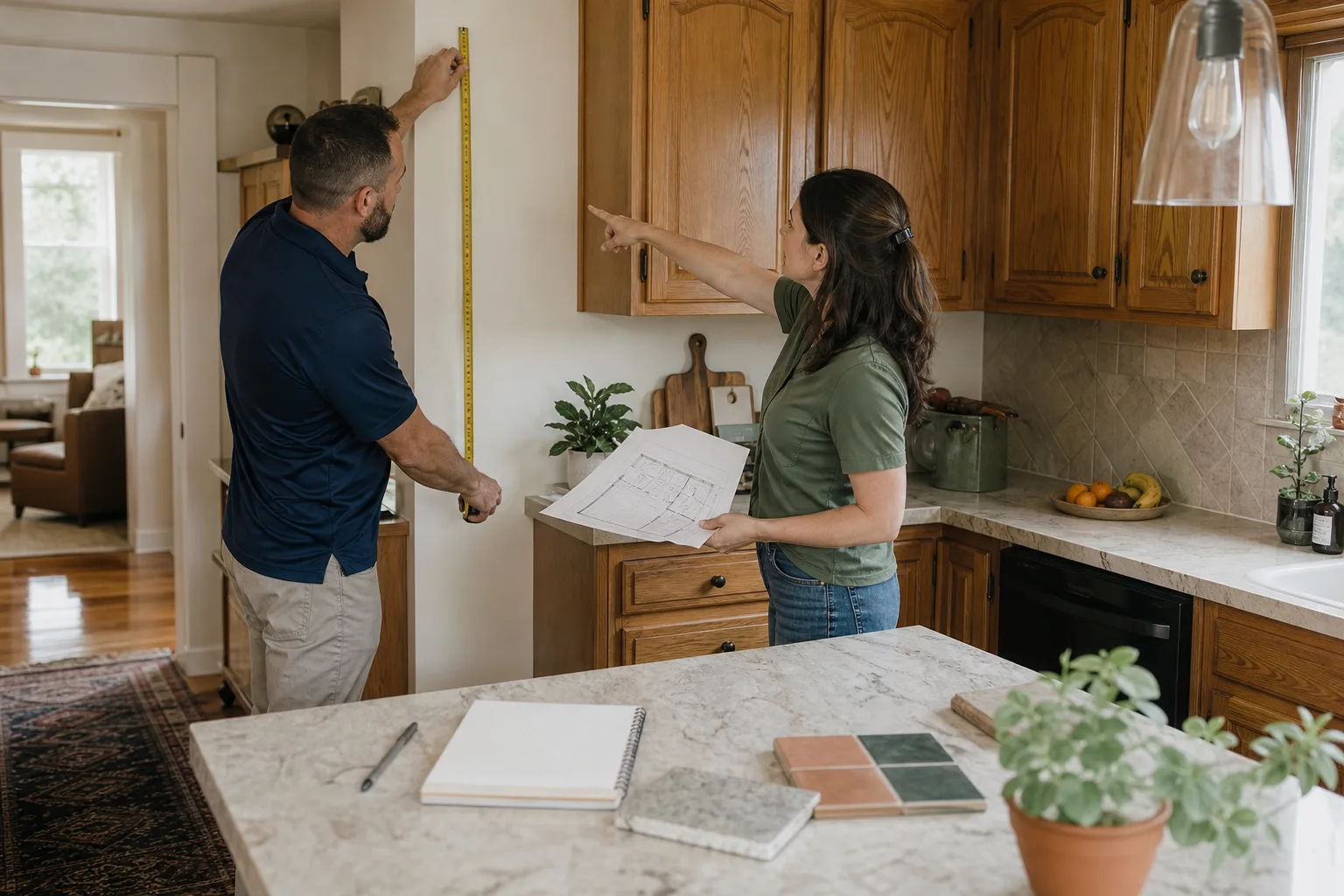
How to Talk to a Contractor About DIY Phases
Most contractors will hear you out on a partial-DIY arrangement, and the conversation itself tells you a lot about who you’re hiring. A contractor who welcomes it has confidence in the phases they’re responsible for. A contractor who shuts the conversation down cold usually doesn’t want the work split because they lose visibility into the whole job, and while that can be a legitimate concern, it’s worth naming explicitly.
What to ask, in order:
- Which phases are you comfortable with us handling? A confident contractor can name them on the spot: demo, paint, accessories, mirror, caulking.
- What’s the warranty situation if we do the paint? Paint is usually fine. Anything that touches water or electricity should stay on the contractor’s side of the line.
- How does the written price work if we split the scope? You want a written price before any work starts, itemized by phase, so you can see exactly what each side costs.
- What happens if our demo uncovers something? Rot under the old tub, a soft floor, a surprise drain issue. A good contractor walks you through how the price changes before the change happens, not after.
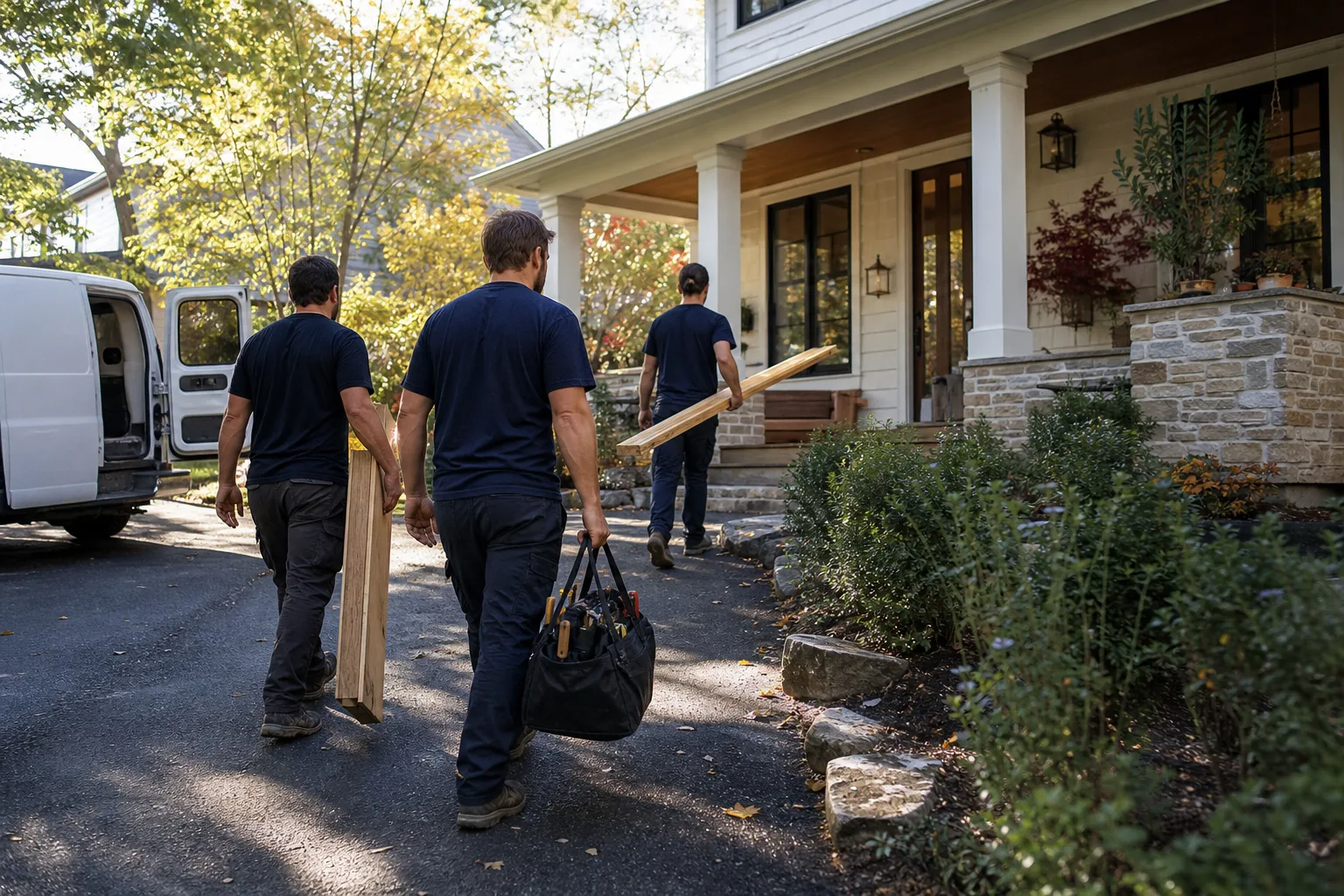
- Who’s on the crew that comes into our home? Background-checked, uniformed technicians matter more than the schedule. Families wanting to know who’s walking through the door is a reasonable ask.
What a contractor who welcomes the question shows you: confidence in the warranty work, a written price they can defend line by line, and a clean handoff plan for the phases you own. If the answer to every question is “we’ll handle it all,” that’s not automatically bad, but it’s not a conversation that respects your labor savings either.
Common Mistakes to Avoid
- Starting demo before the plumbing and electrical rough-in has been permitted. Unpermitted work in Mesquite can force a redo when the inspector gets to the final, and the shower surround comes down with it. Pull the permits before demo begins.
- DIY waterproofing a shower to “save” the labor cost. A failed membrane voiding the manufacturer’s warranty costs far more than the labor would have. This is the most common expensive mistake in a bathroom remodel.
- Replacing tile over old tile without checking the substrate. The new tile looks fine for six months, then the grout line over the old failed backer cracks along the same seam. Open it up and start clean.
- Skipping the flood test on the shower pan. The one step that catches a bad pan before it becomes a problem. If the contractor doesn’t mention it, ask.
- Letting the electrical work go to a handyman. GFCI outlets in a wet zone carry real safety stakes, and Nevada requires a licensed electrician. This is not a place to save.
- Assuming paint is a “free” home improvement. Your labor for a full bathroom repaint is a weekend, and it’s still worth doing yourself. Everything else in the paint phase still has to be sequenced around the tile, so coordinate with the crew.
- Not asking who’s on the crew. Background-checked, uniformed technicians are a baseline, not a bonus, especially when kids and pets are in the house during the work. Ask the question up front.
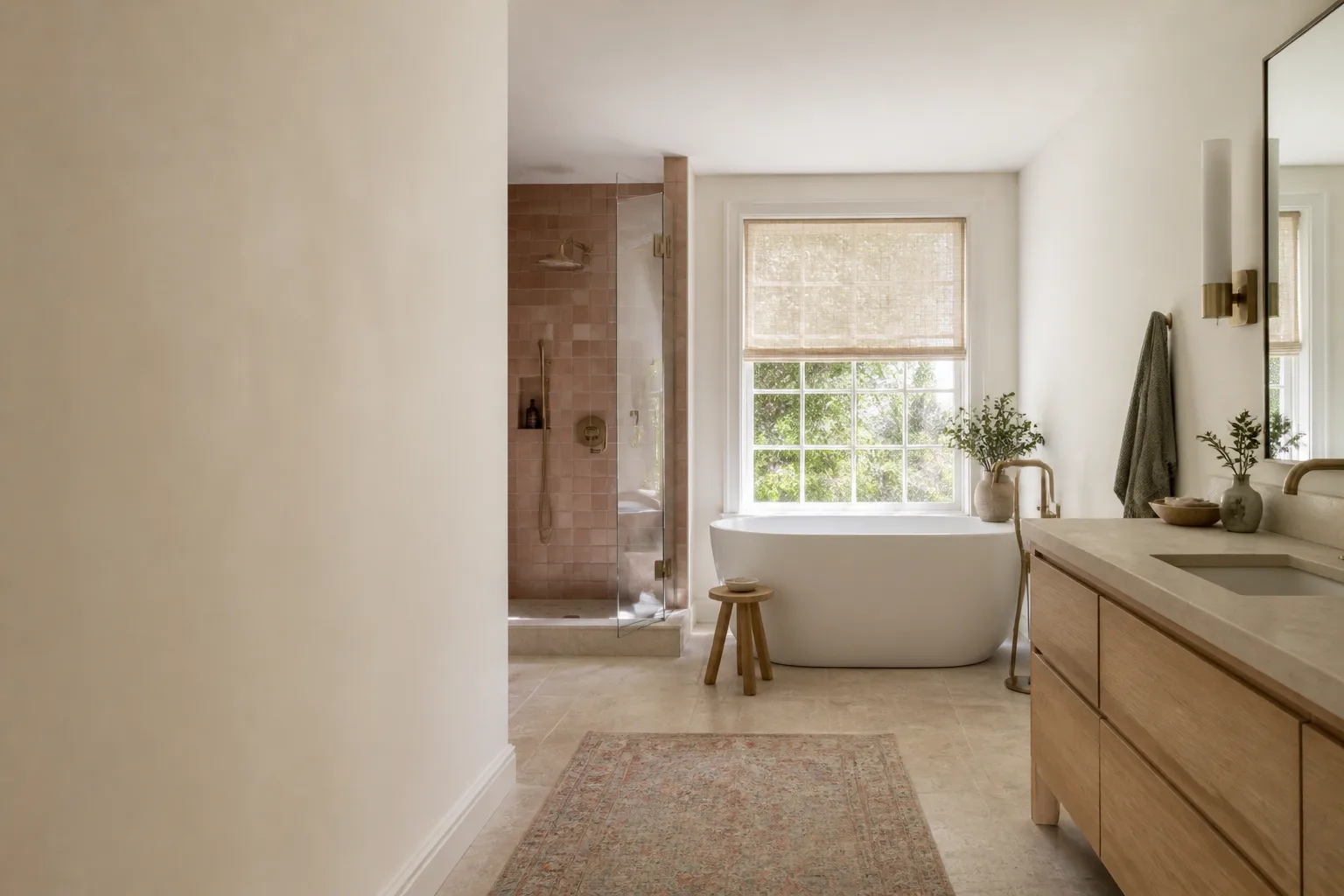
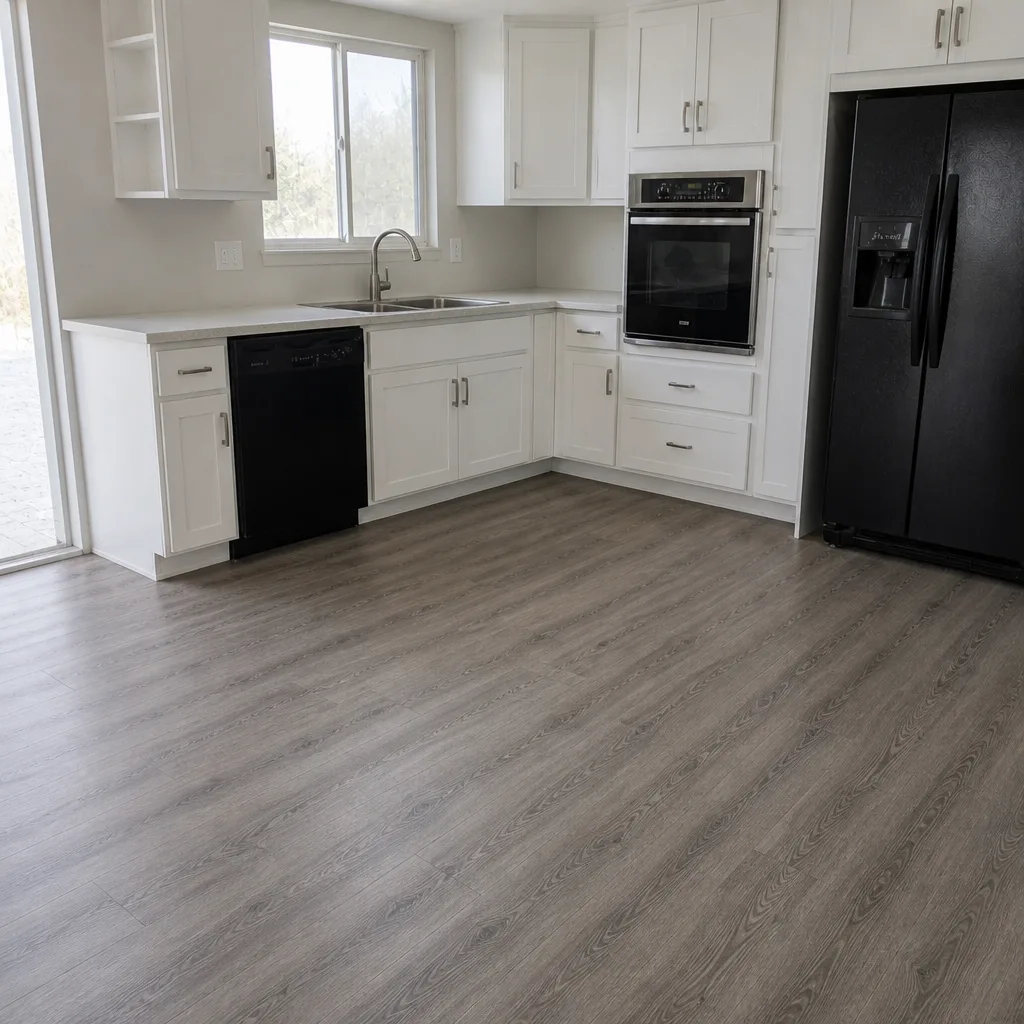
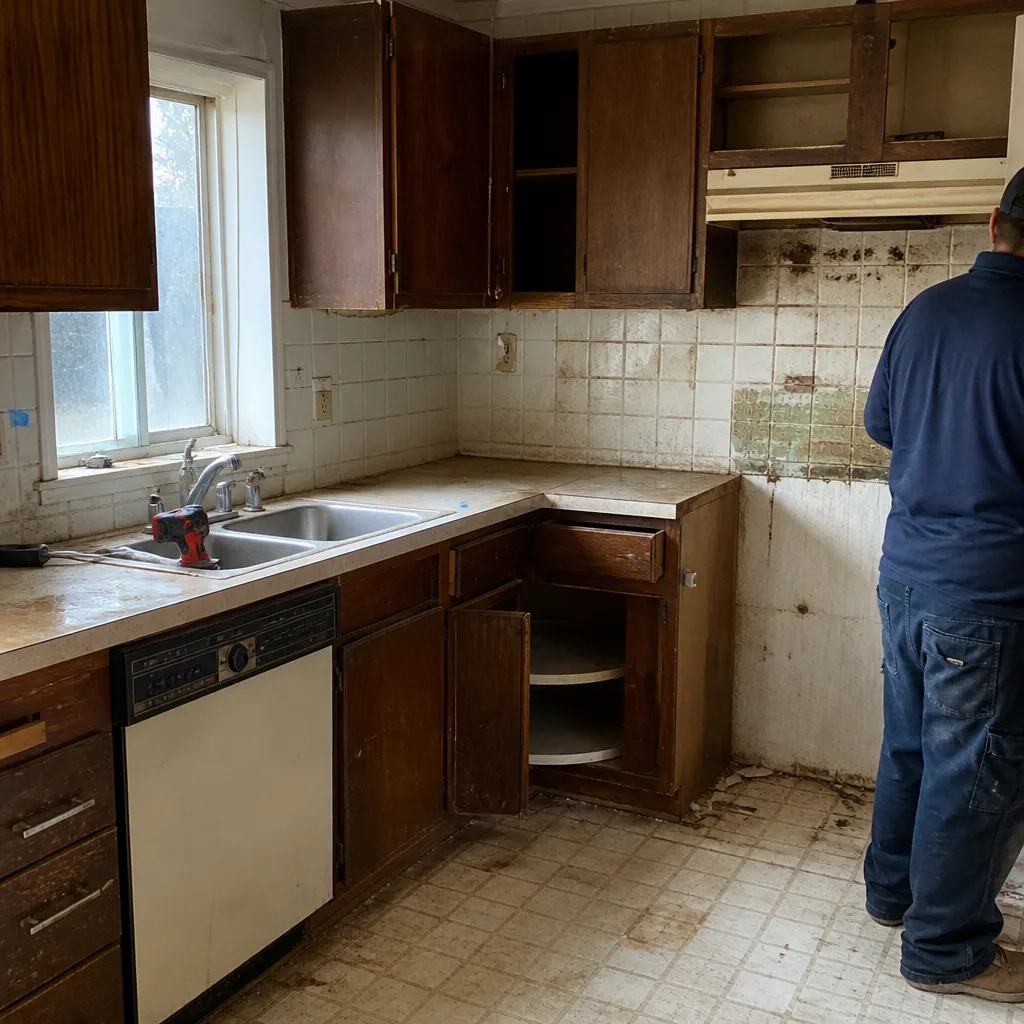
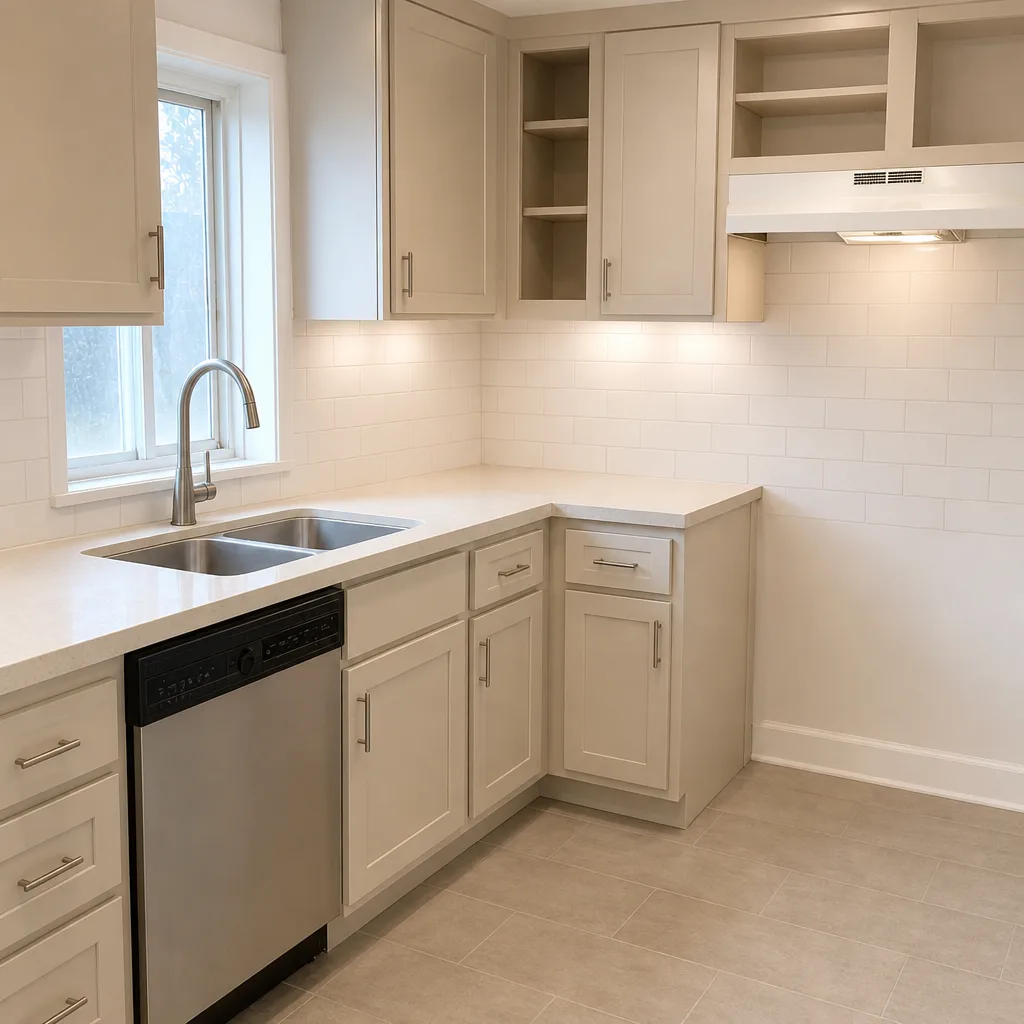
See the difference
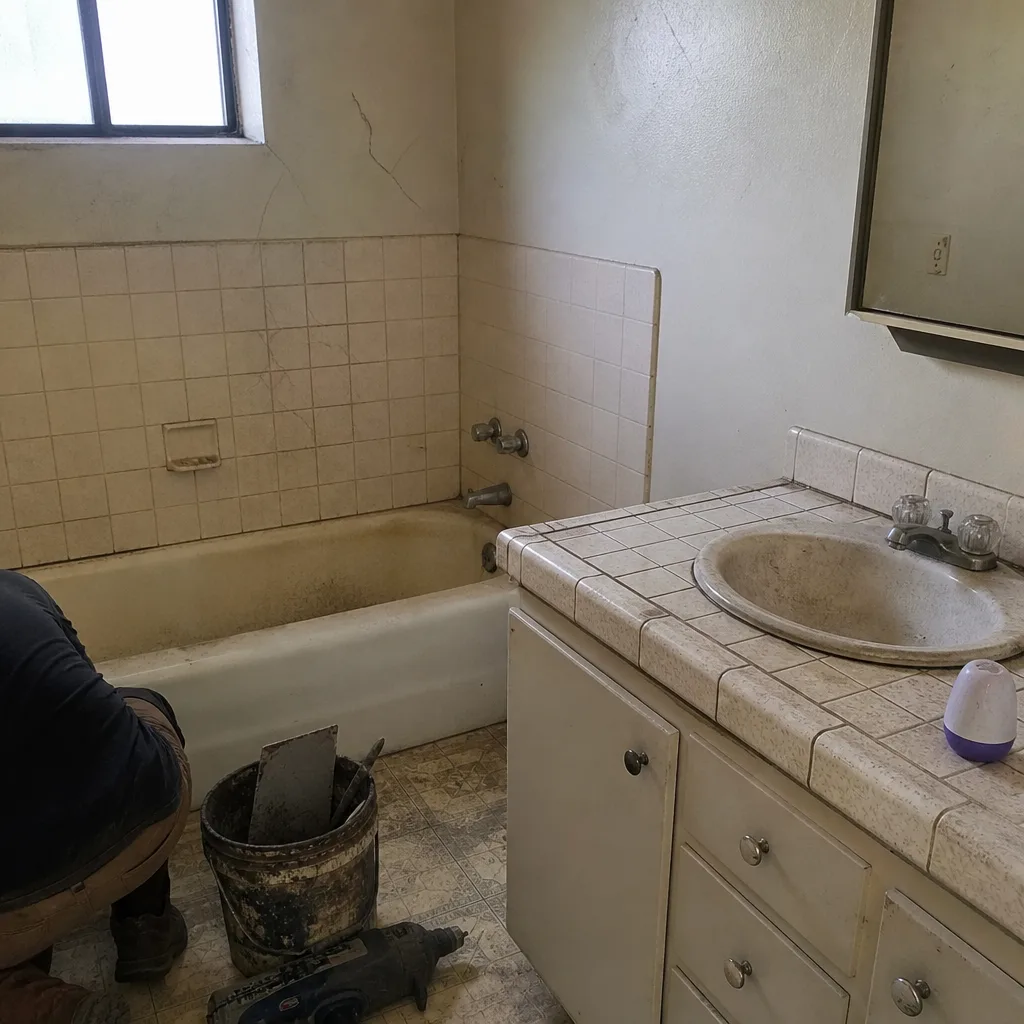 Before
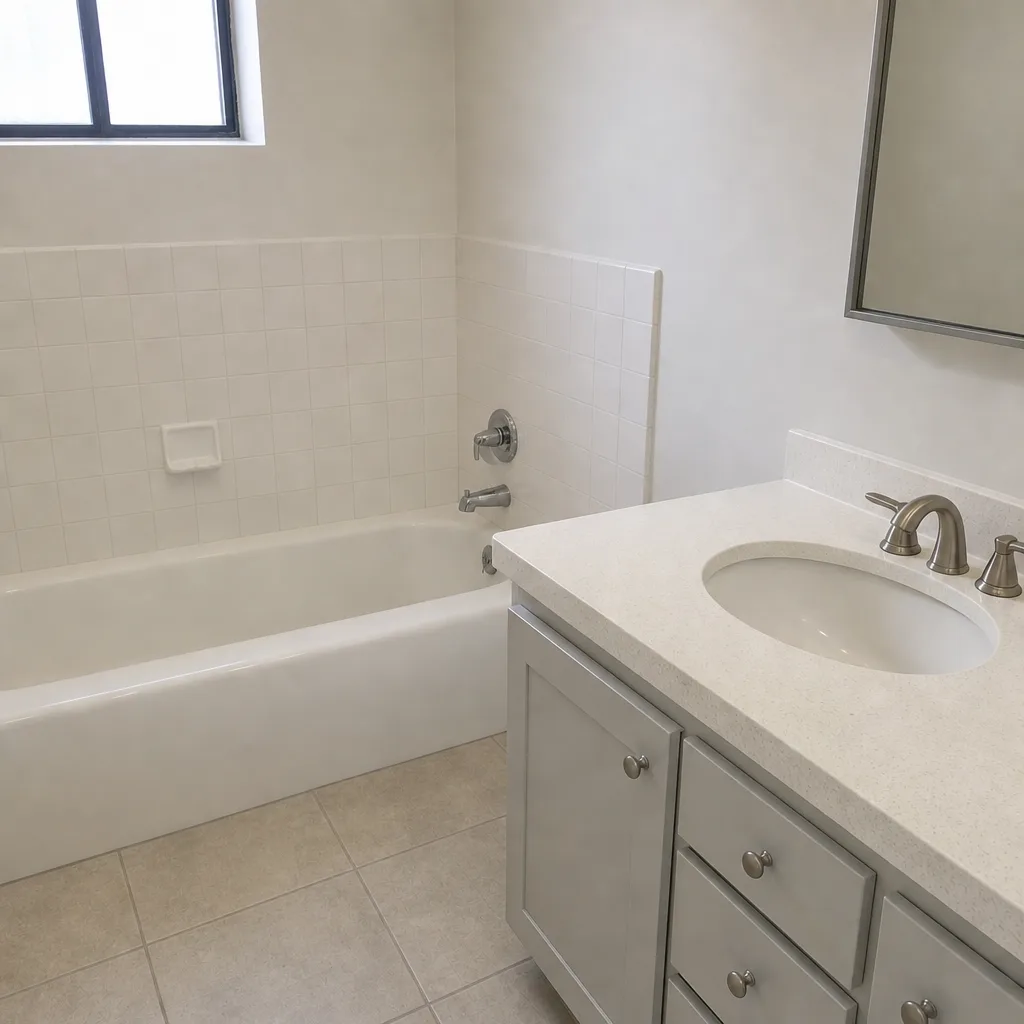 After
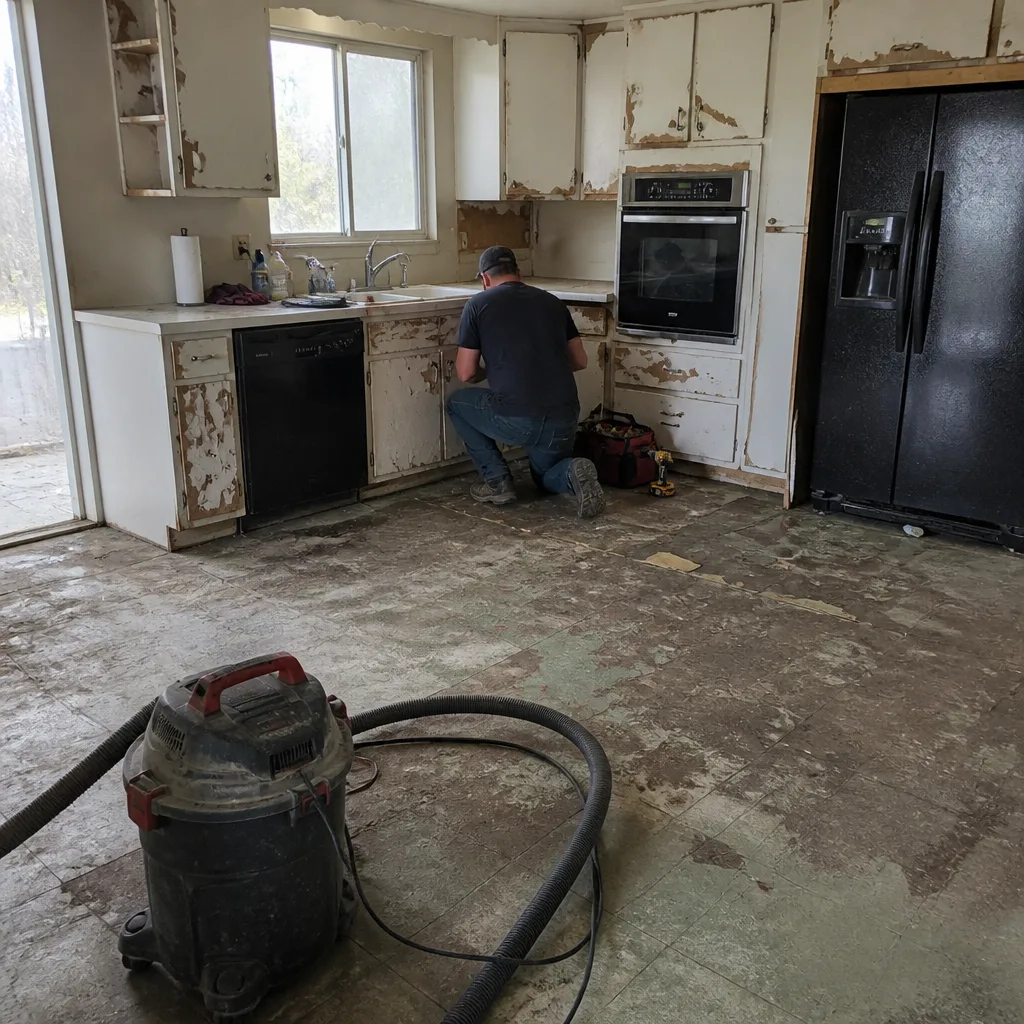 Before
 After
 Before
 After
When to Call a Professional
Call a professional when the project involves any of the following: a shower or tub replacement, any change to plumbing fixtures or supply lines, any electrical work including lighting and GFCI outlets, a wet-area waterproofing install, a permit of any kind, or a project that has uncovered structural damage once the walls are open. In those cases, the DIY path either isn’t legal in Nevada or carries a warranty and water-damage risk that outweighs the labor savings. For everything else (paint, demo, accessories, mirror, caulk), do it yourself with confidence. Elmstead Remodeling Mesquite offers free estimates in Mesquite – call (833) 620-6606, and we’ll walk through the phases you want to own and the ones we do. Our technicians have up to 21 years of experience, and the written price is in your hands before any work starts.
Frequently Asked Questions
Partially. You can legally handle painting, accessory installation, mirror hanging, demo, and finish work in your own home in Nevada. You cannot legally do the plumbing or electrical work yourself, including moving a fixture or adding a circuit, because Nevada requires a licensed contractor for both. The waterproofing phase is technically doable yourself but carries the highest warranty and water-damage risk of any phase. Call (833) 620-6606 for an exact quote on the phases you want to hand off – estimates are free.
A mid-market bathroom remodel in Mesquite typically runs about $15,000 to $28,000 for a full professional job, roughly $12,000 to $20,000 for a partial-DIY arrangement where the homeowner handles demo and paint, and roughly $4,000 to $9,000 in materials for a full-DIY approach (which is only legal here if the plumbing and electrical work still go to licensed contractors). The range swings with bathroom size, finish level, and any rot or substrate damage found during demo. Call (833) 620-6606 for an exact quote – estimates are free.
Yes. Replacing a shower requires a permit in Mesquite because the shower pan, drain, and waterproofing are all part of the plumbing scope, and any change to the drain assembly triggers both the permit and the licensed-plumber requirement. A like-for-like shower valve replacement at the same location sometimes moves forward without a permit, but any relocation or new fixture almost always does. The inspection that follows is what verifies the drain slope and the sealed pan before tile goes in. Call (833) 620-6606 to schedule your free estimate.
Because many waterproofing manufacturers require certified installers to honor their warranty, which means a careful DIY install can void the product warranty even when the tile goes on perfectly. Waterproofing is also the one phase buried under the finished surface, so a failure shows up as a soft subfloor or a stain on the ceiling below, a year later, after the tile is paid for. The risk isn’t the visible bathroom, it’s the hidden one. Call (833) 620-6606 and we’ll walk through what a certified install looks like – estimates are free.
Yes. Demo and painting are the two best phases for a Mesquite homeowner to keep, and they save real labor cost without touching the plumbing, the electrical, or the waterproofing. Demo is a weekend job if you wear eye protection, run a shop vac, and know where the water shutoff is. Painting is a second weekend once the tile and fixtures are done. Coordinate the timing with your crew so the paint phase lands after the finished surfaces and before the final walk-through. Call (833) 620-6606 for a written price on a partial-DIY scope – estimates are free.
A mid-market bathroom remodel in Mesquite typically runs three to five weeks from permit to final walk-through, with a partial-DIY arrangement usually landing at the same length because the homeowner’s demo and paint phases fold into the same schedule. Permit approval adds a week or two on the front end, and any substrate damage found during demo can add days. The written price and the schedule are both given before work starts, so you have the timeline in your hands. Call (833) 620-6606 to schedule your free estimate.
The Bottom Line
The safe DIY line in a Mesquite bathroom remodel sits where water and electricity begin. Paint, demo, accessories, mirror, and caulk are yours with confidence. Plumbing, electrical, waterproofing, and any permit-triggering change belong to a licensed contractor, and that’s not a knock on your skills, it’s how the insurance, the permit, and the warranties are structured. The partial-DIY approach keeps your labor savings on the low-risk phases without handing you the one mistake that costs the most. If you’re planning a remodel and want a written price before any work starts, Elmstead Remodeling Mesquite offers free estimates in Mesquite – call (833) 620-6606 to talk through the scope.
Written by the team at Elmstead Remodeling Mesquite.