Last updated November 18, 2026






Free written scope consultation - allowances, timeline, and change-order rules on paper before a single trade is scheduled
Construction Warning Signs: A Mesquite Homeowner’s Reference Guide
A hairline crack in stucco and a step crack in stucco look nearly identical in a cell phone photo. They have entirely different causes. One is cosmetic shrinkage, the kind of thing that shows up on almost every Mesquite home as the material dries and settles into desert air. The other can point to caliche soil movement happening below the slab, and the difference between them changes what you should do next, and how fast.
Confusing those two is the single most common mistake we see Mesquite homeowners make. This reference guide connects the symptoms you can actually see on your own house to the desert causes behind them, then sorts those symptoms into three groups: call within 48 hours, monitor for 30 days, or ignore because it’s cosmetic. By the end you’ll know how to read your own walls, doors, ductwork, and patio edges like a building professional does.
Quick Answer
Most visible cracks and gaps in a Mesquite home are cosmetic and caused by normal drying and thermal cycling, but a specific subset are genuine structural warnings: step cracks in stucco wider than a credit card, doors that rack out of square in a single season, efflorescence or spalling along the foundation, and paint bubbling on interior walls without a plumbing source. Those four signs mean schedule a professional inspection. Everything else can usually be photographed, dated, and watched for 30 days before you decide.
Styles & brands we work with
- Kitchen remodeling
- Bathroom remodeling
- Home additions & ADU
- Roofing
- Windows & doors
- Driveway & pavers
- Fence
Table of Contents
- The Crack Taxonomy: Shrinkage, Settlement, or Structural
- What Desert Slab-on-Grade Construction Does Differently
- Door and Window Racking: Soil Movement, Not Framing Failure
- HVAC and Ductwork Warning Signs in 150°F Attics
- Water Intrusion Signs That Look Dry in the Desert
- The 48-Hour / 30-Day / Cosmetic Triage Framework
- How to Photograph and Document a Warning Sign
- Common Mistakes to Avoid
The Crack Taxonomy: Shrinkage, Settlement, or Structural
Not every crack is a warning. In stucco and masonry construction, cracks fall into three categories, and each one asks something different of you. Learning to tell them apart is the most useful skill in this guide.
Shrinkage cracks are thin (hairline to about 1/16 inch wide), usually straight or spiderweb-shaped, and appear within the first year of new stucco. Stucco is a cementitious mix that loses water as it cures, and in Mesquite’s low humidity that curing happens fast and a little unevenly. Shrinkage cracks are cosmetic. They don’t widen over time, they don’t follow a stair-step pattern, and they can be patched and repainted. If you see several of them along a wall, that’s normal, not a failure.
Settlement cracks are wider (1/16 to 1/8 inch), often diagonal, and tend to run from the corner of a window or door opening toward the nearest exterior corner. They appear when the soil under one part of the foundation compresses or expands more than the soil under another part. In Mesquite this is the caliche story. Caliche is a naturally cemented calcium-carbonate layer common in Clark County soils, and it behaves differently from ordinary dirt: it doesn’t drain uniformly, it swells and shrinks with moisture changes, and when a chunk of it shifts under a slab, the slab tilts and the walls above it crack in a predictable diagonal pattern. Settlement cracks are worth photographing and monitoring. If they stabilize over 30 days, they’re done. If they widen, they graduate to structural.
Structural cracks are wider than 1/8 inch, follow a stair-step pattern through block or brick, appear suddenly, and often show a horizontal displacement (one side of the crack is pushed out or in relative to the other). A structural crack in a Mesquite home usually means active soil movement or a foundation issue, and it warrants a professional inspection within 48 hours, not a week of watching.
- Shrinkage: hairline, straight or spiderweb, stable. Cosmetic. Patch and move on.
- Settlement: diagonal from a corner, 1/16 to 1/8 inch, may be stable. Photograph and watch 30 days.
- Structural: wider than 1/8 inch, stair-step, sudden, or displaced. Call within 48 hours.
For a wider look at how a full home is assessed for structural concerns and corrected during a remodel, this overview of our Elmstead Remodeling Mesquite home is a useful starting point.
What Desert Slab-on-Grade Construction Does Differently
Most Mesquite homes sit on a slab-on-grade foundation, which means the concrete is poured directly on graded soil with no basement and only a shallow footing. That construction style is efficient and well suited to the climate, but it changes which warning signs matter.
In a home with a basement, water problems announce themselves: you see seepage, you smell dampness, you find a wet spot on a floor. In a slab-on-grade Mesquite home, moisture moves through the slab and evaporates before you ever see a puddle. That means you’re reading the after-effects, not the water itself. Spalling (concrete flaking off the face of the slab or patio), efflorescence (the white chalky salt deposits that bleed through masonry or tile grout), and paint bubbling on an interior wall with no plumbing nearby are all moisture indicators in desert construction. Each one means water is moving through the material and drying from the outside in.
Thermal movement is the other desert-specific factor. A Mesquite exterior wall can swing 40 to 60 degrees Fahrenheit between afternoon and pre-dawn in the shoulder seasons, and stucco, wood framing, and window frames expand and contract at different rates. That movement is exactly what produces the small gaps you’ll see at the corners of exterior window trim and the fine horizontal lines running along the seams of a masonry wall. Those are normal. The ones to watch are the gaps that widen, because thermal cracks reach a width and stop, while movement cracks keep growing.
One note on framing behavior in extreme heat: attic temperatures in Mesquite routinely exceed 150°F in July and August. Wood framing and drywall in the ceiling assembly are exposed to that heat, and the differential expansion between the wood and the drywall hung over it causes the ceiling to hairline-crack at the corners of a room the same way stucco does outside. Ceiling corner cracks that are hairline and stable are the desert version of a shrinkage crack. A ceiling crack that widens over a season is not.
Door and Window Racking: Soil Movement, Not Framing Failure
When a door sticks, most homeowners assume the framing is failing. In a Mesquite slab-on-grade home, the far more likely explanation is that the soil under one corner of the slab has shifted, tilting the slab slightly and racking the door frame out of square. The framing itself is almost always fine.
Here’s how to tell the difference between a door that’s a little stiff and a door that’s racking:
- Watch the season. A door that sticks in July and frees up in October is thermal, and it’s normal. A door that sticks more every month, regardless of temperature, is racking.
- Look at the gap. Open the door and look at the gap between the door and the jamb along the top and the hinge side. A racked frame shows a visibly uneven gap, wide at one corner and pinched at the other.
- Check the latch side. If the latch no longer lines up with the strike plate without pushing or lifting the door, the frame has moved.
- Compare doors. If a single door in the house racks while every other door opens cleanly, the movement is local. If two or three doors on the same side of the house rack together, the movement is under the slab.
- Check the diagonal. Measure the two diagonals of the door opening (top-left to bottom-right, top-right to bottom-left). If they differ by more than 1/4 inch, the frame is out of square.
Window racking shows up differently: the sash binds against the jamb, the lock no longer meets the keeper, or the sliding pane jumps the track. A single window that racks in an exterior corner wall in Mesquite is a settlement signal worth documenting. Windows that rack along an entire wall mean the slab under that wall has moved as a unit, and that’s a call to a professional.
HVAC and Ductwork Warning Signs in 150°F Attics
HVAC systems in Mesquite work in a hostile environment. Flexible ductwork runs through attics that hit 150°F and above in summer, and the mastic and foil tape used to seal duct joints at installation are rated to a temperature limit. When the attic exceeds that limit repeatedly, the adhesive degrades, the seal fails, and conditioned air pours into the attic instead of your rooms.
You will rarely see the failing duct seal directly. You’ll see the symptoms in your home instead:
- Rooms that don’t cool evenly. A bedroom that runs 5°F warmer than the rest of the house, especially on the west side, is often a supply duct leaking in the attic.
- Rising electric bills with no other change. A system that’s losing 15 to 20 percent of its cooling to the attic runs longer to make up for it.
- Dust on the ceiling around a supply register. Air escaping a failed seal carries attic dust with it, and it settles in a ring around the register.
- A musty or dusty smell when the system starts. That’s attic air being drawn back into the return.
- Condensation on the outdoor unit or a frozen line set. A system moving less air than it should will ice up a coil.
In our experience, duct seal failures show up in Mesquite homes in the second or third summer after installation, which is exactly when the original mastic has had enough heat cycles to break down. If your system is more than a few years old and one room is consistently the problem room, ask a technician to inspect the attic ductwork, not just the equipment. A full duct inspection is also worth scheduling alongside a larger project: this guide to Kitchen Remodeling in Mesquite covers how duct relocation is handled when a kitchen wall or ceiling changes.
Water Intrusion Signs That Look Dry in the Desert
Desert homeowners tend to think of water problems as a rainy-climate concern. That assumption is how small moisture issues get missed for years. It’s rarely the rain. It’s the irrigation system, the swamp cooler pad, the pool, or the drip line running against the foundation.
Three signs matter most in Mesquite:
Efflorescence. Those white, chalky, powdery streaks on concrete, block, or tile grout are mineral salts carried to the surface by water moving through the material and evaporating. The salts themselves are harmless, but the fact that they’re there means water is migrating through the wall or slab. If efflorescence appears on an interior wall or floor, it’s a genuine moisture indicator. If it appears on an exterior patio or block wall, it’s usually the irrigation line or the sprinkler overspray and worth redirecting.
Spalling. Concrete that’s flaking off in a shallow peeled layer is spalling, and the cause is water entering the slab, freezing (rare in Mesquite, but the mechanism also works with wet-dry cycles), expanding, and breaking the surface off. Spalling on a patio or walkway edge near a downspout or drip emitter is common and easy to fix. Spalling along the base of the house foundation wall means water is pooling against the slab, and that’s a drainage correction before it becomes a movement correction.
Interior paint bubbling or blistering. A patch of paint that bubbles on an interior wall with no plumbing above or behind it usually means water vapor is coming through the drywall from the exterior wall cavity. In Mesquite, the likely source is a failed window seal, a roof-flashing detail, or a stucco crack that’s letting monsoon water in during the July – September storms. It’s not the paint, and repainting over it will only hide it for a season.
If any of these signs appear next to a bathroom fixture or in a wall shared with a bathroom, a remodel is often the right way to open the wall, find the source, and rebuild the assembly correctly. Our Bathroom Remodeling in Mesquite page covers how we handle moisture mitigation, tile substrate, and Schluter waterproofing systems in that situation.
The 48-Hour / 30-Day / Cosmetic Triage Framework
Every warning sign in this guide falls into one of three buckets. Use the framework below to sort what you’re looking at right now, then decide.
Call a professional within 48 hours
- Any stucco or masonry crack wider than 1/8 inch, or one with a step pattern, sudden appearance, or horizontal displacement.
- Two or more doors or windows racking on the same wall of the house, or racking that has gotten noticeably worse in one season.
- Efflorescence, spalling, or paint blistering along the base of an interior or exterior wall that has appeared or grown in the last few months.
- A horizontal crack in the slab, or a gap between the slab and the stucco at the base of an exterior wall.
- Any sagging roofline, or a ceiling crack that widens over a season.
- A supply duct leak with a visible dust ring at a register, plus one room that won’t hold temperature (schedule an HVAC inspection within 48 hours; this is a system issue, not a structural one).
Monitor for 30 days
- Hairline cracks that appeared or grew slightly in the last month, with no other warning signs.
- A single door that sticks but has no measurable diagonal difference and no visible gap issue.
- Exterior stucco cracks between 1/16 and 1/8 inch that appear stable when you photograph them on day 1 and day 30.
- Ceiling corner hairline cracks in one or two rooms.
- Wind-blown deposits on exterior walls near the irrigation line.
Ignore (cosmetic)
- Spiderweb hairline stucco cracks, especially in the first year of a new build.
- A door that’s a little stiff in July and free the rest of the year.
- Small paint or caulk gaps at the corners of exterior window trim.
- Faint hairline cracking along masonry seams that hasn’t changed in years.
- Efflorescence on a patio or walkway surface.
How to Photograph and Document a Warning Sign
If you’re going to call a professional, the photos you take before you call make the conversation faster and the diagnosis better. We’ve had homeowners send thirty photos and one that actually showed the problem. Here’s the shortlist.
- Take one wide shot for context, then close-ups. A wide shot of the whole wall tells us where the crack sits relative to windows, doors, and the roofline. A close-up tells us the width and pattern. Both, in that order.
- Include a coin or a ruler in the close-up. A crack photographed next to a quarter gives an exact scale that a photo alone can’t.
- Date every photo. Use your phone’s timestamp setting, or take a photo of a piece of paper with the date written on it. Then repeat the same photo in 30 days.
- Photograph the whole elevation, not just the crack. The direction and pattern of cracks along a full wall are how a professional reads soil movement.
- Include a photo of the floor at the base of the wall. A gap between the floor and the wall trim tells us how much the slab has moved relative to the framing.
- Note the date and duration of the last significant rain. In Mesquite, monsoon moisture is a leading trigger for water-related signs, and the timing matters.
If a wall shows more than one warning sign, a proper inspection goes beyond the visible surface. Our General Contractor in Mesquite service page covers how wall and ceiling assemblies are opened, inspected, and put back together when a moisture source needs to be found.
Common Mistakes to Avoid
- Patting a hairline crack with stucco and calling it done. If the crack was a shrinkage crack, you’ve fixed it. If it was a settlement crack starting to grow, you’ve hidden it for a season, which is exactly when you’d want the documentation.
- Assuming a sticking door means the house is failing. In Mesquite, most sticking doors are seasonal thermal movement or a slightly tilted slab, and a single stiff door rarely indicates framing failure. Measure the diagonal before you worry.
- Repainting over interior paint bubbling without finding the source. The paint is the messenger. If water is getting into the wall cavity from a failed window seal or a monsoon leak, the new paint bubbles in the same place next summer.
- Ignoring attic ductwork because the equipment is newer. A two-year-old HVAC unit with a leaking 15-year-old duct seal will underperform a 15-year-old unit with a sealed duct system. Check the ductwork, not just the equipment.
- Skipping the 30-day photo comparison. The single most useful thing you can do when a crack appears is to photograph it on day 1 and day 30 with a coin for scale. It’s the difference between “it might be growing” and “it grew 1/16 inch in a month,” and that difference determines the response.
- Letting irrigation water pool against the foundation. A drip emitter or sprinkler head that dumps water against the slab corner is the single most common preventable cause of the settlement cracks we see in Mesquite homes.
- Repairing a structural crack as a finish problem. If a step crack in a block wall is widened and displaced, patching the visible face hides the symptom without correcting the movement underneath. Fix the cause first.
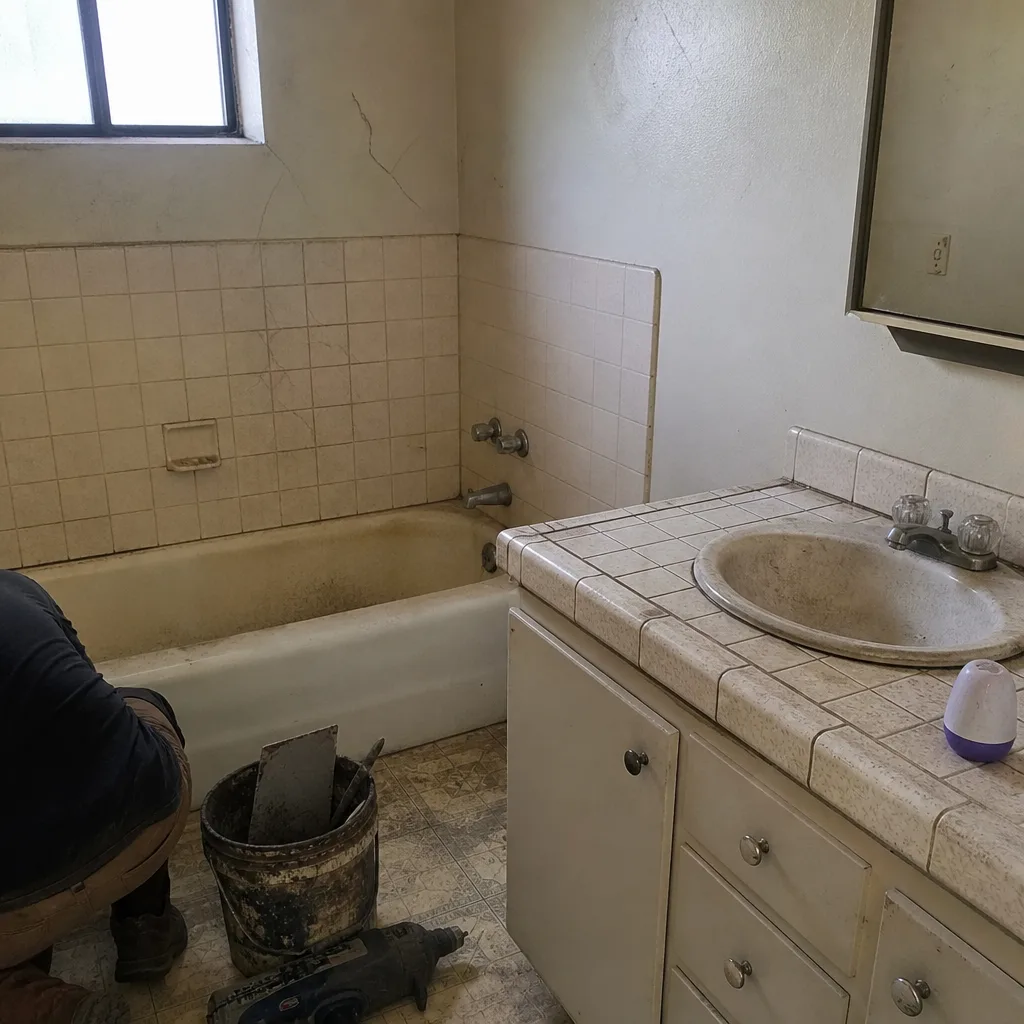
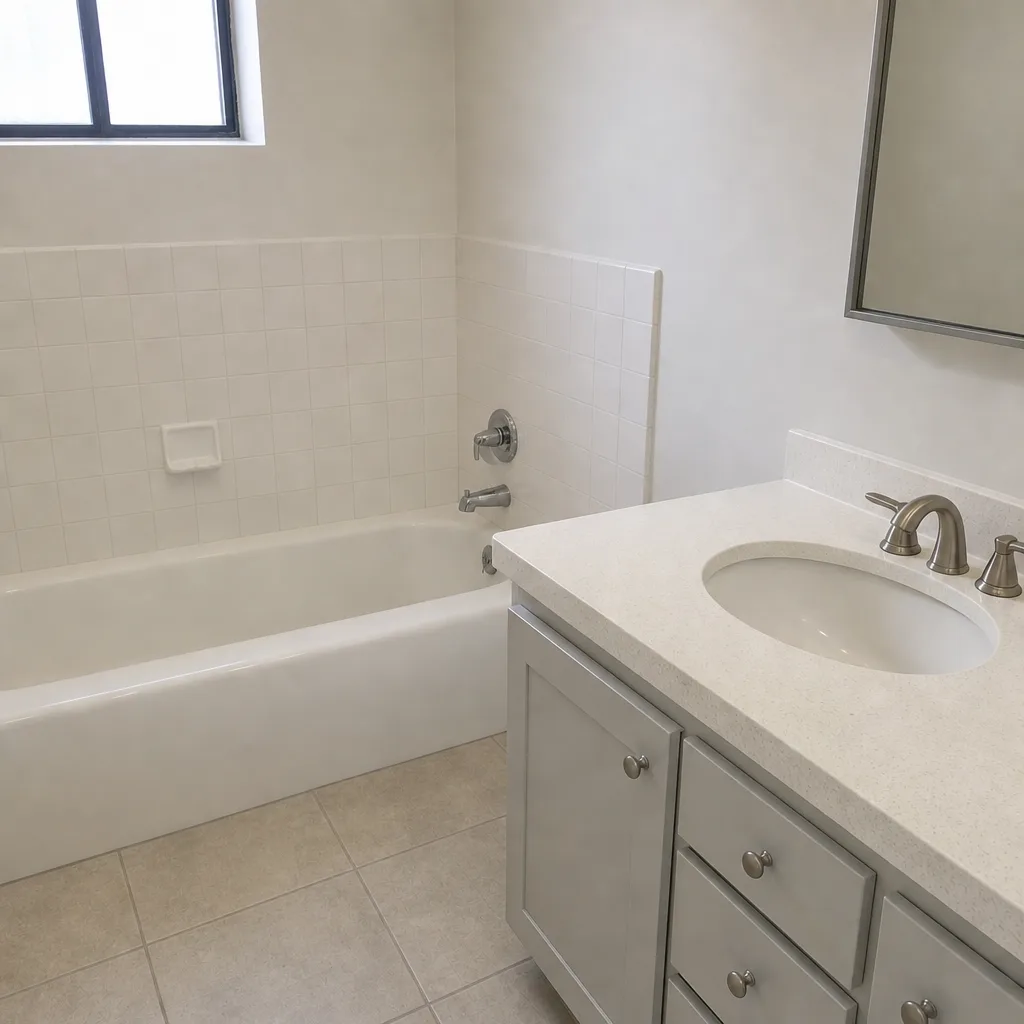
See the difference
 Before
 After
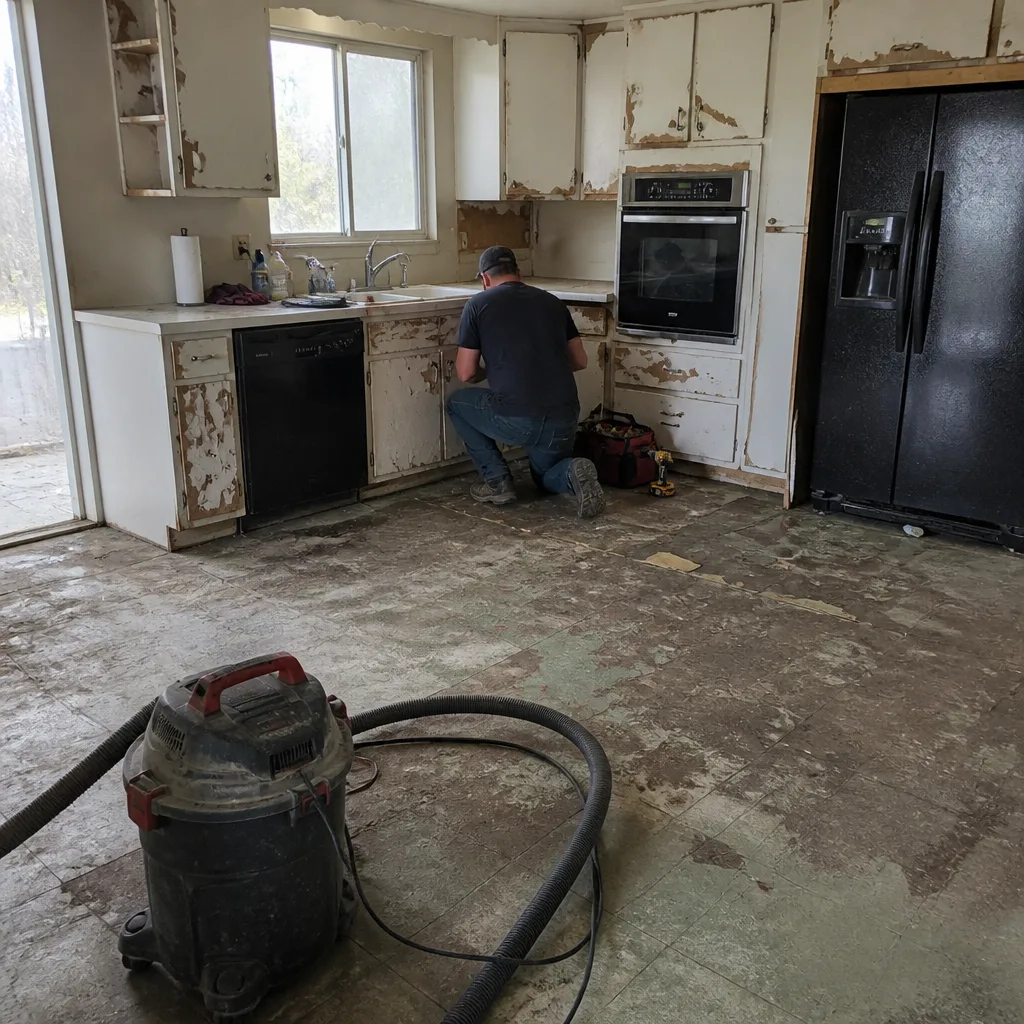 Before
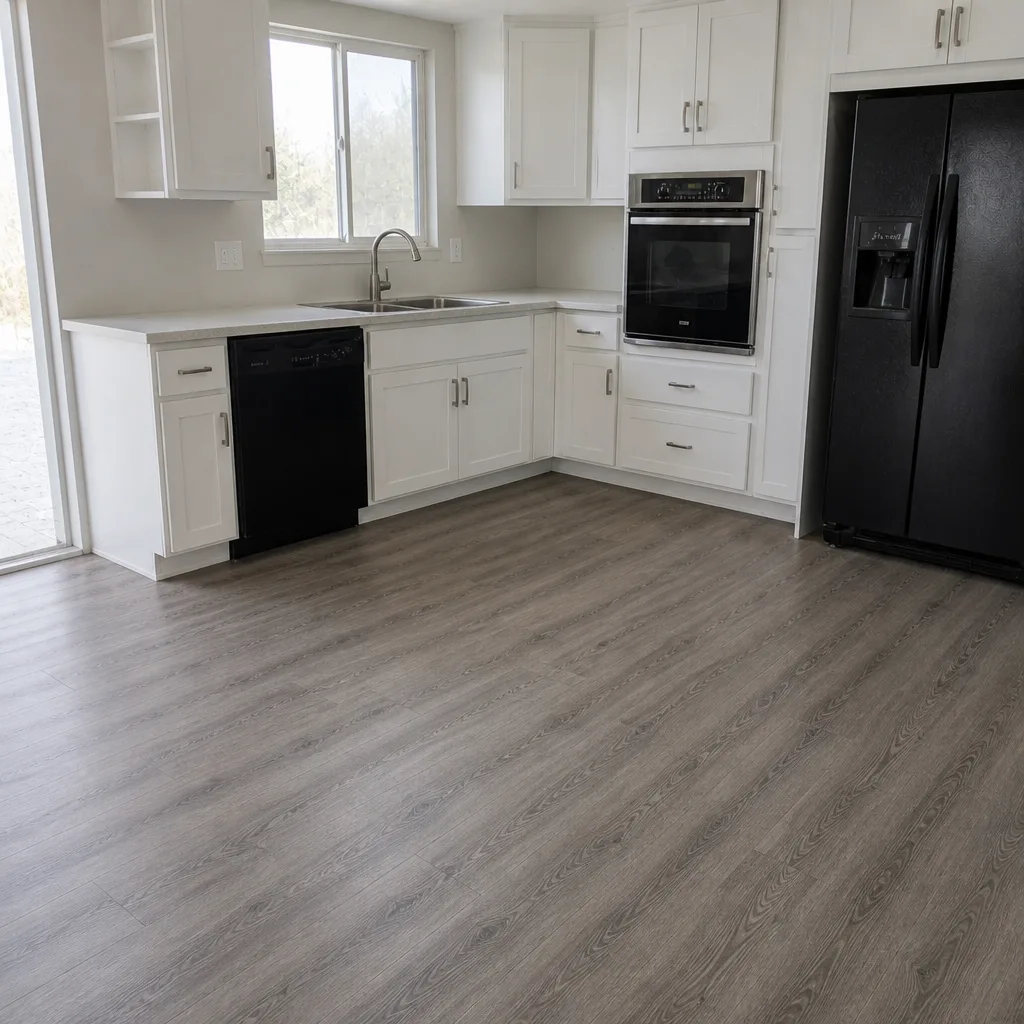 After
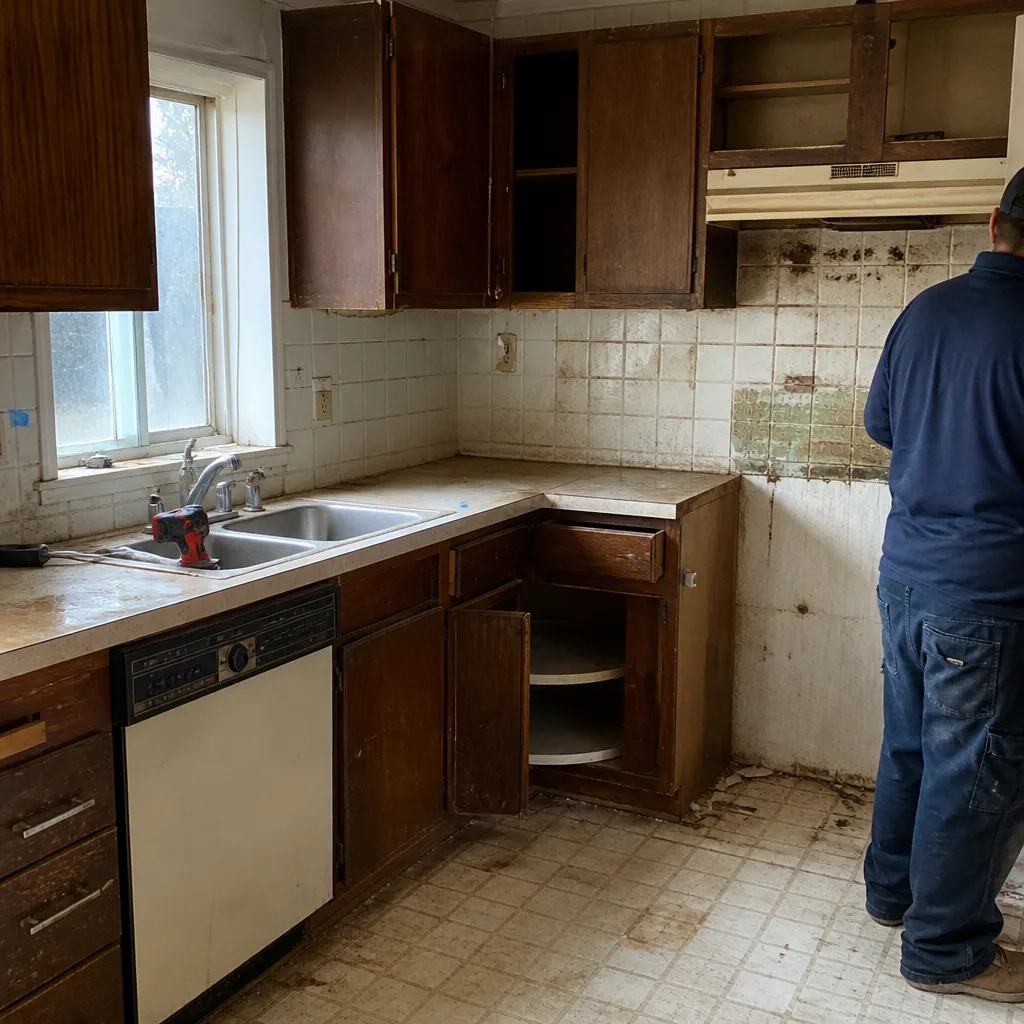 Before
 After
When to Call a Professional
Call a professional within 48 hours if you see any of these: a stucco or masonry crack wider than 1/8 inch, a step-pattern crack, a horizontal crack in a slab or foundation wall, two or more doors or windows racking on the same side of the house, efflorescence or paint blistering appearing on an interior wall, or a roofline that visibly sags. Also call if a warning sign is on a wall you’re about to remodel, because the repair work will be far more efficient when the wall is already open.
For everything else, photograph it, write the date on the photo, and check it in 30 days. If it hasn’t changed, you have a documented cosmetic issue. If it has changed, you have a documented reason to call. Elmstead Remodeling Mesquite offers free estimates in Mesquite – call (833) 620-6606 and we’ll tell you whether what you’re seeing needs a structural correction or a simple patch-and-paint before a planned kitchen or bathroom remodel. Our technicians have up to 21 years of experience reading desert construction, and a written price is given before any work starts.
Frequently Asked Questions

A shrinkage crack is hairline (1/16 inch or less), straight or spiderweb-shaped, and doesn’t grow. A structural crack is wider than 1/8 inch, follows a step pattern through block or brick, or has one side displaced from the other. If you can fit a credit card in the crack, or it’s suddenly wider than it was last month, treat it as structural and call within 48 hours. Call (833) 620-6606 for an exact assessment – estimates are free.
That’s thermal movement, and it’s normal in Mesquite. Wood framing and the slab under it expand in the heat and contract at night, and a door that’s fit to a tight tolerance in the cooler months will bind slightly in summer. A door that sticks year-round, or that’s getting worse, is a different problem and worth measuring with the diagonal test above. If you’re unsure which one you have, call (833) 620-6606.
That’s efflorescence, mineral salts carried to the surface by water moving through the material and evaporating. On an exterior patio or block wall it’s usually irrigation overspray and easy to redirect. On an interior wall or along the base of the foundation, it means water is migrating through the structure and worth inspecting within 48 hours. Call (833) 620-6606 to schedule a free estimate if the sign is on an interior surface.
Look for a ring of dust on the ceiling around a supply register, a bedroom that runs 5°F warmer than the rest of the house, and a rising electric bill against the same usage. Attic temps above 150°F in Mesquite summers break down duct mastic seals within two to three summers, and the symptoms show up in your rooms before you ever see the attic. Call (833) 620-6606 if you suspect a leak.
Usually not. Spalling on a patio or walkway surface is typically water, a drip emitter, or a downspout pooling moisture against the concrete, and it’s fixable with drainage correction. Spalling along the base of the foundation wall itself is a different issue and worth a professional look. Call (833) 620-6606 to schedule a free estimate if the spalling is at the house line.
Yes, and the earlier the better. Opening the wall during a planned remodel gives a professional a clear view of the framing, the moisture source, and the slab, which makes the repair more accurate and less expensive than a repair done blind. When you schedule a free estimate for a Mesquite remodel with Elmstead Remodeling Mesquite, tell us which warning signs you’ve seen and we’ll fold the inspection into the scope. Call (833) 620-6606.
The Bottom Line
Most of what looks alarming on a Mesquite home is normal desert behavior: shrinkage cracks in stucco, ceiling corner hairlines, and a door that’s stiff in July. The signs that actually matter are the ones that point to movement or moisture: a step crack wider than a credit card, multiple doors or windows racking on the same wall, efflorescence or paint bubbling on an interior surface, spalling at the foundation line, and attic duct leaks showing as dust rings and hot rooms. Photograph what you see, date the photo, compare it in 30 days, and use the triage framework above. For anything in the 48-hour column, a professional can tell you in an hour whether you’re looking at a cosmetic repair or a structural correction.
If you’re seeing any of the warning signs in this guide and you’re not sure how to read them, call Elmstead Remodeling Mesquite at (833) 620-6606 for a free estimate. We’ll walk the property with you, explain what we see and what we don’t, put a written price in your hands before any work starts, and make sure the house is left as clean as we found it; drop cloths down, shoe covers on, and a photo of the clean-up before the crew leaves. Our technicians have up to 21 years of experience with desert construction, and every project is backed by our 365-Day Done Right Promise.
Written by the team at Elmstead Remodeling Mesquite.