
Last updated November 18, 2026








Free written scope consultation - allowances, timeline, and change-order rules on paper before a single trade is scheduled
General Contractor Maintenance Checklist for Mesquite Homeowners
The call we get most often in October isn’t about summer heat. It’s about water. The brief, intense July and August monsoon window does the quiet damage that shows up two months later as a soft spot under a window frame, a hairline crack above a garage door, or a stain on a ceiling near an exterior wall. Many Mesquite homeowners move here from milder climates and never weatherproof for a season that lasts six weeks but leaves marks for years. This guide walks you through a room-by-room, month-by-month inspection sequence built around how Mesquite homes actually fail: caliche soil that swells and shrinks, UV that eats caulk and paint, and flash rain on sun-baked ground. You’ll get specific products, specific intervals, and tasks you can do yourself without disrupting school pickup or a nap.
Quick Answer
A Mesquite home maintenance checklist should follow the desert calendar, not a four-season national template: inspect roof edges and window seals before monsoon season in June, check caulk and paint for UV breakdown in April and October, watch foundation gaps as caliche soil moves in spring and fall, and inspect HVAC, water heater, and exterior hardware on a fixed annual schedule. Most of these checks take a homeowner 20 minutes a month. The ones that involve ladders, roofs, or gas and electrical systems belong with a licensed professional.
Styles & brands we work with
- Kitchen remodeling
- Bathroom remodeling
- Home additions & ADU
- Roofing
- Windows & doors
- Driveway & pavers
- Fence
Table of Contents
- The Mesquite Month-by-Month Maintenance Calendar
- Monsoon Prep: The Six-Week Window That Causes Most Warranty Calls
- Caliche Soil Movement and Foundation Gaps: What to Monitor
- Caulk and Sealant Products Rated for 110°F+ Surfaces
- Maintenance That Voids Manufacturer Warranties If Skipped
- Quiet-Hour Friendly Inspections: Tasks for Nap Time and School Hours
- Room-by-Room Inspection Steps
- Common Mistakes to Avoid
The Mesquite Month-by-Month Maintenance Calendar
A generic checklist that tells you to “check gutters in fall” doesn’t match a Mesquite weather calendar. Our summer rain arrives in a compressed window, our UV load peaks in June, and our soil moves most in spring and fall when temperatures swing hard between day and night. Here’s what we recommend, month by month.
- January: Walk the exterior perimeter after any rain. Look for soil pulling away from the slab and note the gap width with a ruler or a photo for comparison.
- February: Test smoke and carbon monoxide detectors. Flush the water heater tank if it hasn’t been done in a year.
- March: Inspect window and door seals on the south and west faces, where UV hits hardest. Recaulk any joint that has pulled or chalked.
- April: Check the roof from the ground with binoculars. Look for lifted shingle edges and granule loss near valleys and penetrations. Schedule the pro inspection before the heat.
- May: Service the HVAC before the first 100°F day, not after it fails. Replace filters monthly through September.
- June: Monsoon prep. Clear roof drains and scuppers, check that window weep holes are open, and confirm exterior door thresholds are sealed.
- July – August: After each significant rain, walk the interior ceilings and exterior walls for new stains. Photograph anything that looks wet.
- September: Inspect the garage door springs and hardware visually (don’t touch tensioned parts). Check the water heater for corrosion at the fittings.
- October: The big one. Recaulk exterior joints that took the summer UV hit. This is the month most Mesquite warranty calls come in, and it’s the month to get ahead of them.
- November: Check weatherstripping on exterior doors. Test the furnace or heat pump before the first cold night.
- December: Review any deferred items and book the bigger projects, like a bathroom remodel in Mesquite, before the spring rush.
Pin this list to the fridge. Twenty minutes a month prevents most of the calls that turn into real repairs.
Monsoon Prep: The Six-Week Window That Causes Most Warranty Calls
The July and August monsoon doesn’t look like rain in other parts of the country. It arrives fast, dumps an inch in twenty minutes, and runs off ground that’s been baked hard for months. That runoff finds every weak point in a home’s exterior envelope. The water doesn’t need to get in during the storm to cause damage; it often seeps into a joint, sits, and shows up as a stain weeks later.
Before June ends, work through this sequence:
- Roof edge and valleys. Look from the ground for lifted shingles at the rake and eave edges. If you see visible granule accumulation in the gravel beds below downspouts, the shingles are aging and worth a professional look. GAF and CertainTeed shingle warranties both specify installation and ventilation requirements, and a pro can tell you if yours is in spec.
- Window weep holes. These are the small slots in the bottom frame of aluminum windows that let water drain out. If they’re plugged with dust or paint, water backs up into the frame. A toothpick clears them. Don’t widen them.
- Exterior door thresholds. The seal under an exterior door takes a beating from UV and heat. Press a piece of paper under the closed door; if it slides out easily, the threshold seal has failed. Replace the sweep.
- Stucco and siding cracks. Hairline cracks are normal. Cracks wider than a nickel, or any crack that grows between inspections, need a pro to look at the underlying wall.
- Drainage away from the slab. Make sure the ground slopes away from the house at roughly an inch per foot for the first six feet. Mesquite soil can shift and settle, so recheck this each spring.
One practical note: a garden hose on a ladder is not the same as a monsoon. If you want to test a suspect area, have a pro do it with proper equipment. Roofs and stucco are not DIY territory in Mesquite heat.
Caliche Soil Movement and Foundation Gaps: What to Monitor
Mesquite sits on caliche, a calcium-carbonate-rich soil layer that behaves like concrete when dry and expands unpredictably when wet. That cycle drives foundation movement. In spring and fall, when day-to-night temperature swings are largest, the soil under and around a slab moves most. The result is a slow gap cycle at the perimeter of the slab and around garage aprons, driveways, and patios. Homeowners can’t stop this, but they can watch it.
Here’s a monitoring routine that doesn’t require a contractor:
- Measure the perimeter gap twice a year. Take a photo with a ruler held against the gap at each corner of the slab. Save the photos with the date. Comparing a March photo to an October photo tells you whether the gap is stable or growing.
- Note any new cracks in drywall, especially at door frames and window corners. Diagonal cracks at the corners of doors and windows are the classic sign of movement. Vertical and horizontal cracks elsewhere are less concerning.
- Watch doors and windows for sticking. If a door that always closed cleanly starts dragging on one side, note when it began. That date matters to a foundation inspector.
- Keep water away from the foundation footing. Downspouts and roof drains should discharge at least four feet from the slab. In Mesquite, that’s the single best thing you can do.
- Don’t fill perimeter gaps with concrete or expanding foam. These gaps need to move. Filling them creates a new problem at the joint line.
If you see a gap grow by more than about a quarter inch within a year, or diagonal cracks appear suddenly, call a professional. A licensed general contractor in Mesquite can inspect and tell you whether the movement is within normal range for the area or needs a specialty foundation evaluation. If you’re planning a remodel, foundation health matters even more; we cover that in our guide on general contractor services in Mesquite.
Caulk and Sealant Products Rated for 110°F+ Surfaces
Standard painter’s caulk fails in Mesquite within a year or two. The sun-facing wall surface can hit 130°F or more in June, and the joint between wall and trim expands and contracts daily. What survives here are elastomeric sealants rated for high-temperature exposure and exterior movement.
Our go-to products on Mesquite jobs:
- Sashco Mor-Flexx for exterior vertical joints and trim-to-stucco transitions. It’s acrylic-based, paintable, and rated for joints that move.
- DAP Dynaflex Ultra for general exterior joints where you want a paintable finish. Rated for exterior temperature exposure and holds up better than basic caulk.
- GE Silicone II exterior for window and door perimeters where you don’t need paint. Silicone handles the UV and temperature swings but is not paintable.
- OSI Quad Max for exterior joints that see the most movement, like stucco-to-metal flashing transitions. It’s tough, but plan your color; it’s hard to paint over once set.
Realistic replacement intervals in Mesquite:
- Sun-facing exterior joints (south and west): recaulk every 2 – 3 years.
- Shaded or north-facing joints: every 4 – 5 years.
- Window and door perimeters: inspect yearly, recaulk as needed.
- Joints below grade or against the slab: inspect yearly for separation; don’t recaulk unless the joint has failed.
When you recaulk, cut out the old material. Caulk applied over failing caulk fails faster. Clean the joint with a dry brush and let it fully dry before applying new sealant. If you’re uncomfortable on a ladder or the joint is above the first story, that’s a call to a pro.
Maintenance That Voids Manufacturer Warranties If Skipped
Manufacturer warranties aren’t blanket promises. They carry conditions, and skipping those conditions can void coverage. This matters in a Mesquite home because the climate stresses products harder than most of the country. Here’s what we see most often:
- Roof shingles: GAF and CertainTeed both require proper attic ventilation and installation to spec. If a previous installer skipped the ventilation, or if you’ve had a roof leak you didn’t repair, coverage can be refused. Keep records of any roof repairs and annual inspections.
- Exterior doors and windows (Sterling and similar): Warranty typically requires that weep holes stay clear and that the perimeter sealant be maintained. A plugged weep hole causing water infiltration is considered a maintenance failure, not a manufacturing defect.
- Plumbing fixtures (Grohe and similar): Warranty requires installation to spec and, in hard-water areas, reasonable maintenance. Scale buildup that causes valve failure is a maintenance issue. In Mesquite, hard water is a real factor; consider a softener or whole-house filter if your fixtures are showing scale.
- Water heater: The manufacturer’s warranty usually requires annual flushing. Skip it and a tank failure at year five may not be covered. Flushing takes about 20 minutes and is a reasonable DIY task with a hose and a drain valve.
- HVAC: Warranty language requires regular filter changes and annual professional service. Document each service with a receipt or a note.
The pattern is consistent: any product that depends on installation quality or maintenance for its performance requires you to do your part. Keep a simple home maintenance log. It’s the cheapest warranty insurance there is.
Quiet-Hour Friendly Inspections: Tasks for Nap Time and School Hours
If you have young kids or pets, the best maintenance routine is one that fits the household rhythm, not the other way around. Some checks are genuinely quiet and can happen during nap time or after bedtime. Others are noisy and better scheduled around the family. Separating them makes the checklist actually doable.
Quiet tasks (nap-time and school-hours friendly):
- Photo-and-ruler check of perimeter foundation gaps.
- Visual inspection of window seals and weep holes.
- Testing smoke and carbon monoxide detectors (press test only; save the alarm-test for when kids are awake and warned).
- Opening and closing doors and windows to check for sticking.
- Cleaning HVAC return grilles and swapping filters (the swap takes minutes and is near-silent).
- Reviewing the roof from the ground with binoculars.
Noisy tasks (schedule when kids are out or awake):
- Flushing the water heater.
- Recaulking exterior joints with a caulk gun (moderate noise, but the smell and clean-up are easier solo).
- Testing the HVAC after a filter change.
- Running the garden hose near exterior seals.
For pets, the practical rule is: keep them inside during caulk work and let freshly sealed areas cure fully before letting them back out. Most exterior sealants cure enough within 24 hours, but check the product label. Some are labeled pet-safe once cured, not during application. If you’re planning a larger project like a kitchen remodel in Mesquite, part of the pre-work conversation should be about how pets and kids move through the house while the crew is on site.
Room-by-Room Inspection Steps
Beyond the seasonal calendar, a periodic room-by-room walk keeps you ahead of small problems. Do this once in spring and once in fall. It takes about 30 minutes and doesn’t require tools.
- Kitchen: Check under the sink for moisture at cabinet bottoms and around pipe penetrations. Look for soft spots in the cabinet floor. Test the dishwasher drain line for slow draining. Inspect the caulk behind the counter and at the backsplash; heat and grease break down sealant faster than most people realize.
- Bathrooms: Check caulk at the tub and shower surround. Press on tile and grout joints; hollow sounds mean loose tile. Look at the ceiling below the bathroom (from the room underneath) for water stains.
- Bedrooms and living areas: Walk the ceiling line at exterior walls. Small hairline cracks are normal; new stains are not. Check window frames for moisture and drafts. Inspect any wall-mounted TV or shelving for sagging anchors.
- Laundry room: Look at the washer hoses; rubber hoses should be replaced every 5 years, braided stainless lasts longer. Check the dryer vent for lint buildup.
- Garage: Inspect the door springs visually and the tracks for alignment. Don’t touch the springs themselves; those are under high tension and require a trained technician. Check that the automatic reverse works by placing a small object under the closing door.
- Exterior: Walk the perimeter. Note the position of the foundation gap, sealant condition, and any new cracks in stucco or siding. Photograph anything that looks different from last season.
If anything on this list looks off and you’re not sure how serious it is, take a photo and call a pro. A quick photo review often saves an expensive repair.
Common Mistakes to Avoid
- Skipping monsoon prep because “it never rains here.” It does, in a compressed window, and the runoff finds every weak joint. Mesquite homes fail at the same places every July and August.
- Using basic painter’s caulk on exterior joints. It fails within one or two summers on sun-facing walls. Use an elastomeric or high-temperature exterior sealant and expect 2 – 3 years of life on the hot faces.
- Filling foundation perimeter gaps with concrete or foam. These gaps need to move with the soil. Filling them creates a new point of failure and can void a future foundation inspection’s usefulness.
- Waiting for the AC to fail before having it serviced. In Mesquite, a mid-July failure is a genuine household emergency. Schedule HVAC service in May.
- Ignoring water stain evidence in the ceiling or walls. A monsoon leak often shows as a faint stain weeks later. The longer it sits, the more the damage grows behind the drywall.
- Skipping the water heater flush for multiple years. In Mesquite’s hard water, skipping flushes shortens the tank’s life and can void coverage. Twenty minutes a year saves a replacement.
- Assuming new appliances or fixtures come fully installed correctly. Even name-brand products like Grohe or Sterling require correct installation and maintenance to keep their warranties valid. A five-minute check of weep holes and seals saves future headaches.
See the difference
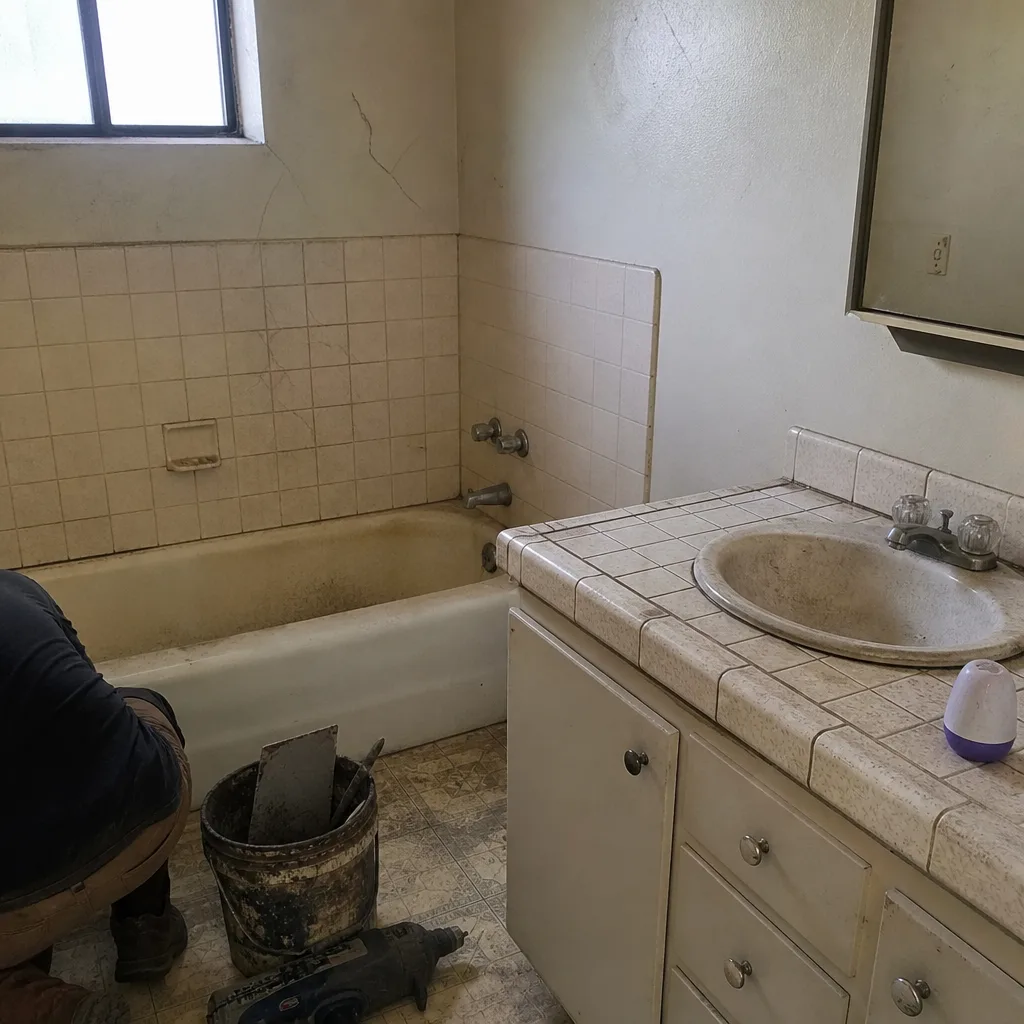 Before
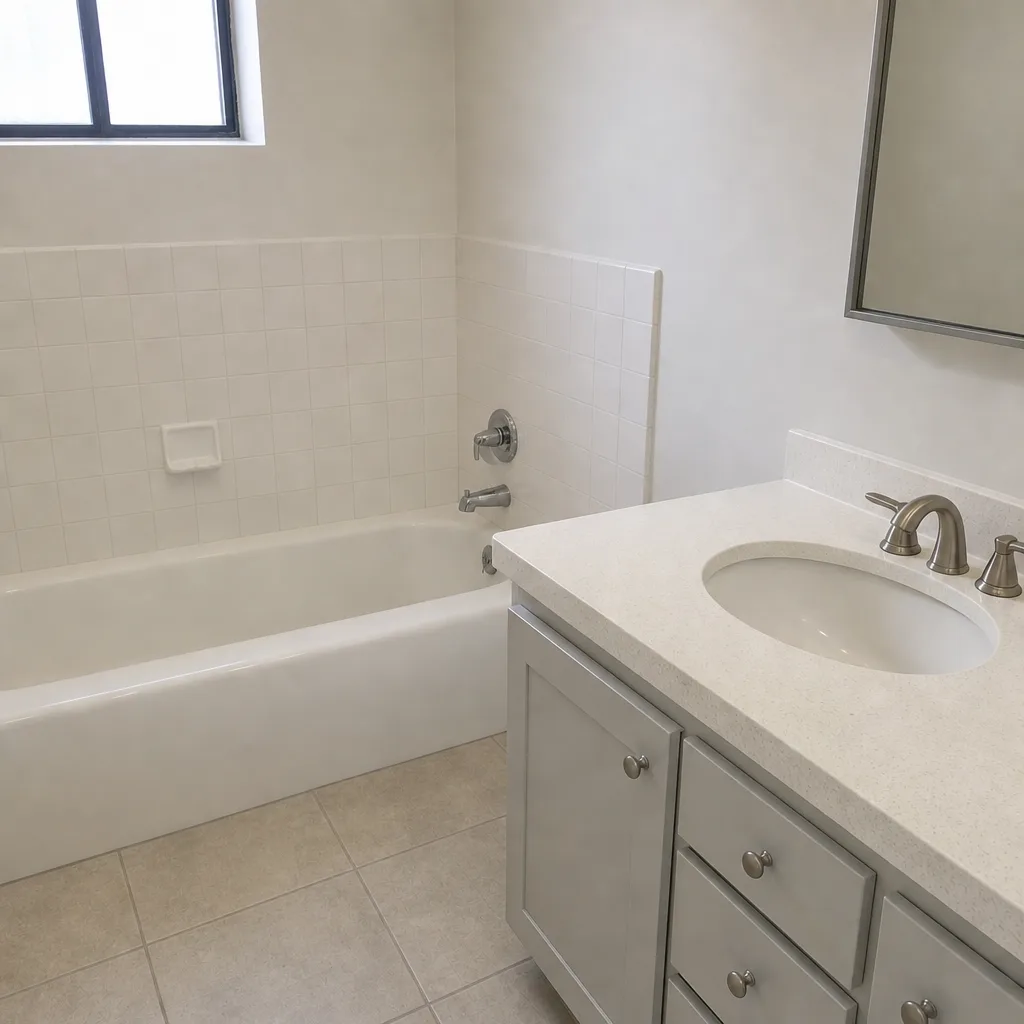 After
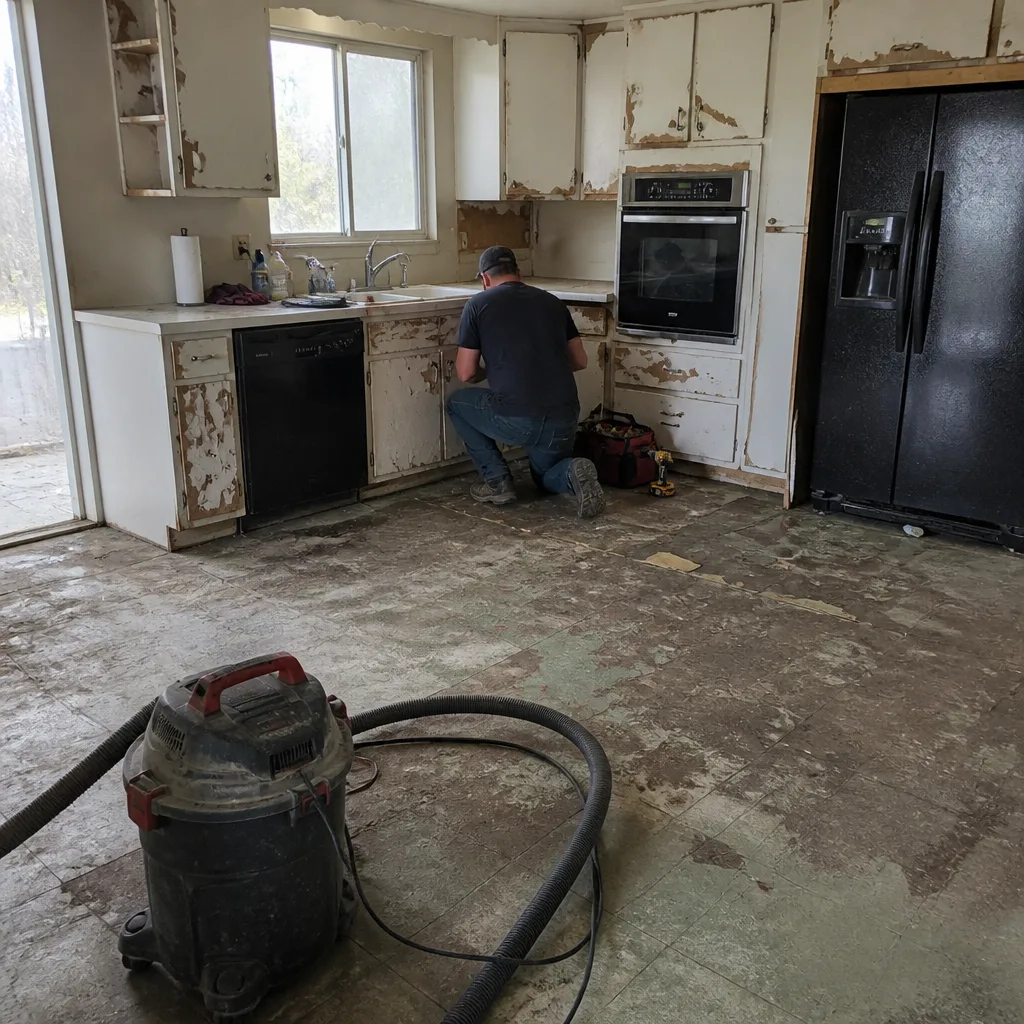 Before
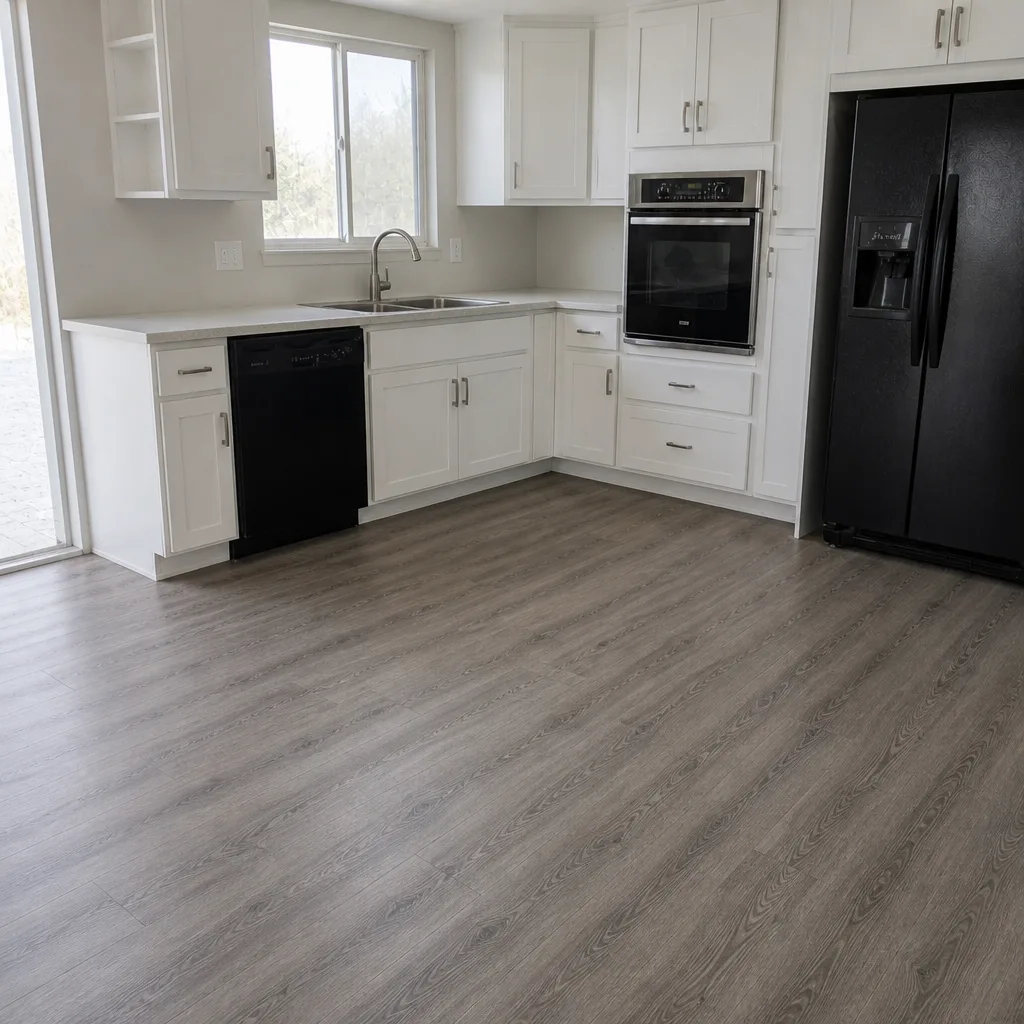 After
 Before
 After
When to Call a Professional
Some maintenance belongs with a licensed contractor, full stop. If you see a diagonal crack at a door or window corner, a growing perimeter gap you can’t explain, a stain on any ceiling, water intrusion through stucco or roof, gas or electrical concerns, or a garage door that’s stopped opening cleanly, call before you touch it. The same is true for any work involving roofs, height, or ladders beyond a single story. Getting a professional set of eyes on it early is cheaper than fixing a failure later. Elmstead Remodeling Mesquite offers free estimates in Mesquite. Call (833) 620-6606. Our technicians have up to 21 years of experience, calls are answered by a live person 24/7, and every project comes with a written price before any work starts.
Frequently Asked Questions

Recaulk sun-facing exterior joints every 2 – 3 years and shaded joints every 4 – 5 years. The UV load here is higher than most of the country, so surfaces facing south and west reach 130°F or more in summer. Standard painter’s caulk fails quickly; elastomeric or high-temperature sealants like Sashco Mor-Flexx and OSI Quad Max hold up longer. If a joint has pulled away, recaulk it before the next monsoon. For help evaluating joint failure around a larger project, call (833) 620-6606, and estimates are free.
Monsoon season in Mesquite runs roughly July through August, but preparations should be finished by the end of June. Before it arrives, clear roof drains, check window weep holes, seal exterior door thresholds, and inspect stucco and siding for cracks. Walk the interior afterward for water stains in ceilings and at exterior walls. Most of what we see as a contractor in October traces back to this short window.
Caliche is a calcium-carbonate-rich soil layer common in the Mesquite area that behaves like concrete when dry. It expands and contracts with moisture and temperature, which drives perimeter gap cycles at the slab. Homeowners can monitor the gap by photographing it with a ruler twice a year. If the gap grows more than about a quarter inch in a year, or diagonal cracks appear suddenly at door and window corners, call a professional to evaluate.
Yes. Once a year is the right interval. Mesquite’s hard water causes scale buildup that shortens tank life and can void the manufacturer’s warranty if the flush has been skipped. The flush itself takes about 20 minutes and is a reasonable DIY task. If you’re unsure about the valve condition or the tank shows corrosion at the fittings, get a pro to look. Call (833) 620-6606 for a free assessment.
Many routine checks are safe to do yourself: flushing the water heater, swapping HVAC filters, clearing window weep holes, photographing foundation gap measurements, checking smoke detectors, and inspecting the roof from the ground with binoculars. What is not DIY territory includes anything on a ladder above one story, roof work, garage door springs, electrical panel work, gas lines, and any repair that touches stucco or structural walls. Those belong with a trained professional.
When the same joint has failed three times in two years, or when water damage is visible behind drywall, or when a room’s layout no longer works for how your family uses it, that’s the moment to consider a remodel rather than another patch. If you’re thinking about a bathroom, kitchen, or whole-home update, our team can walk the house with you and give a written price before any work starts. See our bathroom remodeling services in Mesquite for what that process looks like. Call (833) 620-6606.
The Bottom Line
The Mesquite homes that stay in good shape are the ones where a small monthly routine holds up. The calendar in this guide isn’t complicated, but it is desert-specific: pre-monsoon prep in June, recaulk the sun-facing walls each October, watch the foundation gap twice a year, and keep records so warranties stay valid. None of this requires you to become a contractor; it requires a handful of quiet 20-minute sessions, a camera, and a fridge-mounted list. The work you can’t or shouldn’t do yourself is where a professional earns their place. If you want a fresh pair of eyes on your home or you’re planning a project, call (833) 620-6606 to schedule your free estimate. We’ll show up with shoe covers, drop cloths, and a written price before any work starts, and we’ll leave with a photo of the cleanup. Read more about how we work on our Elmstead Remodeling Mesquite home page.
Written by the team at Elmstead Remodeling Mesquite.