
Last updated November 18, 2026








Free written scope consultation - allowances, timeline, and change-order rules on paper before a single trade is scheduled
General Contractor Troubleshooting: Common Problems and How to Fix Them
A homeowner calls us about tile grout cracking at six months and is usually right that something went wrong. But whether the fix is covered hinges on something less dramatic than the crack itself: whether the original contract named the grout brand, the mix ratio, and the cure time. Most contracts never do, and that gap is where the fight starts. This guide walks through how to diagnose a remodeling problem in Mesquite, decide whether it’s workmanship, communication, or a scope gap, and take the right next step for each.
Quick Answer
When you have a problem with a general contractor, first determine whether it’s defective materials, installation error, or homeowner-caused damage, because the remedy and who pays differ for each. Then check the written scope: if the contract never named the product, method, or standard, you have a scope gap rather than a breach, and the conversation is about a change order, not a warranty claim. Document everything in writing and photos before you call, and escalate in order: direct conversation, then formal written notice, then the Nevada State Contractors Board, then small claims if the dollar amount is small enough.
Styles & brands we work with
- Kitchen remodeling
- Bathroom remodeling
- Home additions & ADU
- Roofing
- Windows & doors
- Driveway & pavers
- Fence
Table of Contents
- Is it a workmanship problem or a scope gap?
- The three-cause decision tree: materials, installation, or damage
- Silent substitutions that show up months later
- The written records that make a warranty claim easy
- First 48 hours versus three months: two different playbooks
- How to escalate a complaint in Nevada
- Why Mesquite problems look different
- Common mistakes to avoid
Is it a workmanship problem or a scope gap?
This is the question that decides everything else, and it takes about ten minutes with a highlighter to answer. Pull your signed contract and the scope of work attachment. Find the line item for the thing that’s failing. Now ask: does the document specify a brand, a grade, a method, or a measurable standard? If yes, and the finished work doesn’t match, you have a workmanship or materials problem the contractor is on the hook to fix. If no, the contract was silent, and you’re dealing with a scope gap.
Scope gaps aren’t automatically the contractor’s fault, and they aren’t automatically yours either. They’re the predictable result of a document that described a result without defining it. A line that says “install tile backsplash” leaves the thinset, the substrate prep, and the grout entirely to the installer’s judgment. When that judgment turns out to be cheaper than what you expected, the argument is about expectations, not defects.
What a well-written scope names:
- Products by brand and line – “KraftMaid Vantage maple cabinet” is enforceable; “quality cabinetry” is not.
- Substrate and preparation – what goes under the tile, the countertop, or the siding matters more than what goes on top.
- Fasteners and adhesives – the specific type, not “appropriate fasteners.”
- Standards cited by name – for tile, that’s the Tile Council of North America (TCNA) handbook methods.
- Cure times and weather constraints – especially relevant in southern Nevada, where a grout that cures too fast in dry heat cracks.
If your contract is silent and the work has already failed, treat the repair as a change order conversation with a written price before any rework starts. If the contract is specific and the work doesn’t match, you’re in warranty territory. Knowing which one you’re in before you pick up the phone keeps the conversation calm and gets you a faster answer. Our General Contractor in Mesquite team walks through this exact scope review with every homeowner before a project starts, which is the cheapest time to have the argument.
The three-cause decision tree: materials, installation, or damage
Once you know the contract’s language, the next job is figuring out what actually failed. Most residential remodeling problems fall into one of three buckets, and the remedy is different for each. Work through these in order.
- Is the failure uniform or random? A single cracked tile in a high-traffic spot is likely impact damage. A network of cracks running along a grout line across an entire floor points to a substrate or installation problem. Uniform failure across a whole surface usually means a materials or method issue.
- Check the delivery receipts and product labels. If the box, tube, or bag is still in the garage, read the batch, the product line, and the date. A discontinued grout line or a thinset past its shelf date explains a lot of failures that look like bad workmanship.
- Look at the edges and transitions. Failures that start at a wall, a doorway, or a corner are usually movement-related. That’s a substrate or expansion-joint question, not a product defect. In a Mesquite home with slab-on-grade construction and big seasonal temperature swings, movement at transitions is common and often fixable without tearing everything out.
- Ask what changed. A pet running the same path, a heavy piece of furniture dragged across a floor, a leak from an appliance, or a power-washing session on new siding can all cause damage the warranty doesn’t cover. Honest answer to this question saves weeks of argument.
- Get a second opinion from a licensed pro who isn’t selling you the repair. A short paid inspection is worth more than a free one that comes with a bid attached.
The remedy map: defective materials means a manufacturer warranty claim, filed with the product label in hand. Installation error means a contractor warranty claim, filed with the signed scope and photos. Homeowner damage means a repair you pay for, and the only question is whether you want to use the original contractor or someone local. Getting the bucket right before you call is the difference between a two-week fix and a two-month dispute.
Silent substitutions that show up months later
Some of the most expensive problems in remodeling don’t look like problems at all until the second year. They start as a swap a crew makes because a product wasn’t in stock, the price moved, or the schedule tightened. The homeowner never gets a call, and the finished work looks fine from the outside. Then the failure shows up.
Where we see this most often:
- Underlayment grade – a thinner or lower-rated board under tile or flooring that flexes and lets the finish above it crack. The label on the finished floor is correct; the layer under it isn’t.
- Fastener type and count – nails instead of screws, or fewer fasteners than the manufacturer’s instructions call for. On exterior work, this shows up as a loose board or a leak at a seam two winters later.
- Insulation R-value – a batt with an R-value lower than what the contract or local code required. You can’t see it after the drywall goes up, and you feel it every August in Mesquite.
- Exterior cladding and trim – James Hardie and similar brands publish installation-specific requirements, and swapping to a lower grade or a different trim material changes how the wall performs in heat and wind.
- Fixtures and hardware – a Kohler or Moen model substituted for a look-alike. The finish often gives it away in year two.
A good contract names products down to the model line and includes a written substitution policy: no swap without your written approval, and any approved swap documented with a photo of the product label and a signed change order with the price difference. That single clause prevents most of the disputes we hear about, and it’s the reason we give a written price before any work starts and don’t change materials after the crew arrives. If a contract you’re reviewing has no substitution clause, ask for one before you sign.
The written records that make a warranty claim easy
A warranty claim that goes smoothly is a documentary exercise, not an argument. The homeowner who has the right paper in a folder gets a repair scheduled; the one who has a phone full of cropped photos gets a back-and-forth. If you’re mid-project or planning one, ask for these records before the crew leaves on the first day.
- Daily photos – wide shots at the start and end of each day, plus close-ups of any concealed work (framing, plumbing, electrical rough-in, waterproofing) before it’s covered up. Concealed work is where the most expensive disputes live, because it can’t be inspected afterward without demolition.
- Delivery receipts – the packing slip or receipt for the actual products delivered to the house, with brand and model visible.
- Sign-off sheets – a simple page where you or a family member initial each major milestone. It’s not a legal document; it’s a record of when each stage was seen and accepted, which anchors the warranty clock.
- Change orders – every approved change, in writing, with the price and the revised date. A verbal change is a future dispute.
- Product manuals and warranty cards – hand these to the homeowner at the end. Manufacturer warranties travel with the product, not with the contractor, and they only work if the homeowner can produce them.
- A completion walkthrough photo – a photo of the clean-up after the crews leave, timestamped. It seems small, and it is a surprisingly good record of the state of the house at handoff.
On every Elmstead Remodeling project in Mesquite, those records are part of the job, not an add-on: shoe covers and drop cloths on every visit, a written price before work starts, a photo of the clean-up before the crew leaves, and a 365-Day Done Right Promise behind the finished work. If something goes wrong in the first year, the paperwork that makes the fix straightforward is already in your hands.
First 48 hours versus three months: two different playbooks
The timing of when you find a problem changes your leverage and the right next step. A problem caught mid-project is fixable cheaply; the same problem caught three months after the crew leaves costs more to work around, and the conversation is different.
Mid-project problems: the first 48 hours
- Stop the work on that item, not the whole project. A calm “hold on the tile until we talk” keeps the rest of the schedule moving and takes pressure off the conversation.
- Photograph the failure in place. Wide shot first, then close-up, then a shot with a reference for scale.
- Write down what you see, not what you think caused it. “Three hollow-sounding tiles along the south wall” is more useful than “shoddy work.”
- Call the contractor’s project lead the same day and follow up in writing – email or text is fine – summarizing the conversation and asking for a written plan to fix it by a specific date.
- Don’t tear anything out yourself. Once you remove the failed material, you’ve removed the evidence that determines who pays.
Post-completion problems: three months out
After the punch list is closed, the playbook shifts from “fix the work” to “make a warranty claim.” Re-read your warranty document before you call, and pull the completion photos and sign-off sheet. Write a short claim letter or email with four parts: what failed, when you first noticed it, what the contract or warranty says applies, and what you’re asking for (a repair, an inspection, or a written opinion). Ask for a response within a set window – ten business days is reasonable. If the contractor is responsive and reasonable, most post-completion problems are resolved at this stage without any escalation.
One Mesquite-specific wrinkle: much of the remodeling here happens in newly built or recently bought homes where the original builder warranty may still be active on the shell, even when a remodel contractor handled the finishes. When a water stain or a floor issue appears, check both warranties before assuming who’s responsible.
How to escalate a complaint in Nevada
Most contractor disagreements resolve at step one, and that’s the right place to start. But if the direct conversation stalls, Nevada has a clear ladder. Here’s the order and realistic timelines for each rung.
- Direct written conversation. Send a dated email or letter to the contractor summarizing the issue and requesting a fix by a date. Give them ten business days. Most issues end here, and this document becomes the first exhibit if you escalate.
- Formal written notice of complaint. After the deadline passes, send a second letter stating that you intend to file with the Nevada State Contractors Board (NSCB) if the issue isn’t resolved within a stated window. Include photos and the contract page that applies. This is a real step, not a bluff; send it by a method that gives you a delivery record.
- File a complaint with the Nevada State Contractors Board. The NSCB handles complaints about licensed contractors and can investigate, order repairs, or take disciplinary action against a license. Filing is free to the homeowner. Expect the intake and review process to take several weeks to a few months, depending on the complexity of the claim and the contractor’s response.
- Small claims court. For dollar amounts small enough to fit within Nevada’s small claims limit, this is faster and less expensive than a civil suit. Filing involves a short form and a modest fee, and the hearing is typically scheduled within weeks to a couple of months. Bring the contract, photos, receipts, and the letters you sent.
- Civil action. For larger dollar amounts, consult a Nevada construction attorney. Most initial consultations are free or low-cost, and an attorney can tell you quickly whether the claim is worth pursuing.
Two things speed up any rung: the contractor’s license number (find it on the NSCB’s public license lookup) and the signed contract. Both are required for a complaint to move forward, and both should be in your file before any project starts.
Why Mesquite problems look different
Some of the failures that look mysterious in other parts of the country have very recognizable causes here, and knowing them shortens the diagnosis. Our climate, our housing stock, and our permitting all play into how a remodel ages.
Heat and dryness are the big two. Drywall cracks that appear along a corner or over a doorway in a Mesquite home in the first summer after a remodel are usually not a structural problem; they’re the house adjusting to seasonal movement, and they’re a patch-and-repaint fix. Grout that cracks along a whole tile field within a few months likely cured too fast in a hot, dry space; the mix ratio and the sealing schedule matter more here than they do in a humid climate. Exterior caulk joints and trim on south- and west-facing walls degrade faster than the manufacturer’s data sheet suggests, so a proactive recaulk at the second year is routine maintenance, not a repair.
Slab-on-grade construction, which covers much of the newer housing in Mesquite, means substrate prep under tile and flooring is the single most consequential part of the job. It also means the transition from tile to carpet or wood at a doorway gets more movement than most homeowners expect. Ask specifically how the substrate will be prepped and how expansion joints will be handled at transitions; if the answer is vague, that’s a scope gap worth closing before work starts.
Permitting here follows the same general pattern as the rest of Nevada: structural, electrical, plumbing, and mechanical work needs a permit and an inspection, and a reputable contractor pulls the permit in their own name, not yours. That matters because a homeowner-pulled permit puts the inspection responsibility on you, and it complicates any later complaint. If you’re planning a larger project, our Kitchen Remodeling in Mesquite and Bathroom Remodeling in Mesquite teams pull the permits and walk the inspections as part of the written scope, and every quote specifies who pulls what before anything starts.
Common Mistakes to Avoid
- Signing a scope that describes results, not materials. “New flooring” leaves the underlayment, the fastener schedule, and the material line entirely to the crew’s judgment. Ask for the brand, model, and grade on every line.
- Tearing out the failed material before anyone has seen it. Once the tile is in the dumpster, proving the installation was at fault becomes very hard. Photograph, then call.
- Relying on verbal change orders. A verbal “we’ll swap that out” is not enforceable in a Mesquite dispute and is the source of most cost surprises. Every change goes in writing, with the price.
- Paying in full before the final walkthrough. Hold a final payment until the punch list is closed and the completion photos are in your hand. It’s normal and expected, and reputable contractors in Mesquite plan for it.
- Skipping the permit because the work “isn’t structural.” Electrical, plumbing, and mechanical changes still need a permit and inspection, and unpermitted work complicates resale and any warranty claim years later.
- Assuming the manufacturer warranty travels automatically. It doesn’t. You need the product label, the receipt, and the warranty card. Ask for all three at handoff.
- Letting a small cosmetic issue become an annual problem. A hairline crack or a caulk line pulling away is a cheap fix in month three and a water intrusion issue by year two, especially in our dry-summer, cool-winter swing.
See the difference
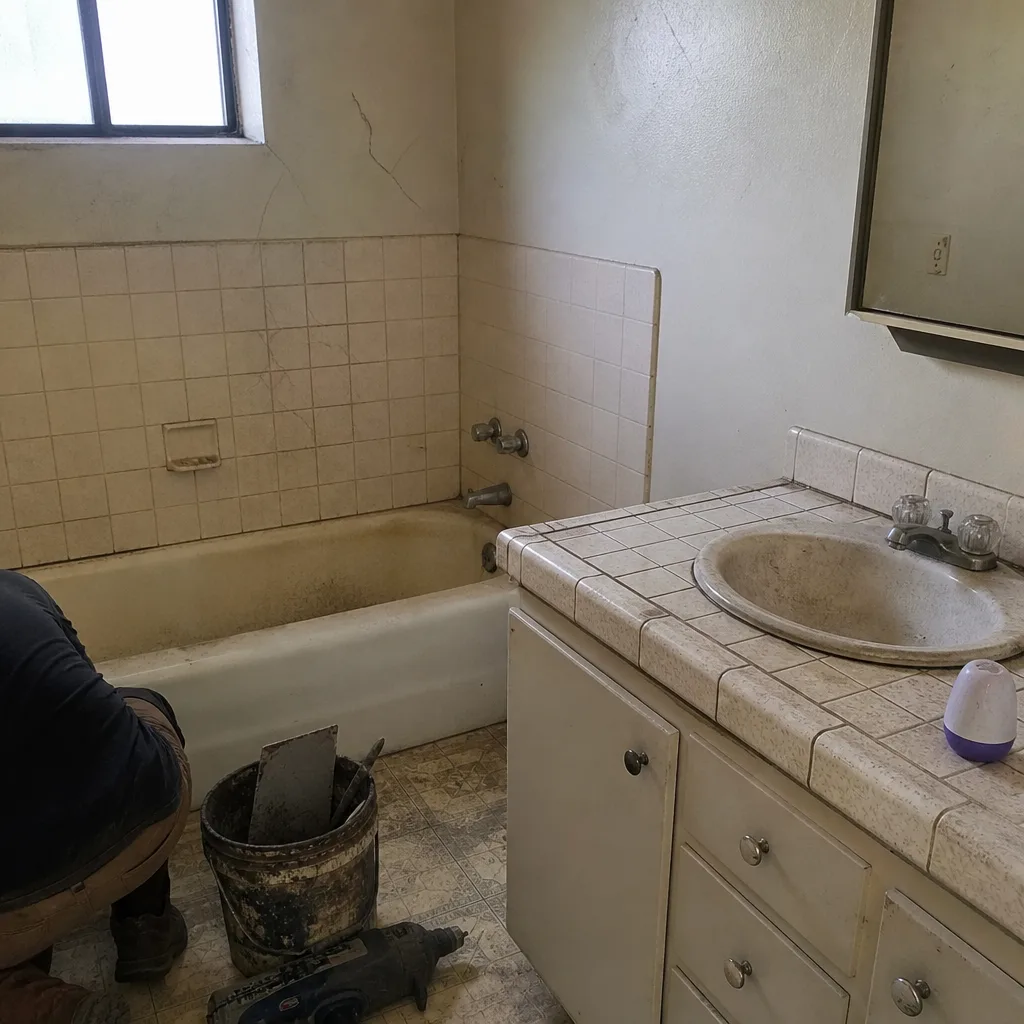 Before
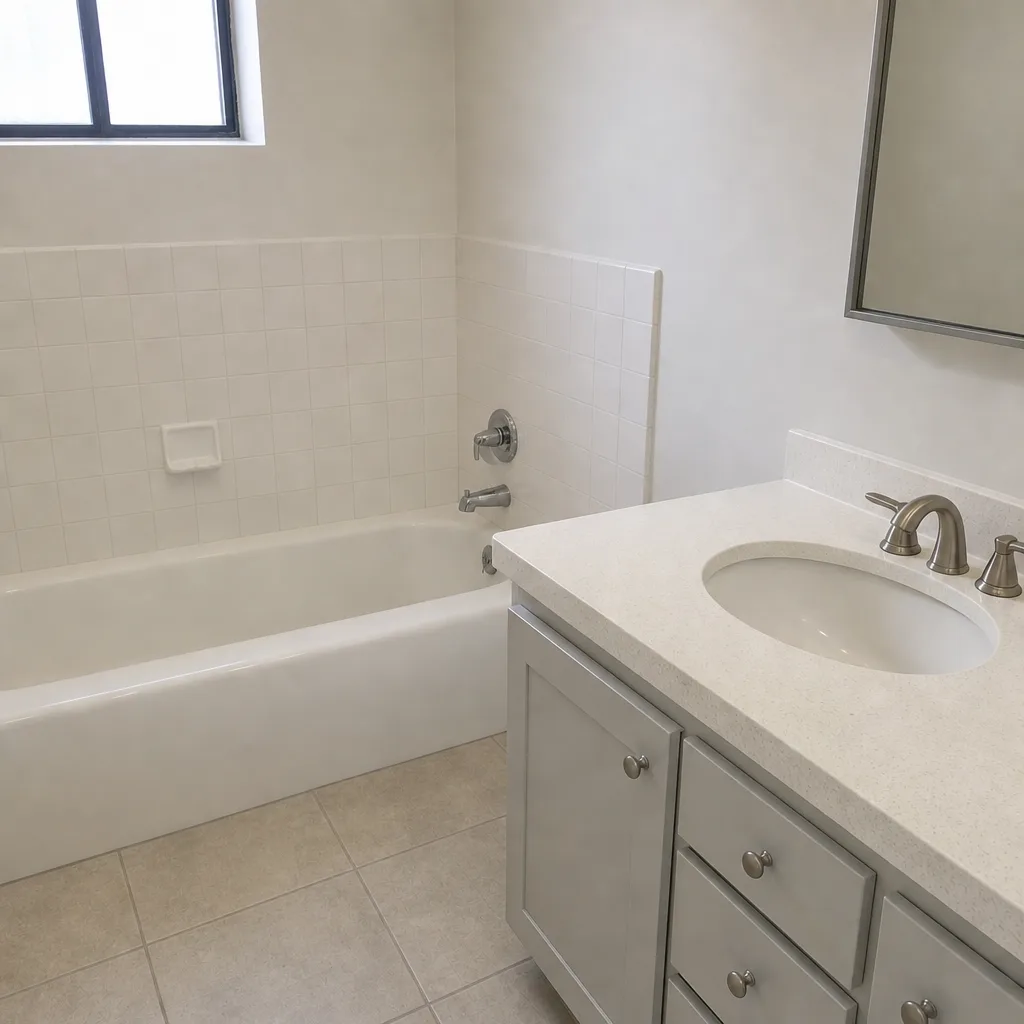 After
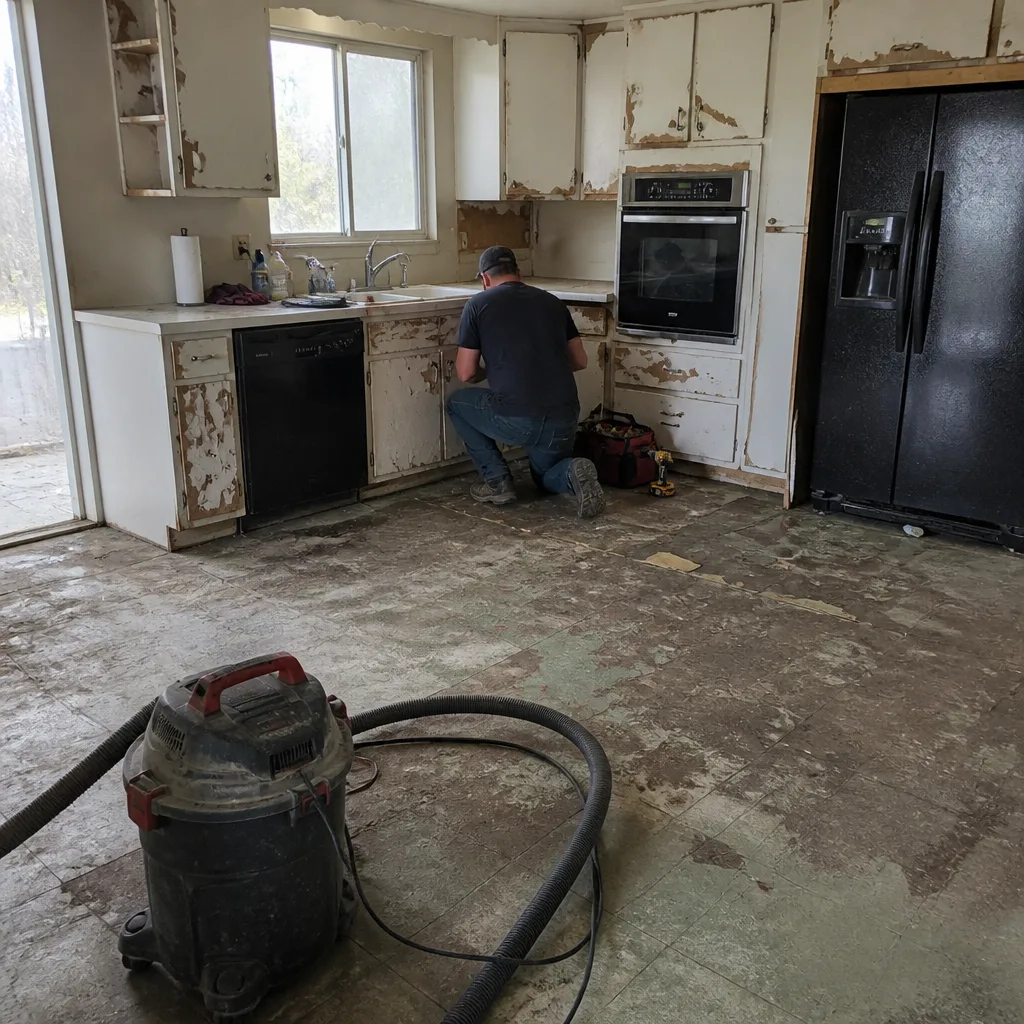 Before
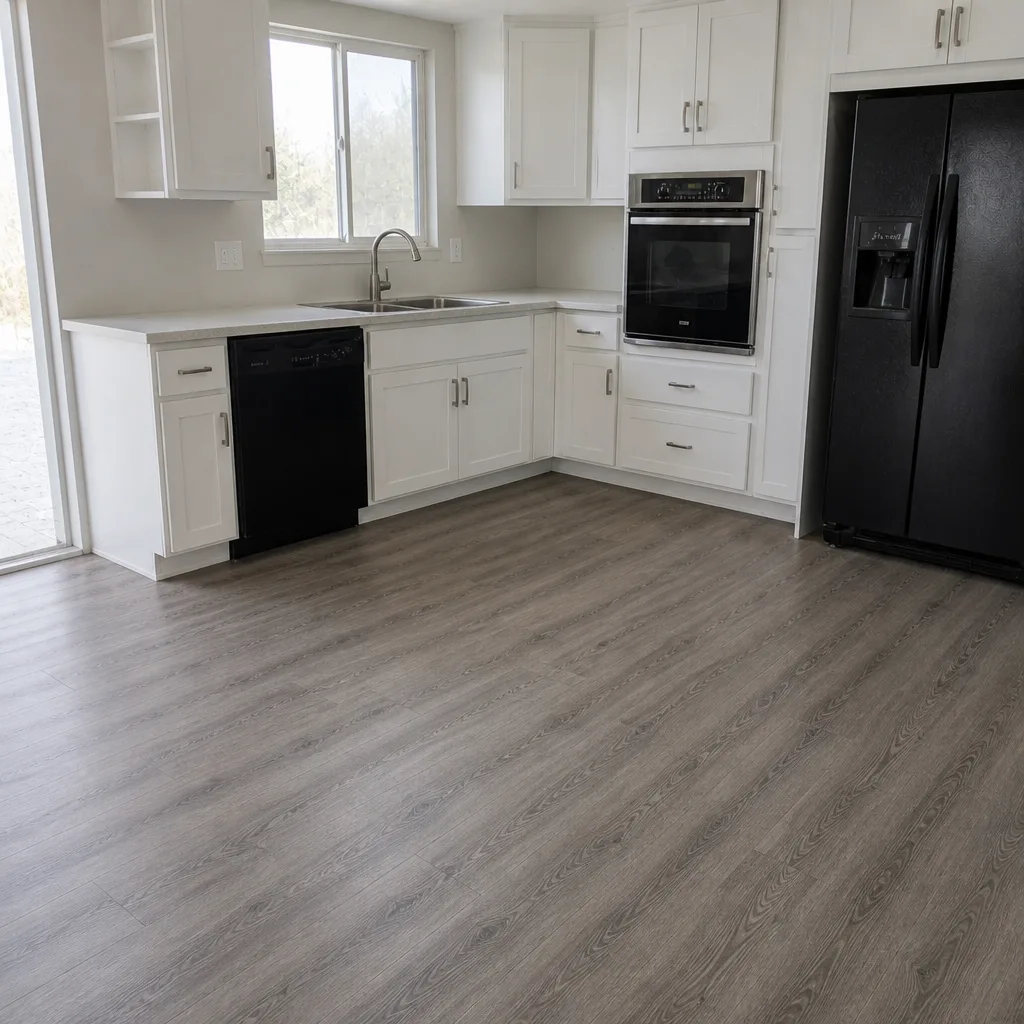 After
 Before
 After
When to Call a Professional
Call a professional when the failure involves anything structural, anything electrical, anything plumbing-related behind a wall, or anything with a water source. Also call when you’re not sure which of the three buckets the problem fits into, because a wrong guess costs more than a short inspection. In Mesquite, the practical rule is: if fixing it might require opening a wall or pulling a fixture, call before you touch it. If it’s a cracked caulk line or a scuff on a newel post, it’s a maintenance item and you can handle it. A licensed pro is the right call for anything that could be hiding a bigger issue, and a short paid inspection is almost always the cheaper path. Elmstead Remodeling Mesquite offers free estimates in Mesquite – call (833) 620-6606 to schedule a look before the small problem becomes a big one. You can also see our full range of work on our Elmstead Remodeling Mesquite home page.
Frequently Asked Questions
Do three things before anything else: photograph the issue in place, re-read your signed scope to see whether it specifies a product or standard, and send the contractor a dated email or text describing what you see and asking for a written plan to fix it by a date. Don’t tear anything out. That three-step sequence protects the evidence and puts the conversation in writing, and it resolves most problems without escalation.
Usually the homeowner, because an unnamed product is a scope gap rather than a warranty breach, and the fix becomes a change order. The exception is when the failure is clearly installation error under a standard method (the TCNA handbook is the common reference for tile), because a contractor is expected to install to industry standards even when the contract is silent. If a written price has to change to fix it, it should be documented in a change order before any rework starts. Call (833) 620-6606 for a free estimate on the repair.
A responsive contractor typically responds within ten business days and schedules the fix within a few weeks. If the claim goes to the Nevada State Contractors Board, expect several weeks to a few months for intake, review, and the contractor’s response. Small claims court in Nevada usually schedules a hearing within a few weeks to a couple of months of filing. The written record is the difference between the short and long timelines, so keep everything dated.
Yes. Permits are pulled by the Elmstead team in the company’s name, and inspections are walked as part of the written scope, so the homeowner isn’t left carrying the inspection responsibility. That’s part of the reason we give a written price before any work starts – the permit, the inspection, and the clean-up are already in the number, not surprised onto the invoice after the crew arrives. For a Mesquite project, call (833) 620-6606 for a free estimate.
You should have the signed contract and all change orders, delivery receipts for the named products, daily and completion photos, sign-off sheets from each milestone, and the manufacturer warranty cards for every fixture, cabinet, countertop, and exterior material. That folder is what turns a warranty claim from a dispute into a scheduled repair. Ask for it in writing before the final payment; reputable contractors in Mesquite hand it over as a matter of routine.
The 365-Day Done Right Promise means that if the finished work isn’t done right within the first year after the project closes, we make it right. It covers workmanship on the projects Elmstead Remodeling completes. It doesn’t cover homeowner-caused damage or ordinary wear, and manufacturer warranties on products like KraftMaid, Cambria, Kohler, and James Hardie materials travel with the product separately. The point of the promise is simple: if something goes wrong in year one, you have one number to call and a written commitment behind it. Call (833) 620-6606 for a free estimate on your next project, or see our General Contractor in Mesquite services.
The Bottom Line

Most remodeling problems that feel like contractor failures are actually contract failures, and the fix usually starts with reading your own paperwork, not with a lawyer. Name the products, name the substitution policy, keep the photos, and hold the final payment until the walkthrough. If something goes wrong, decide first whether it’s workmanship, materials, or damage, then follow the escalation ladder – direct written conversation, formal notice, NSCB, small claims – in that order. Our team at Elmstead Remodeling in Mesquite gives a written price before any work starts and stands behind every project with the 365-Day Done Right Promise. Call (833) 620-6606 for a free estimate.
Written by the team at Elmstead Remodeling Mesquite.