Last updated November 18, 2026



Free written scope consultation - allowances, timeline, and change-order rules on paper before a single trade is scheduled
Kitchen Remodeling Warning Signs Every Homeowner Should Know
We’ve reviewed a lot of contracts over the years, and the same sentence shows up in the bad ones: “granite countertops.” That’s it. No slab source, no thickness, no edge profile, no finish. It reads like a specification, but it functions as a permission slip. It lets a contractor install the least expensive slab that technically fits those three words, and homeowners sign agreements shaped exactly that way more often than you’d expect. The warning signs that cost families the most money almost never appear after demolition starts. They’re sitting in the paperwork before anyone picks up a hammer. This guide will teach you to read those signals in Mesquite, from the quote on your counter to the crew in your kitchen.
Quick Answer
The biggest kitchen remodeling warning signs are vague written quotes that don’t name product brands, model numbers, or grades; contractors who resist putting a fixed price in writing before work starts; skipped pre-project inspections that miss water damage or old electrical work; and subcontractors who show up without a clear scope. Catching these during planning saves far more than catching them after demo.
Styles & brands we work with
- Kitchen remodeling
- Bathroom remodeling
- Home additions & ADU
- Roofing
- Windows & doors
- Driveway & pavers
- Fence
Table of Contents
- Warning Signs in the Language of a Written Quote
- Behavioral Warning Signs Before You Sign
- Structural Warning Signs a Pre-Project Inspection Should Surface
- Permits and Licensing: What a Mesquite Homeowner Should Verify
- Warning Signs During the Project, Not Before
- How Material Substitution Actually Happens
- What a Contractor’s Clean-Up Habits Tell You Before You Hire
- The Questions That Separate Careful Contractors From Careless Ones
Warning Signs in the Language of a Written Quote
A written quote is a contract in miniature. Every noun in it should be specific enough that you could take it to a showroom and ask to see the exact item. When a line item says “premium fixtures” or “hardwood cabinets” or “tile backsplash,” you’re not looking at a price. You’re looking at a placeholder that gives the contractor room to substitute downward without technically violating anything.
Here’s what a strong kitchen quote line looks like compared to a weak one:
- Weak: “Granite countertops.” Strong: “3cm Cambria quartz, color name and slab number, eased edge, template and install included.”
- Weak: “Quality cabinets.” Strong: “KraftMaid or Wellborn, door style named, box construction spec, soft-close hinges listed by brand.”
- Weak: “New faucet.” Strong: “Moen or Kohler, model number, finish, and whether the supply lines are included.”
- Weak: “Flooring allowance: $2,000.” Strong: “Tile specified by name and size, underlayment named (Schluter, for example), allowance only if you change the selection in writing.”
An allowance is the single most common loophole. When a quote says “$2,000 allowance for tile,” that number isn’t a price. It’s a promise that the contractor will spend at most that much and charge you for anything over. Ask what the actual installed cost is at the tile you want, with the actual name on it, before signing. In Mesquite, where tile and stone selections often have to ship in from Las Vegas suppliers, a loose allowance can balloon once freight and lead time enter the picture.
Behavioral Warning Signs Before You Sign
The paperwork matters, but the behavior before it matters just as much. We’ve watched homeowners hire contractors who never walked the kitchen with them, never asked about pets or kids underfoot, never named who was doing the electrical. Those are not small omissions. They’re the same signals you’d get from any contractor who treats your home as a work site instead of a family’s house.
Before a contract is signed, watch for these red flags:
- They resist a written price. If a contractor tells you they’ll “work it out as we go” or hands you a verbal number that changes each time you talk, you can’t compare bids and you can’t hold anyone accountable. A written price should be standard on every project, not a perk you have to fight for.
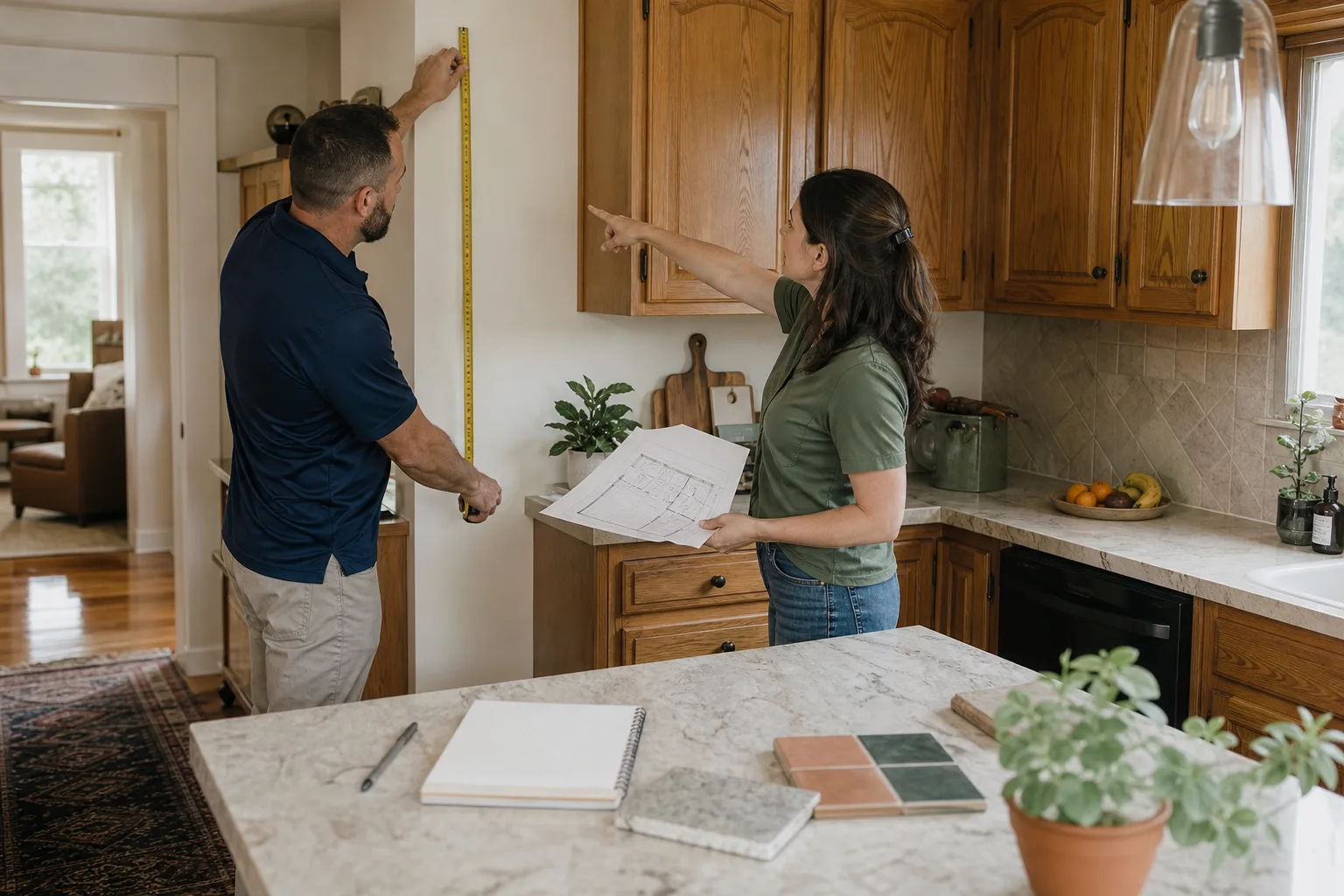
- They skip the pre-project walkthrough. A careful contractor wants eyes on the cabinets, the subfloor, the outlet count, and the plumbing before quoting. If they’re willing to price your kitchen from the driveway, they’ll be willing to fix surprises with your checkbook.
- They can’t name their electrical and plumbing subs. Ask who’s doing the rough-in. If the answer is “we’ll figure that out,” you don’t know whose workmanship is backing your walls. Ask whether those subs are licensed, and whether the contractor will put their names in writing.
- They push you to sign before you’ve seen everything. Pressure to sign fast is a signal that the paperwork won’t survive a second read.
- They won’t answer the phone. If you’re leaving voicemails before the contract, you’ll be leaving them after the check clears.
In our experience serving Mesquite families, the contractors who pass this screen are the ones who ask about the kids’ sleep schedule, the pets’ feeding routine, and whether anyone works from home. Those questions sound small. They’re actually how a careful crew plans the job around a family’s day.
Structural Warning Signs a Pre-Project Inspection Should Surface
Your kitchen is already telling a story about its past. A responsible pre-project inspection reads that story before demo, not after. Skip it, and the “surprise” costs get discovered on the wrong side of a signed contract, usually at your expense.
Three specific spots a careful inspection should check in any Mesquite kitchen:
- Under the sink cabinet. Look for dark staining on the cabinet floor, swelling at the base of the box, soft wood around the plumbing penetrations, and any bubbling of the paint or finish. Past leaks don’t always announce themselves. They leave water rings, swollen particleboard, and mold that a flashlight and a screwdriver handle can find in five minutes.
- Near the dishwasher. Feel the floor right in front of and beside the dishwasher. A soft spot or a bounce underfoot usually means water has been getting under the flooring for a while. Replacing tile over a soft subfloor is a waste of the tile.
- Behind outlet and switch plates. Pull a plate and look at the wiring. Aluminum branch wiring, ungrounded outlets, wire nuts wrapped in electrical tape, or outlets added without a box all point to past unlicensed electrical work. That matters because rough-in permits and inspections require the whole circuit to meet code, not just the new parts.
Mesquite’s dry climate hides water damage well. Wood dries out and cabinets shrink back into shape, so the visual clues fade faster than they would in a humid climate. A contractor who assumes “no visible water damage” after one glance is skipping the inspection that protects you. If the inspection turns up something, you want it in writing with a price before demo, when you can still compare options. That’s the reason the upfront pricing standard matters – the price should cover what the inspection found, not just what the contractor hoped to find.
Permits and Licensing: What a Mesquite Homeowner Should Verify
Before signing a kitchen remodeling contract in Mesquite, verify the contractor’s license directly with the Nevada State Contractors Board. The board’s public search lets you confirm a license number, its status, its classification, and whether there are any disciplinary actions. Do that search yourself. Don’t take a business card as proof.
Here’s the exact sequence to follow before you sign:
- Ask for the contractor’s Nevada license number in writing.
- Search the Nevada State Contractors Board database to confirm the license is active and matches the legal name on your contract.
- Confirm the license classification covers the work being quoted, including any specialty trade you’re subbing out.
- Ask which permits will be pulled for your project and who pulls them. In Mesquite, kitchen rough-in work involving electrical, plumbing, or structural changes typically requires permits pulled by the licensed contractor, not the homeowner.
- Ask for proof of insurance and confirm the coverage dates overlap your project schedule.
- Ask for the written price one more time before you sign, and check that the numbers on the contract match the quote you approved.
A contractor who hesitates on any of these steps is telling you something. The written price, the license number, the permit responsibility, and the insurance should all be routine answers. When they’re not, that’s the warning sign. For more on how a full kitchen project comes together in Mesquite, see our Kitchen Remodeling in Mesquite page.
Warning Signs During the Project, Not Before
Some warning signs only appear once work is underway. These are the ones that determine whether your project finishes on the price you agreed to or drifts into change orders.
Watch for these three:
- Material swaps without written approval. If a different slab appears, a different faucet gets installed, or a cabinet brand changes, stop. Any substitution needs your written sign-off, with the replacement named and priced. A crew that swaps materials quietly is making the same bet the vague quote did: that you’ll accept what’s installed because it’s already in.
- Work happening outside agreed hours. A contractor who agreed to quiet tools during nap time and then fires up a table saw at 2 p.m. is telling you how they’ll handle the rest of the contract. The Cedarwell Care Promise exists because these hours matter to a family with kids and pets in the house.
- Subcontractors arriving without knowing the scope. When the electrician shows up and asks what they’re wiring, the plan didn’t get handed off. That’s the same problem as never naming subs before the contract, just pushed later.
Two more signs worth noting. A crew that doesn’t lay drop cloths and wear shoe covers on the way in is showing you their standard. And a crew that doesn’t photograph the clean-up before leaving is telling you they’re comfortable not being held to it. Those habits are small only if you never look at the kitchen at the end of the day.
How Material Substitution Actually Happens
Most homeowners imagine substitution as a bait-and-switch. In practice, it’s quieter. It happens in three predictable ways:
- The vague brand reference. A quote that says “Moen faucet” leaves room for the cheapest Moen, which is not the same faucet as the one in the showroom.
- The missing grade or model number. “Plywood” and “OSB” are both wood panels with different costs and different performance in a kitchen. “Quartz” can mean a $60/square foot option or a $30 one.
- The allowance with no ceiling. An allowance lets the contractor quote low and resolve the difference as a change order. If the quote includes allowances, ask for installed pricing at your selected product, not an allowance range.
Named brands are protection, not decoration. When a quote names KraftMaid or Wellborn for cabinets, Cambria or Silestone for counters, and Kohler, Moen, or Grohe for fixtures, you can research each one, price it independently, and compare two bids honestly. That’s true in Mesquite as much as anywhere. It’s also why we name brands in every quote, and why manufacturers’ warranties on those products travel with the finished project – your coverage follows the product, not the proposal.
What a Contractor’s Clean-Up Habits Tell You Before You Hire
Clean-up is the easiest signal to test. Ask any contractor you’re considering how they protect the floors, the doorways, and the walkway to the kitchen. Ask whether shoe covers and drop cloths are included in the price or added as a line item. Ask whether they’ll take a photo of the clean-up before the crew leaves each day.
The answers tell you more about how they run a job than any testimonial. A contractor who treats clean-up as an afterthought treats your home the same way. A contractor who plans for the drop cloths plans for the details, and the details are where kitchen problems hide – behind the dishwasher, under the sink, behind an outlet plate. If you’ve got pets, ask about products. Some sealants, adhesives, and finishes off-gas longer than others, and pet-safe choices exist where there’s a choice. That question is reasonable and a careful contractor expects it.
The Questions That Separate Careful Contractors From Careless Ones
You don’t need a technical background to spot a careful contractor. You need six questions and a willingness to listen to how they answer.
- “Will you give us a written price before any work starts?” A yes with an example in writing is what you want. A “we’ll work it out” is not.
- “Who are your electrical and plumbing subs, and can I see their license numbers?” A careful contractor answers with names.
- “What does the pre-project inspection cover?” You want the sink cabinet, the dishwasher floor, and the outlet wiring named.
- “Will you pull permits, and which ones?” “Yes” is the right answer for any rough-in work.
- “How do you protect our floors and handle quiet hours with kids in the house?” The specifics matter. Drop cloths, shoe covers, and a plan for nap time are the minimum.
- “What happens if something goes wrong after the project is done?” A written post-project commitment is the answer. Without one, you’re relying on relationship and memory.
For a project that touches plumbing and electrical, you can see how the careful answers play out in a Bathroom Remodeling in Mesquite project as well. The same discipline applies across the house. If you’re evaluating a broader remodel, our General Contractor in Mesquite page covers how the full-project sequence works.
Common Mistakes to Avoid
- Accepting an allowance as a price. An allowance is a spending cap, not a final number. Ask for installed pricing at the actual product you’ve chosen before signing.
- Hiring without a walkthrough. A contractor who prices your Mesquite kitchen from the driveway hasn’t seen the sink cabinet or the dishwasher floor, and the surprises become your change orders.
- Not verifying the license on the Nevada State Contractors Board database. A business card is not a license. Search the number yourself before signing.
- Skipping the permit question. In Mesquite, rough-in work without permits can mean undoing and redoing the work later to pass inspection. The cost lands on you.
- Letting a material swap slide because it’s “close enough.” Every swap without written approval sets the precedent for the rest of the project.
- Ignoring clean-up as a test. If a contractor doesn’t plan to protect your floors and photograph the clean-up, the same inattention will follow the countertop and the cabinet installation.
- Choosing a bid on price alone. The lowest bid with vague language is often the most expensive once allowances and change orders stack up. Compare line items and named products, not totals.
See the difference
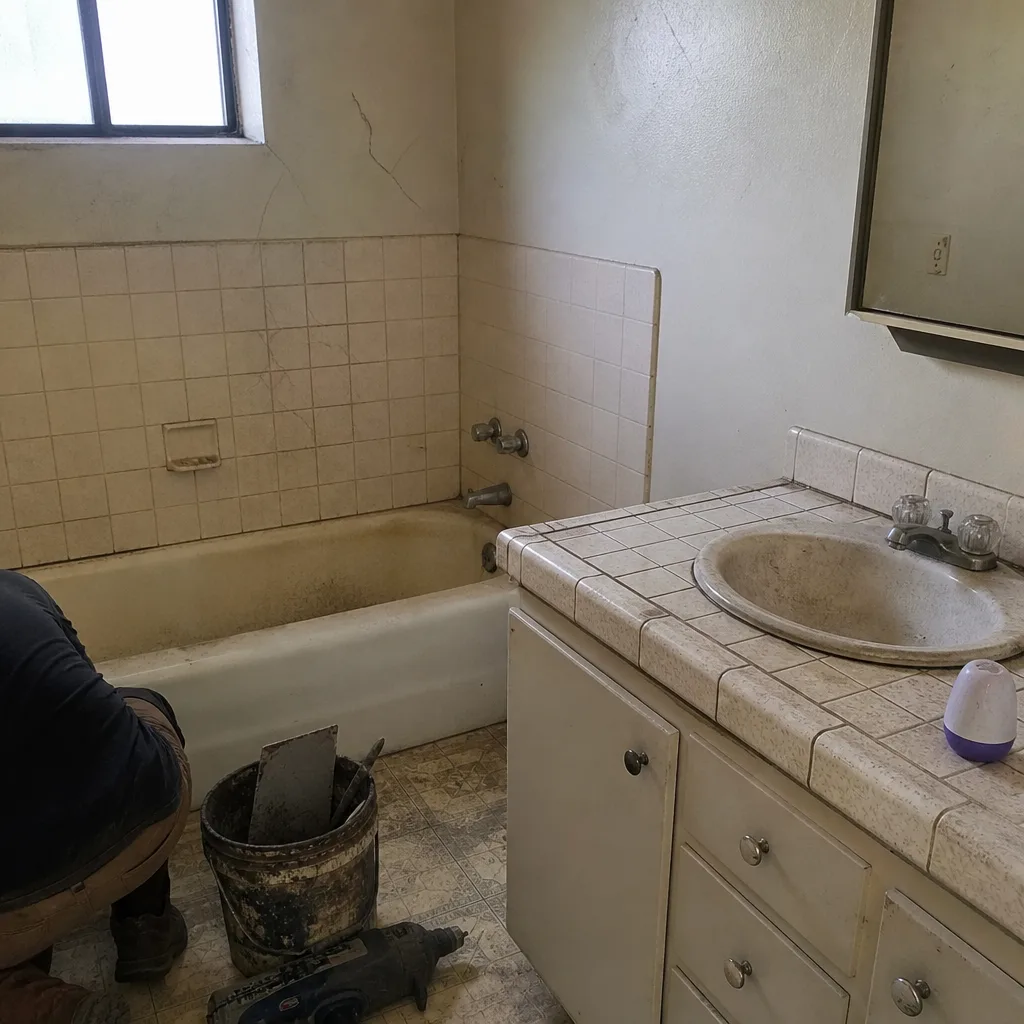 Before
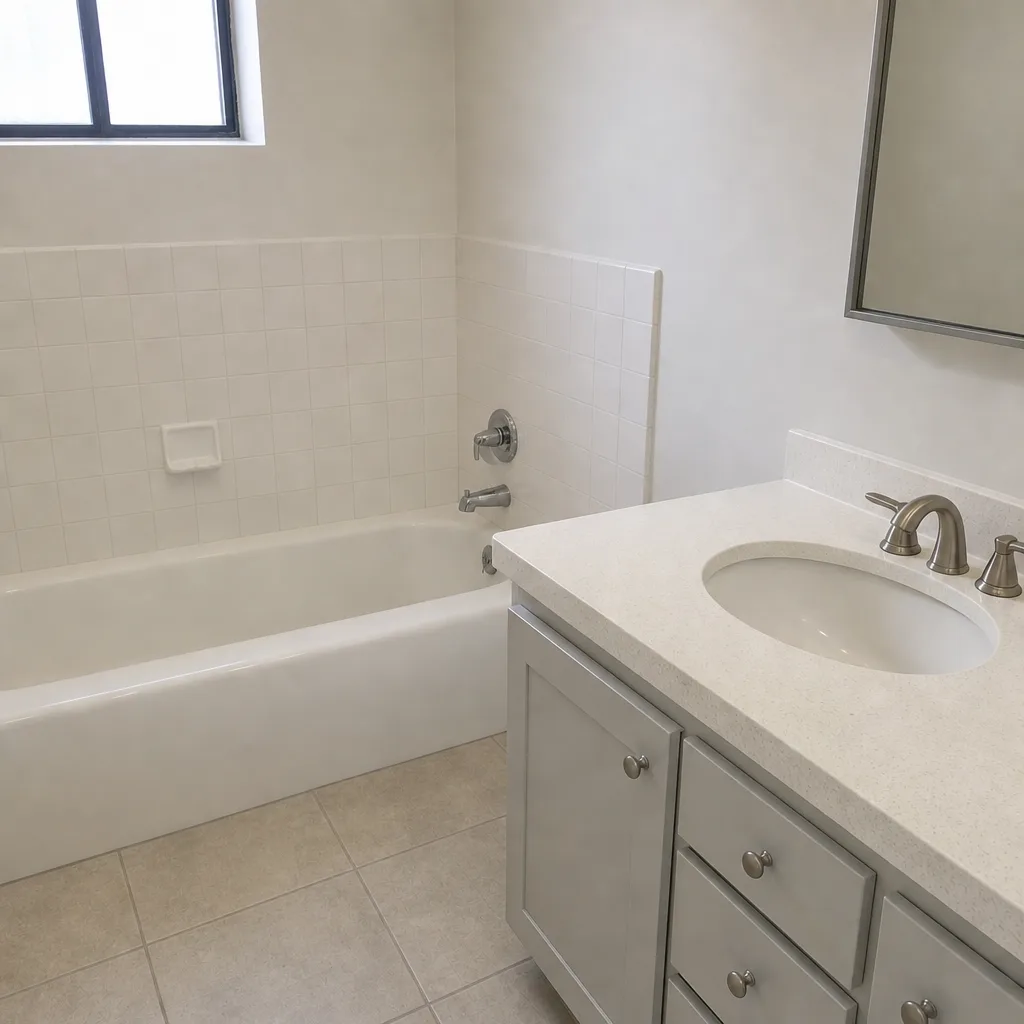 After
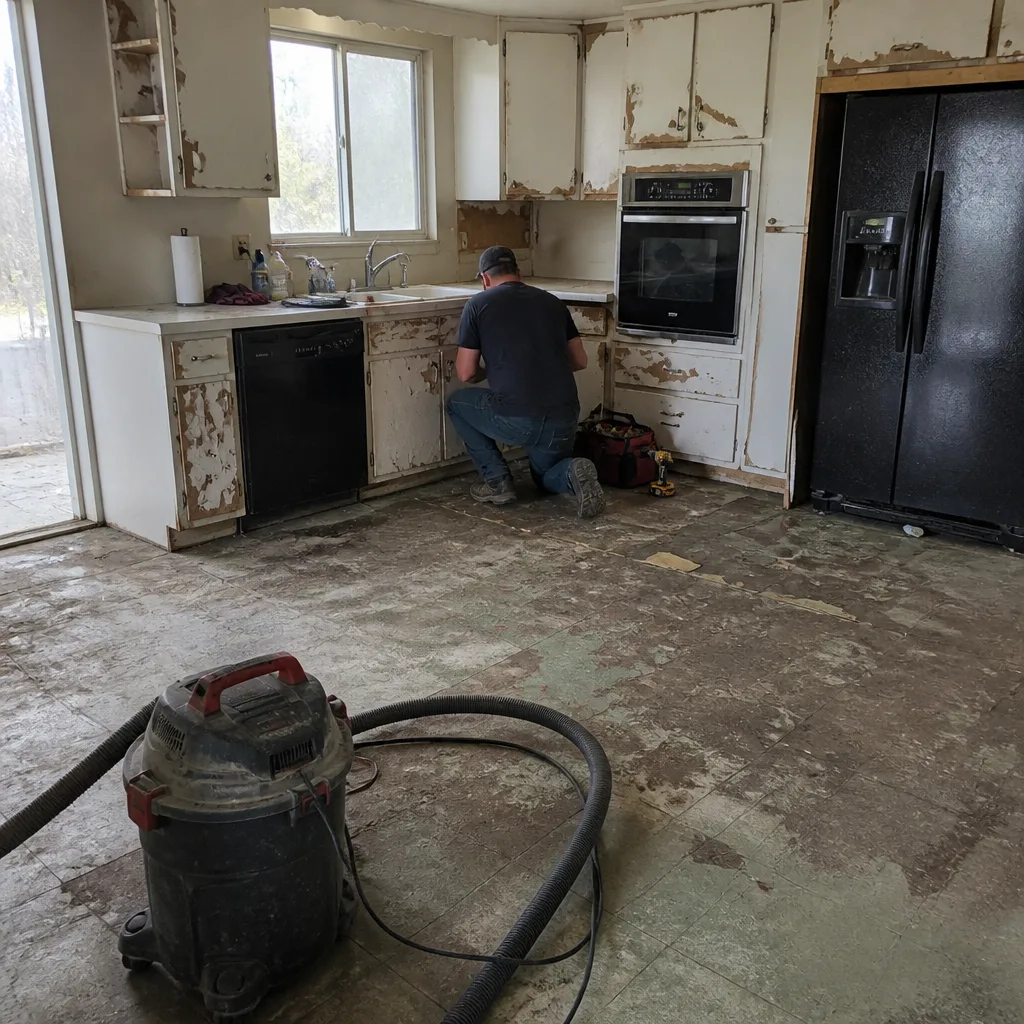 Before
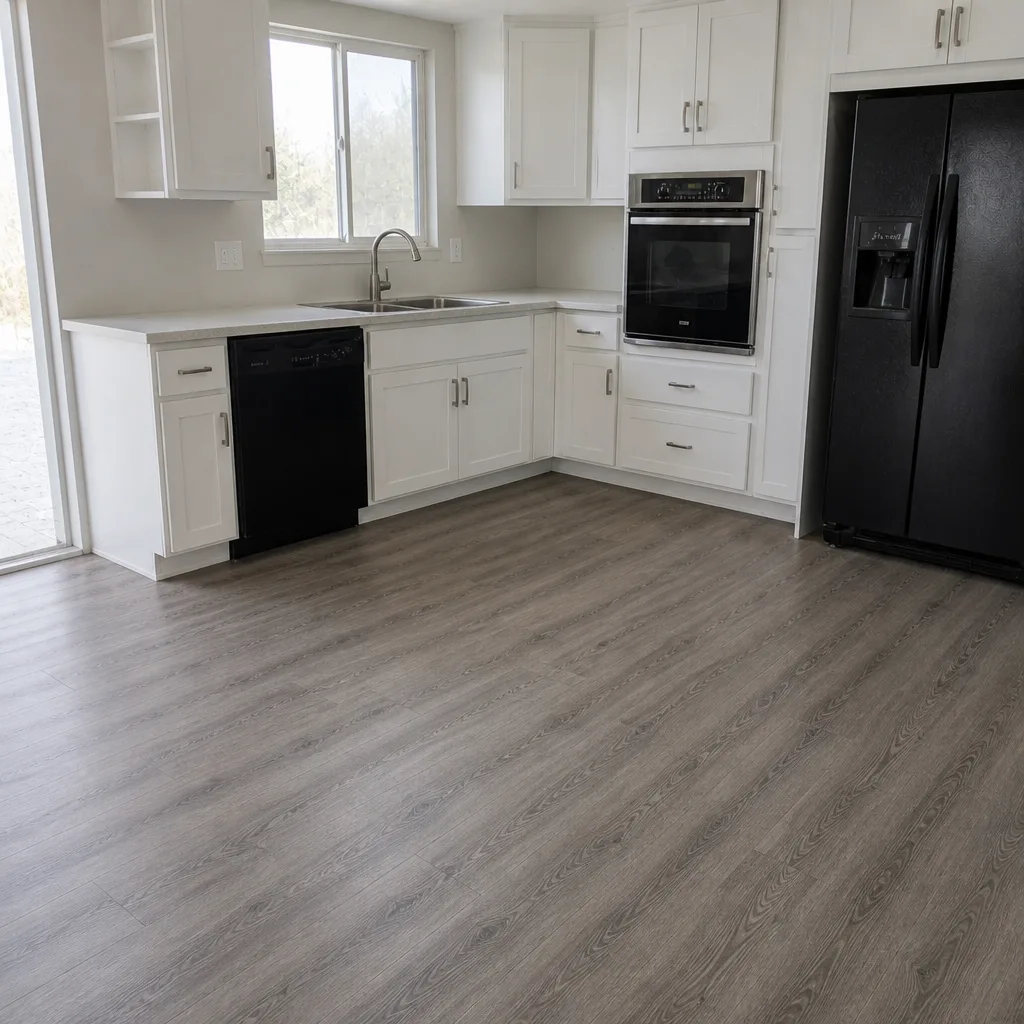 After
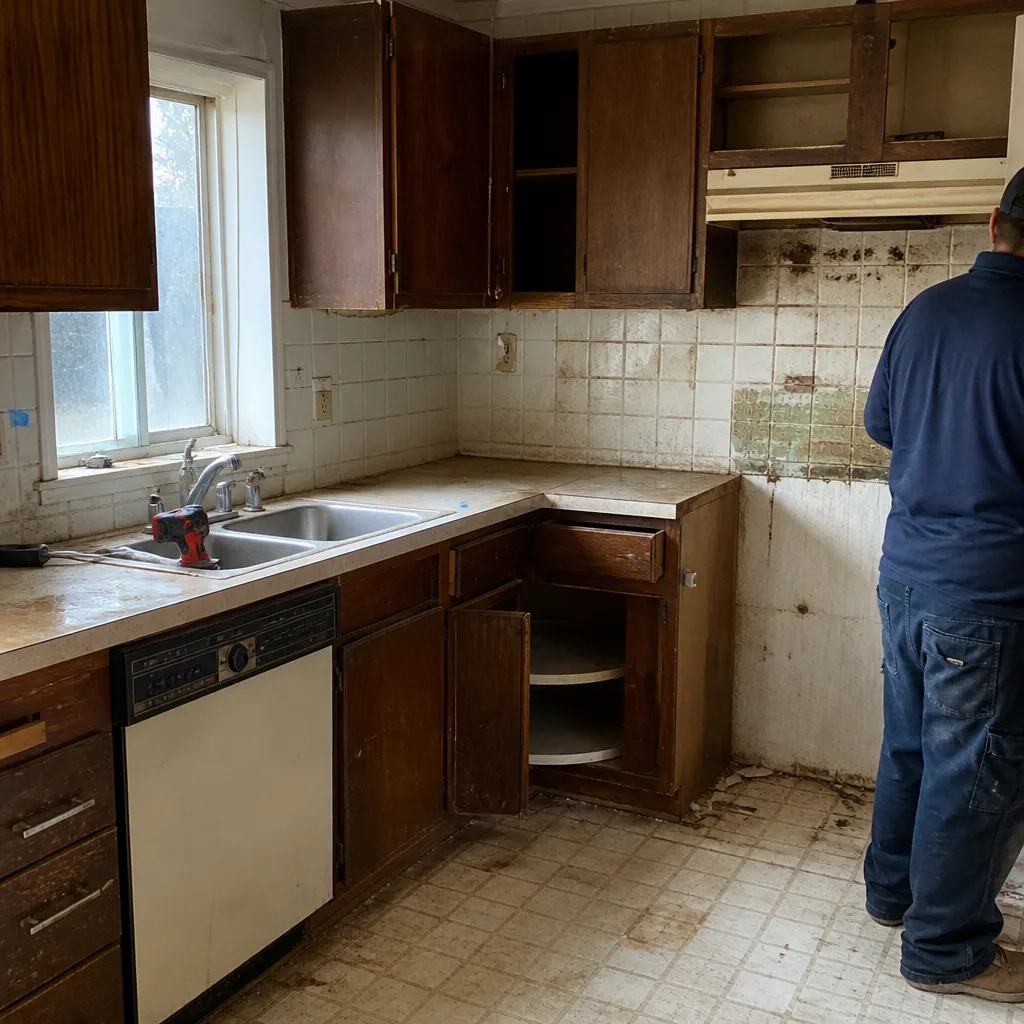 Before
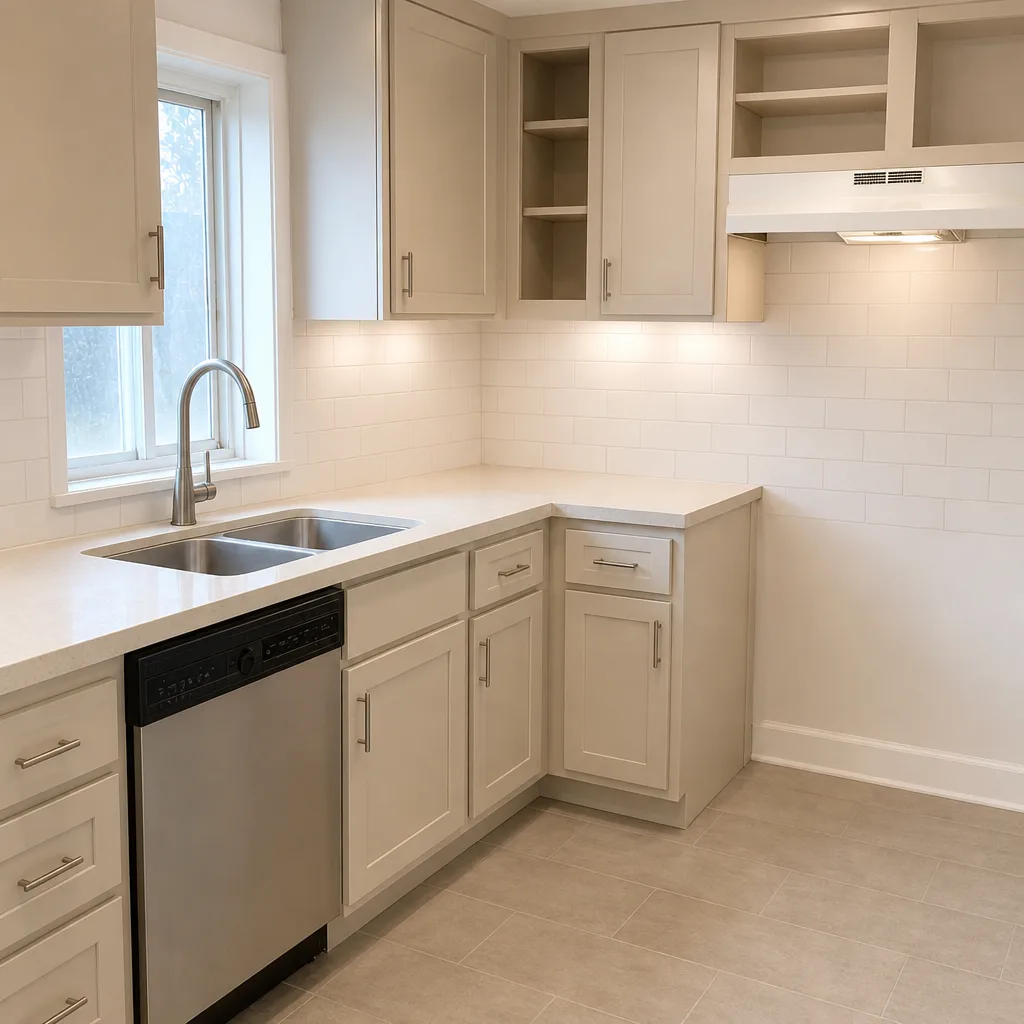 After
When to Call a Professional
Call a licensed contractor when the work touches plumbing, electrical, gas, or anything structural, and call one before you sign anything, not after. If you’ve spotted water staining under the sink, a soft spot near the dishwasher, or outlet wiring that looks homemade, you want a professional inspecting the kitchen before a contract gets signed. The same applies if a contractor hands you a quote full of vague language and refuses to give you a written price. That’s the point to slow down and get a second opinion, not the point to rush.
Elmstead Remodeling Mesquite offers free estimates in Mesquite. Our technicians have up to 21 years of experience, and every project is governed by the Cedarwell Care Promise: a written price before any work starts, shoe covers and drop cloths on every visit, quiet tools during family rest hours where possible, and a photo of the clean-up before the crew leaves. Call (833) 620-6606 to schedule a walkthrough and get an honest read on your kitchen.
Frequently Asked Questions
Kitchen remodeling in Mesquite typically runs from roughly $28,000 to $45,000 for a mid-range full kitchen, and $70,000 or more for a large kitchen with custom cabinetry and structural changes. The biggest cost swing is cabinetry, followed by countertops and labor. Call (833) 620-6606 for an exact quote. Estimates are free, and a written price is given before any work starts.
On a careful project, the price shouldn’t change unless you change the scope in writing. Change orders should always be written, signed, and priced before the extra work begins. If a contractor can’t commit to that, treat it as a warning sign. Call (833) 620-6606 to see what a written-price bid looks like on your kitchen.
Yes. Any kitchen project involving electrical, plumbing, or structural changes requires permits in Mesquite, and the licensed contractor pulls them, not the homeowner. Permits keep the work inspectable and protect you when you eventually sell. Ask any contractor you hire which permits they’ll pull and who covers the cost. Call (833) 620-6606 if you want to walk through the permit sequence for your project.
Vague quotes cost the most, often thousands of dollars in substitutions and change orders. A quote that says “quartz countertops” without a slab name or thickness lets the contractor install the least expensive option that technically fits the description. The cost shows up later as an upgraded slab price or a change order. Call (833) 620-6606 for a quote with named products and installed pricing.
Search the contractor’s license number on the Nevada State Contractors Board’s public database before you sign. The search confirms the license status, classification, and any disciplinary history, and it should match the legal name on your contract. Do the search yourself rather than relying on a business card. Call (833) 620-6606 if you’d like to walk through what to verify before signing.
The main mid-project warning signs are material swaps without written approval, work happening outside agreed hours, and subcontractors arriving without knowing the scope. Any of these means the plan wasn’t handed off properly. Stop and ask for it in writing before the next phase begins. Call (833) 620-6606 for a second opinion on a project that’s already underway, and see how we approach the work on our Elmstead Remodeling Mesquite home page.
The Bottom Line
The kitchen remodeling warning signs that cost the most are the ones that appear long before demo: vague quotes, skipped walkthroughs, unnamed subs, missing permits, and a contractor who resists a written price. Catch them while you can still compare bids, and you’ll spend your money on the finished kitchen instead of on fixing someone else’s shortcuts. Read every quote line by line. Verify the license on the Nevada State Contractors Board database before you sign. Ask about the pre-project inspection, the named brands, the drop cloths, and the post-project commitment. In Mesquite, the contractors worth hiring will answer all of those without hesitation, and the ones who won’t are telling you everything you need to know.
Call (833) 620-6606 to schedule your free estimate with Elmstead Remodeling Mesquite. Written price before any work starts. Background-checked, uniformed technicians on every job. The 365-Day Done Right Promise on every project, and a live person answering the phone when you call.
Written by the team at Elmstead Remodeling Mesquite.