
Last updated November 18, 2026








Free written scope consultation - allowances, timeline, and change-order rules on paper before a single trade is scheduled
Bathroom Remodeling Maintenance Schedule: What to Do and When
Here’s the number that surprises most Mesquite homeowners: your bathroom exhaust fan needs cleaning every 90 days, not once a year. National maintenance guides assume moderate humidity and clean air. Mesquite has neither. Our desert dust settles into fan grilles and vent housings faster than anywhere we work, and clogged fans trap moisture that cracks caulk and darkens grout. When that happens, it looks like a remodeling defect. It’s actually a maintenance gap. This guide gives you the schedule in writing: a month-by-month calendar, the products that are safe for your specific finishes, how to inspect caulk like a contractor, and a log template you can keep for warranty claims. We’ll keep the Mesquite specifics front and center throughout.
Quick Answer
Clean your exhaust fan every 90 days, reseal grout every 12 to 18 months in the shower, and inspect caulk lines twice a year. In Mesquite’s hard-water and low-humidity environment, these three tasks prevent most of the damage that gets mistaken for failed workmanship. Keep a written log of every maintenance date and product used; it protects your manufacturer warranties and tells you exactly when a fixture or surface is approaching replacement.
Styles & brands we work with
- Kitchen remodeling
- Bathroom remodeling
- Home additions & ADU
- Roofing
- Windows & doors
- Driveway & pavers
- Fence
Table of Contents
- The Mesquite-Month-by-Month Maintenance Calendar
- Which Cleaners Are Safe for Your Tile, Grout, and Fixtures
- The Biennial Caulk Inspection: Where to Look and What Damage Looks Like
- Sealing and Treating Grout in a Hard-Water Home
- Exhaust Fan Care: The 90-Day Rule
- Fixtures, Glass, and Finish Care
- Your Maintenance Log: What to Record and Why
- Common Mistakes to Avoid
- When to Call a Professional
The Mesquite Month-by-Month Maintenance Calendar
Generic schedules fail in Mesquite because they’re built for humid climates. The air here is dry almost year-round, which sounds easier on a bathroom but isn’t. Low humidity pulls moisture out of caulk and grout faster, causing them to shrink and crack. Add mineral-heavy water and airborne caliche dust, and the degradation follows a predictable cycle. Here’s the calendar we recommend to families we work with.
Every 30 Days
- Wipe down shower walls with a squeegee after each use; on the first of the month, do a full spray-and-rinse of the enclosure.
- Check the drain for hair and debris; clear it before it slows.
- Look at the caulk line at the tub or shower base for any dark spots starting at the edges.
Every 90 Days
- Remove and clean the exhaust fan grille and, where accessible, vacuum the fan blades and housing.
- Inspect the toilet base for wobble and check that the water supply line shows no moisture.
- Wipe down cabinet hardware and drawer glides; dust gets into the tracks faster here than in greener climates.
Every 6 Months
- Full caulk inspection (see the dedicated section below).
- Clean the shower glass with a mineral-dissolving product and check for hard-water film.
- Test the GFCI outlets near the sink with the test button.
Every 12 to 18 Months
- Reseal grout in the shower, and every 24 months on the floor if traffic is heavy.
- Re-caulk any joint that failed the six-month inspection.
- Check the finish on faucets and shower trim for pitting or dulling.
These intervals aren’t arbitrary. They’re the ones that match Mesquite’s dust and water chemistry. If you’ve recently finished a full remodel, our Bathroom Remodeling in Mesquite page explains the material choices that make this schedule easier from day one.
Which Cleaners Are Safe for Your Tile, Grout, and Fixtures
The wrong cleaner can void a manufacturer warranty faster than any wear and tear. We’ve seen homeowners damage a Kohler finish with an abrasive pad, and we’ve seen grout etched by an acid cleaner that was labeled “for tile.” Here’s what’s safe for the finishes we install, and what to avoid.
Safe for glazed ceramic and porcelain tile
- pH-neutral tile cleaner or a mild dish soap and warm water.
- Oxygen-based (non-chlorine) cleaners for organic stains.
- Soft microfiber cloths or a non-scratch sponge.
Safe for natural stone (if you have marble or travertine)
- Stone-specific pH-neutral cleaner only. Never vinegar or lemon on stone.
- Soft cloth or mop; no abrasive powders ever.
Avoid on grout and fixtures
- Bleach-based cleaners on colored grout: they strip sealer and accelerate staining.
- Acidic cleaners (vinegar, citrus, CLR-type products) on natural stone or on chrome and brushed finishes. Vinegar is fine on glazed porcelain if rinsed, but it degrades sealer over time.
- Abrasive powders and steel wool on any Kohler, Moen, or Delta finish.
- Drain-cleaning chemicals that splash onto grout: they etch it.
Fixture finishes
Kohler and Moen finishes are designed to be cleaned with mild soap and a soft cloth. Avoid ammonia-based glass cleaners on brushed or matte finishes, and never use a scouring pad. For routine care, a damp cloth and a drop of dish soap is all you need. If you’re choosing fixtures for a new bathroom, Kohler and Moen both publish finish-care guides you can download before you buy.
The Biennial Caulk Inspection: Where to Look and What Damage Looks Like
Caulk is the first thing to fail in a desert bathroom, and it’s the cheapest thing to fix if you catch it early. Every six months, walk the room and inspect these joints in order:
- The tub or shower base where it meets the wall. Look for a hairline gap, a dark line along the caulk edge, or any spot where the caulk pulls away from the tile.
- Inside corners of the shower walls. Run a dry fingertip along the joint; if it catches on a crack, mark it.
- Around the faucet escutcheons and the shower valve trim. Any gap here lets water behind the wall.
- The toilet base. A cracked or loose caulk ring lets water wick under the floor.
- Where the backsplash meets the countertop. Not a wet zone, but expansion and contraction cause cracking here too.
Early versus late stage damage
- Early stage: a thin crack less than 1/16 inch, or slight darkening at one edge. Re-caulk is a 30-minute task.
- Late stage: caulk that peels away in strips, soft or crumbly texture, water pooling behind the caulk line, or a musty smell near the shower base. At this point water has likely been getting behind the tile, and that’s a contractor call, not a caulk-gun call.
When you recaulk, use a 100% silicone caulk rated for wet areas. Don’t use painter’s caulk, and don’t paint over silicone. If you’re not sure whether the joint is failing or the tile behind it has shifted, call us. A crack you can see is usually small; the damage behind it might not be.
Sealing and Treating Grout in a Hard-Water Home
Mesquite water is hard. On the scale, it lands in the “very hard” range, and that means mineral deposits build up in grout lines faster than in most of the country. Grout is porous even when it’s sealed, so the schedule matters more here than the product.
Household showers (1 to 2 people, daily use)
- Deep-clean and reseal every 12 months.
- Spot-treat mineral film every 30 days with a pH-neutral cleaner.
Busy family showers (3 or more people, daily use)
- Deep-clean and reseal every 9 to 12 months.
- Spot-treat mineral film every 2 weeks.
Guest bathrooms or low-use showers
- Reseal every 18 to 24 months.
How to tell it’s time to reseal
- Drip a few drops of water onto the grout. If it beads up, the sealer is working. If it soaks in within a minute, it’s time.
- Look for white chalky lines along the grout, which are mineral deposits from hard water.
- Run a fingertip along the grout; if it feels gritty or powdery, the surface is breaking down.
To reseal, clean with a pH-neutral cleaner and a soft brush, let it dry for 24 to 48 hours, then apply a penetrating sealer (not a surface film sealer). Two coats, 30 minutes apart. Keep the bathroom well-ventilated while it cures, and give it 24 hours before the shower goes back into use. Animal and small kids stay out during that period; sealer fumes aren’t something you want a toddler around. Our General Contractor in Mesquite page covers the tile and grout selections we use when we build a bathroom from scratch, if you’re planning ahead.
Exhaust Fan Care: The 90-Day Rule
This is the task most homeowners skip, and it’s the one that matters most in a desert climate. A bathroom fan is sized to pull a specific cubic feet per minute; when the grille clogs with dust, that number drops, moisture stays in the room, and the caulk and grout problems we just covered get worse. A fan running at half capacity is essentially a fan that isn’t working.
What to do every 90 days
- Turn the fan off at the switch and let it stop completely.
- Remove the grille (most are friction-fit or have two spring clips; check your model’s manual).
- Vacuum the grille and the visible fan blades with a brush attachment.
- Wipe the blades with a damp cloth; don’t bend them.
- Reinstall the grille and run the fan to confirm it’s pulling air (hold a tissue near the grille; it should pull toward it).
When to replace rather than clean
- The motor is loud or rattling.
- The fan runs but the tissue test fails after cleaning.
- The fan is more than 10 years old and undersized for the room.
Replacing a bathroom exhaust fan is a job for an electrician or a licensed contractor, not a weekend project. The wiring runs through the ceiling cavity and needs to be connected safely and inspected. If the fan is failing, don’t wait; a month of poor ventilation in Mesquite is enough to cause visible caulk damage.
Fixtures, Glass, and Finish Care
Faucets, shower trim, and glass all take a beating in a hard-water home, but the care is simple if you do it consistently.
- Faucets (Kohler, Moen, Delta): Wipe dry after use. Water spots left to sit leave mineral rings that etch chrome over time. Once a week, wipe with a damp cloth and a drop of dish soap.
- Showerheads: Soak in a 50/50 mix of white vinegar and water for 30 minutes every 3 months to dissolve mineral buildup. Rinse thoroughly. This is safe on most finishes; check your specific model if it’s a specialty finish.
- Shower glass: Squeegee after every shower. Once a week, use a glass cleaner designed for hard water. Don’t use abrasive pads; they scratch the coating.
- Toilet: Use a non-bleach cleaner on the bowl and check the flapper annually. A running toilet wastes water and can push your bill higher than any fixture replacement.
- Caulking and grout in the wet zone: These are your priority, as above. Everything else is cosmetic.
If a fixture does need replacing, replacing it early is cheaper than letting hard water damage spread to the tile behind it. Moen and Kohler both publish warranty terms that depend on using non-abrasive cleaners, so the care routine protects your warranty as well as the finish.
Your Maintenance Log: What to Record and Why
A written log is the most overlooked tool in home maintenance, and it’s the one that pays off twice: once when you file a warranty claim, and again when you decide whether to remodel. Here’s what to record:
- Date of every maintenance task (fan cleaning, caulk inspection, grout reseal, fixture wipe-down).
- Product name and brand used, including the exact cleaner.
- Condition observed: “caulk line on tub, small crack left corner, re-caulked on 3/12” is more useful than “checked caulk.”
- Photo or note of any area that looked questionable.
- Contractor visit dates and what was done.
Two reasons this matters. First, manufacturers’ warranties, including those on Kohler and Moen fixtures and on the tile and grout we install, can hinge on documented care. A log gives you a paper trail. Second, when you’re deciding whether to remodel or replace, the log shows you which surfaces are actually failing and which just need a cleaning. If you’re weighing a refresh, our Kitchen Remodeling in Mesquite page uses the same documentation approach for kitchen surfaces.
Common Mistakes to Avoid
- Skipping the fan cleaning because it “looks fine.” Dust on the grille is invisible from the floor. By the time you notice moisture, the caulk is already failing.
- Using vinegar on everything. It’s fine on glazed porcelain, but it strips sealer and damages natural stone and some fixture finishes. Match the cleaner to the surface.
- Re-caulking over old caulk. New silicone won’t adhere to old silicone. Remove the old bead completely, clean, dry 24 hours, then apply.
- Ignoring a soft spot in the grout. Gritty or powdery grout means the surface is breaking down and water is getting in. Reseal or call a contractor before the tile loosens.
- Letting hard water sit on fixtures. Water spots left overnight become mineral etch marks. Wipe dry after every use, especially on chrome and brushed finishes.
- Not testing the GFCI outlets. It’s a two-second press of the test button every six months, and it’s the cheapest safety check in the room.
- Waiting for a “big problem” before calling anyone. In our experience, most Mesquite repair calls start with a complaint that began as a maintenance gap months earlier. Early is cheaper.
When to Call a Professional
Some maintenance is a homeowner task. Some isn’t. Call a licensed contractor when you see water staining on the ceiling below the bathroom, when caulk failure has been ignored long enough that the tile feels loose or hollow, when the shower pan flexes underfoot, or when a fixture replacement requires opening a wall. Electrical work, including exhaust fan replacement and GFCI repair, also belongs with a professional. If you’re unsure whether a crack is cosmetic or structural, err on the side of a call. At Elmstead Remodeling Mesquite, estimates are free and a written price is given before any work starts, so you’ll know the cost before you commit. Call (833) 620-6606. Every project carries our 365-Day Done Right Promise: if it’s not done right, we make it right.
See the difference
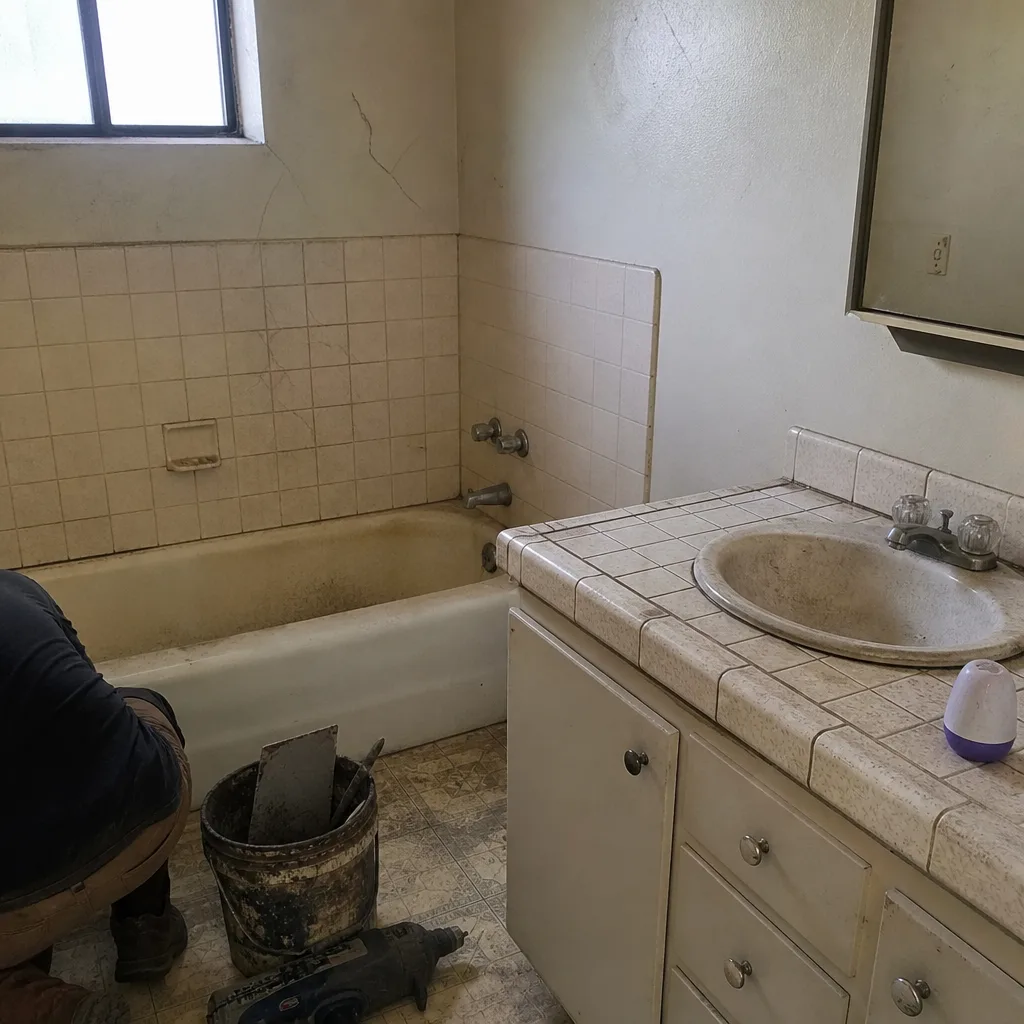 Before
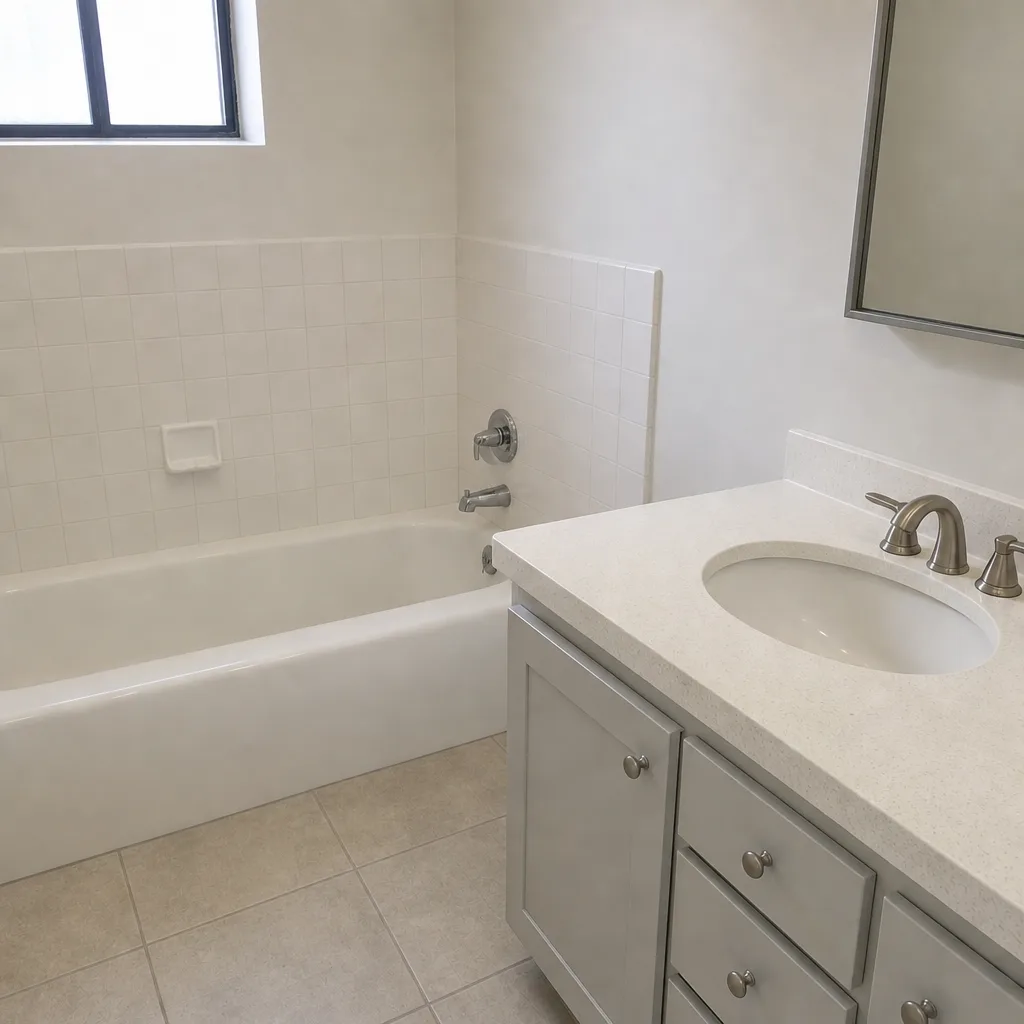 After
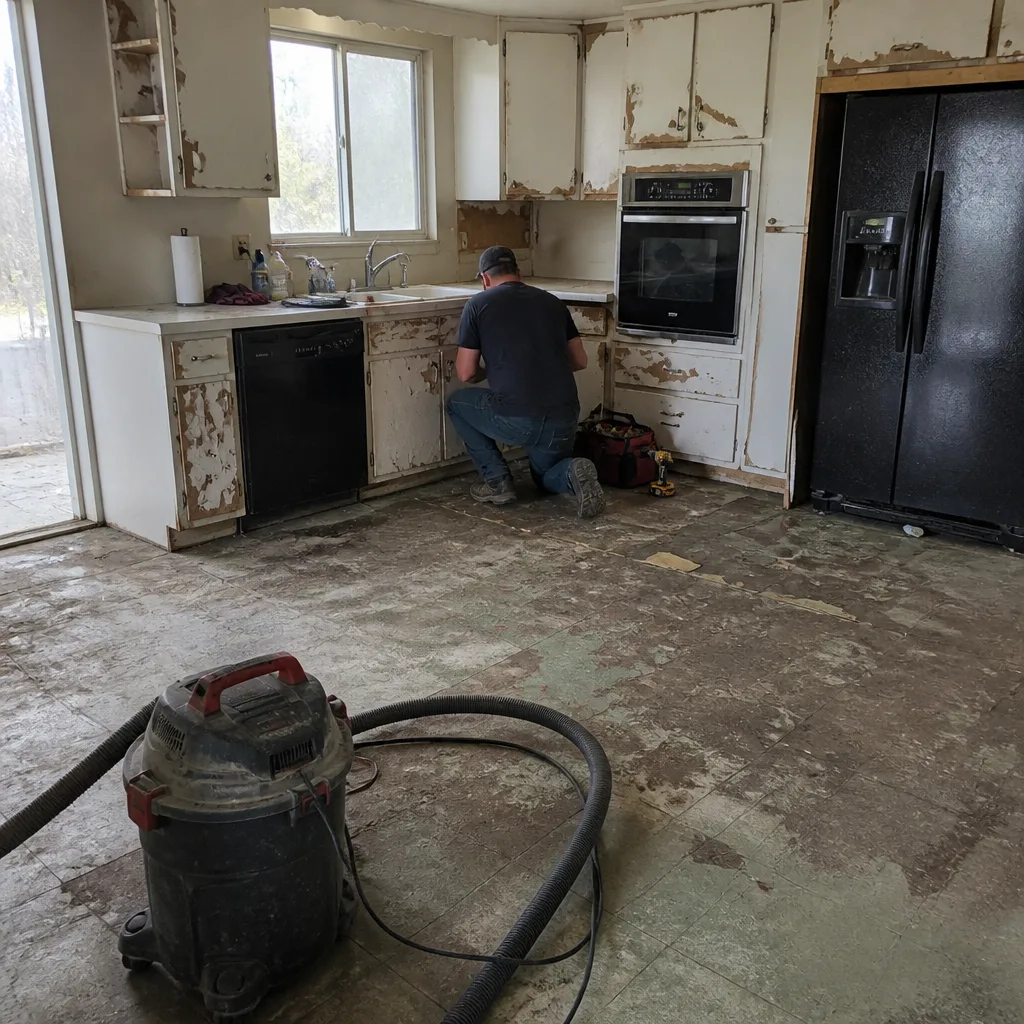 Before
 After
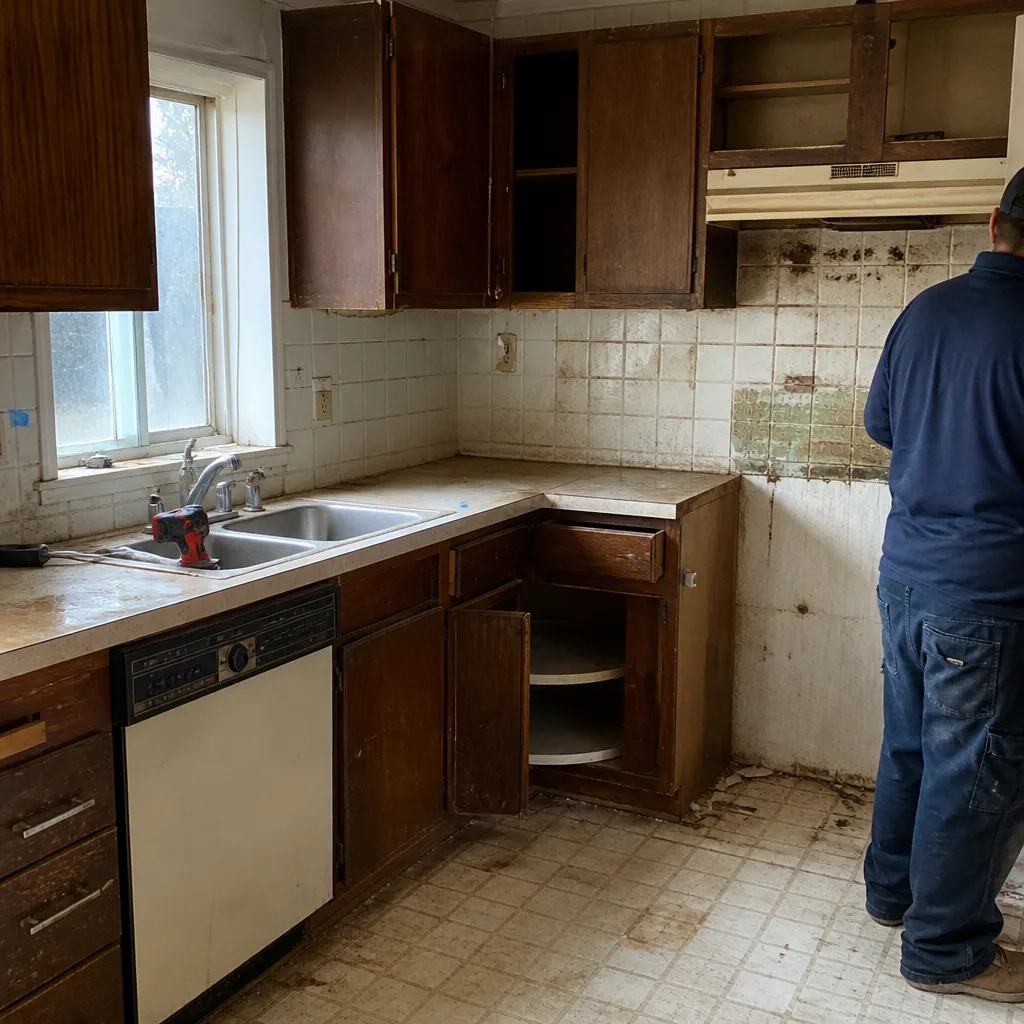 Before
 After
Frequently Asked Questions

Every 90 days. Mesquite’s dust and caliche particles clog fan grilles faster than in greener climates, and a clogged fan lets humidity build up until it damages caulk and grout. Clean the grille and vacuum the blades quarterly, and replace the fan if it fails the tissue test after cleaning.
Every 9 to 12 months in a busy family shower and every 12 to 18 months in a low-use bathroom. Mesquite’s hard water deposits minerals in the grout faster than soft water does, so watch for chalky lines and test with a few drops of water; if it soaks in, reseal. Call (833) 620-6606 if you’d rather have a professional handle the reseal.
Early failure is a thin crack or slight darkening at the edge, fixable with a fresh bead of 100% silicone. Late failure is peeling, crumbling, or soft caulk with water pooling behind it. Late failure usually means water has been getting behind the tile and needs a professional inspection. Call us for a free estimate if you’re not sure which stage you’re at.
Vinegar is safe on glazed porcelain if you rinse it, but it strips sealer and damages natural stone and chrome finishes. Bleach strips colored grout and accelerates staining. Use a pH-neutral cleaner for routine care, and reserve acidic cleaners for dissolving mineral deposits on glazed surfaces only. Moen and Kohler both recommend mild soap for their finishes.
With this maintenance schedule, a well-built bathroom can go 15 to 25 years before major surfaces need replacing; tile and grout are the first to show age in a hard-water home. The fixtures and caulk typically need service well before the tile does. If you’d like an honest assessment of what’s due, our Elmstead Remodeling Mesquite home page lays out the services we cover, and estimates for a professional walkthrough are free.
Replacing a fan or a faucet generally doesn’t require a permit, but moving plumbing or electrical, or altering a shower pan, usually does. The rules vary by jurisdiction, so confirm before work starts. When we take on a project, the local pro we connect you with handles permits and inspections, and you get a written price before any work begins.
Call a licensed contractor before doing anything else. A stain on the ceiling below usually means water is getting past the shower pan, the caulk line, or the supply line, and the damage behind the wall is often larger than the stain shows. Call (833) 620-6606 for a free estimate; we’ll assess what’s actually happening before recommending a repair.
The Bottom Line
Your remodeled bathroom doesn’t fail all at once. It fails at predictable intervals: caulk cracks, grout absorbs minerals, and the exhaust fan clogs. In Mesquite, those intervals are shorter than the national averages, which is why the 90-day fan cleaning and the 9 to 12-month grout reseal matter more here. Keep a written log of every maintenance date and product used. Inspect caulk every six months. Match your cleaner to your finish. When something looks structural, call a professional rather than hoping. That habit is what keeps a good remodel looking good.
If you’d like a professional walkthrough, our team at Elmstead Remodeling Mesquite is here to help. We’ll look at your caulk lines, grout, and fan, and give you a written assessment before any work begins. Call (833) 620-6606 for a free estimate. Every project is covered by our 365-Day Done Right Promise, and phones are answered by a live person 24/7.
Written by the team at Elmstead Remodeling Mesquite.