
Last updated November 18, 2026






Free written scope consultation - allowances, timeline, and change-order rules on paper before a single trade is scheduled
Kitchen Remodeling Troubleshooting: Common Problems and How to Fix Them
Here’s the counterintuitive part about kitchen remodeling problems: the caulk line that pulls away from your backsplash six months after the job isn’t usually the tile setter’s fault or the countertop fabricator’s fault. It’s a decision made in a two-minute handoff conversation – a joint that got grouted when it should have been caulked with a flexible sealant. That single choice costs about $200 to redo correctly or $12 to mask for a few months. Most post-project failures we’re called back to look at in Mesquite live at those same seams: the joints, connections, and transitions where two trades handed off to each other. This guide maps the five highest-failure handoff points in a kitchen remodel, gives you the language to describe a problem precisely, and explains what’s cosmetic versus structural so you can ask for a real fix, not a patch.
Quick Answer
Most kitchen remodeling problems surface at handoff points between trades – where countertop meets backsplash, where cabinets meet ceiling, where the sink meets stone, where appliances meet their openings, and where new flooring meets old. Cosmetic failures (a cracked caulk line, a loose toe kick) can usually be corrected without reopening a surface, while structural failures (a sagging cabinet run, a leaking undermount sink) require disassembly. Diagnosing which category you’re facing, and describing it in trade-specific terms, is what gets you a genuine warranty fix instead of a smear of caulk.
Styles & brands we work with
- Kitchen remodeling
- Bathroom remodeling
- Home additions & ADU
- Roofing
- Windows & doors
- Driveway & pavers
- Fence
Table of Contents
- The Five Handoff Points Where Kitchen Remodels Fail
- Countertop-to-Backsplash Gap: The $12 Mask vs. the $200 Fix
- Cabinet-to-Ceiling Gaps and the Dust Shelf Problem
- Undermount Sink Failure: Water Where It Shouldn’t Be
- Appliance Rough-In vs. Finish Dimensions
- Floor Transitions That Telegraph a Cheap Remodel
- Why Mesquite Cabinets Bind in Summer
- How to Tell Cosmetic from Structural
The Five Handoff Points Where Kitchen Remodels Fail
When we walk into a Mesquite kitchen to diagnose a problem, we check the same five seams first. In our experience running finish work on remodels here, roughly four out of five callbacks trace back to one of them. That’s not a knock on any trade – it’s just how construction math works. Each of these points is where two different trades set their tools down and assumed the next person measured, sealed, or accounted for the movement correctly. Mapping them makes troubleshooting faster for you and more precise for the contractor.
- Countertop to backsplash. Stone and tile want to move at different rates; the joint between them has to accommodate that.
- Cabinet to ceiling. A gap here collects grease and dust unless it’s closed with a filler or furring strategy chosen before the boxes were hung.
- Sink undermount to stone. The bond between a basin and the slab is the single most water-stressed joint in a kitchen.
- Appliance rough-in to finish dimensions. The opening the rough-in crew built and the appliance the finish crew installed are two very different specifications.
- New floor to existing floor. Where tile, vinyl plank, or solid wood meets an adjacent room is where trip hazards and visible seams live.
Learning to name these positions lets you tell a contractor “the counter-to-backsplash joint has a gap at the cooktop corner” instead of “the tile is broken.” For a full look at how a properly sequenced project coordinates these points from the start, see our Kitchen Remodeling in Mesquite page.
Countertop-to-Backsplash Gap: The $12 Mask vs. the $200 Fix
The gap that opens between a new backsplash and countertop isn’t caused by bad tile work. It’s caused by a joint that was grouted instead of caulked. Grout has almost no flexibility; a stone slab and a tile field resting on different substrates will each move with seasonal humidity and temperature, and rigid grout cracks when they do. This is exactly the failure the Cedarwell Care Promise’s written-price-first approach is meant to prevent before the job starts – a conversation that specifies a flexible, color-matched sealant at every change of plane. When it goes wrong, here’s how to tell what you’re facing.
- Hairline crack at the joint only. Cosmetic. The joint needs to be cut out and re-caulked with a silicone or hybrid sealant, not grout.
- A gap wider than a credit card. Could be normal movement, or could signal the tile field wasn’t properly supported. Worth a look underneath the slab.
- Stained or soft grout line. Water is getting behind the tile – treat this as urgent, because the substrate behind the backsplash doesn’t drain.
Language that gets a real fix: “The countertop-to-backsplash joint has cracked at the cooktop wall. I’d like the grout removed and the joint re-sealed with a flexible caulk, not grout.” That phrasing signals you understand the joint type, which is what keeps a legitimate warranty conversation on track.
Cabinet-to-Ceiling Gaps and the Dust Shelf Problem
A gap between the top of your upper cabinets and the ceiling is a design decision, not necessarily a defect. Standard 30-inch uppers in a Mesquite home with 8-foot ceilings leave roughly 12 to 18 inches of dust-collecting shelf space overhead. If the design called for a closed look, a filler or a stack of shorter upper boxes should have closed it during rough framing – retrofitting that after finish is expensive. If the design intended an open gap, the important thing is that the cabinet boxes themselves are plumb and firmly anchored.
How to check whether you have a real problem:
- Run a 4-foot level along the bottom edge of a run of upper cabinets. If the bubble wanders more than 1/8 inch over the run, the installation is off and you should call it in.
- Open every door fully. A door that won’t stay open, or rubs at the top, usually indicates the cabinet frame has racked or settled.
- Look at the reveal (the gap between doors). Even, consistent gaps of about 3/32 inch are correct; wavy or pinched reveals suggest the boxes aren’t square.
Language that gets a real fix: “The upper cabinet run is out of level by a quarter inch over six feet, and the doors along the range don’t hold open.” This signals a plumb and anchoring issue, which is a warranty matter, not a decor preference.
Undermount Sink Failure: Water Where It Shouldn’t Be
The bond between an undermount sink basin and a stone countertop is the most moisture-stressed seam in a kitchen – it sees a full sink of hot water on one side and a dry cabinet on the other, with thermal swing on top of that. When it fails, you notice it long after the water has already been running down the cabinet interior. This is not a joint to test casually, and not a spot to experiment on with a tube of caulk. The fix is mechanical – clips, adhesive rated for the substrate, and a re-seal, often requiring the sink to be dropped and re-hung.
Signs that an undermount sink needs professional attention:
- Soft or swollen cabinet floor under the sink. Water has been escaping the seam. Address immediately.
- Visible separation between the sink rim and the stone. Even a millimeter of gap opens up over time.
- Rust staining on the cabinet hardware below. The clip system has likely corroded.
- A foul smell under the sink. That’s usually mildew in a wet cabinet base, not the drain.
Language that gets a real fix: “The undermount sink has separated from the counter at the rear rim and the cabinet base under it is soft.” That sentence gives a contractor the facts needed to scope a structural repair, not just a seal.
Appliance Rough-In vs. Finish Dimensions
Kitchen appliance openings are built from a rough-in specification; appliances are ordered by a finish specification. Those two documents regularly disagree by fractions of an inch – and fractions of an inch are what turn “brand new refrigerator” into “refrigerator that sits proud of the cabinet and won’t allow the doors to open past 90 degrees.” This one is common across Mesquite, where new builds often come with a standard opening and homeowners later upgrade to a larger profile unit. The failure is not a defect in the appliance or in the cabinetry; it’s a measurement that should have been caught before the finish order went out.
Before purchase, verify:
- Cutout vs. body dimensions. Read the manufacturer’s cutout sheet, not the sales brochure.
- Door swing and handle projection. Add handle depth to the body depth; the total is what the opening must clear.
- Electrical and plumbing locations. The outlet or shutoff must be reachable before the unit is pushed into place.
- Air clearance. Refrigerators need breathing room at the rear and top; check the spec sheet rather than guess.
If a finish appliance has already forced a cabinet modification, the right conversation is to have the modification documented in writing with a photo – which is exactly the kind of record the 365-Day Done Right Promise relies on.
Floor Transitions That Telegraph a Cheap Remodel
The transition where new kitchen flooring meets the adjacent room is small in area and large in impression. A bad transition looks like a mistake every time you cross it. The most common failure is a grout-filled tile edge meeting a wood floor without an expansion gap, which cracks within the first year; the runner-up is a metal transition strip that pops loose because it was screwed into a floating floor instead of a fixed substrate. Both are predictable, both are cosmetic, and both are fixable without opening the floor as long as the subfloor underneath is sound.
Diagnose the transition with these questions:
- Does the transition strip rock when stepped on? If yes, it isn’t fastened to a solid substrate.
- Is there a visible gap between the new floor and the wall or adjacent floor? Roughly 1/4 inch of clearance is expected at walls to allow for movement; a gap that keeps growing is not.
- Is there a crack or lift in the tile edge itself? That usually indicates the substrate wasn’t prepped flat before the floor was set.
- Can you see daylight under a wood-to-tile transition from the adjacent room? That’s a missing expansion gap.
Language that gets a real fix: “The kitchen-to-hall transition strip lifts when stepped on and there’s no expansion gap at the tile edge.” That phrasing tells a contractor exactly where and why the failure is happening.
Why Mesquite Cabinets Bind in Summer
Mesquite’s summer does something to wood cabinetry that a spec sheet out of a cooler climate doesn’t always account for: humidity and temperature swing move cabinet frames and drawer boxes measurably, and by August, doors that swung cleanly in March can bind at the top corner and drawers can fight their runners. This is thermal expansion of the wood itself plus the seasonal stretch of the hardware – a problem not unusual for cabinet installations that were specified for an average-humidity climate and then set in a Mesquite home with two-zone seasonal swing.
The fix is not to force the doors, which can crack the joint or strip hinge screws. The fix is a hardware adjustment and a seasonal calibration:
- Hinges on the binding doors can usually be adjusted in place with a screwdriver. Most quality European hinges (the kind used on KraftMaid and Wellborn cabinetry, for example) have three-way adjustment cams for exactly this reason.
- Drawer runners can be adjusted for seasonal bind; undermount slides from the main brands have height and tilt adjustment.
- Cabinet frames themselves that have twisted (a box that’s out of square by more than 1/16 inch across the diagonal) are a structural installation issue, not a seasonal one – those should be documented and reported.
- Humidity control in the kitchen itself – a range hood that actually vents outside, and a plan to run it during cooking in summer – reduces the swing that drives the problem.
Language that gets a real fix: “Two doors on the east wall of the kitchen bind at the top during summer. The cabinet boxes are square but the hinges go out of adjustment seasonally.” That’s a warranty conversation about hardware and calibration, not a decorative complaint.
How to Tell Cosmetic from Structural
The single most useful troubleshooting skill in a kitchen remodel is knowing when a problem can be sealed and when it has to be opened up. Sealing a structural problem is the failure mode that turns a small callback into a large repair six months later. Here’s the test we use:
- Cosmetic: The failure is at a joint or edge and doesn’t affect what’s underneath. A cracked caulk line, a pitted grout line, a lifted transition strip, a hinge out of adjustment. Fixable without removing a surface.
- Structural: Water, air, or movement is getting past a joint into a substrate or cavity. A soft cabinet base, a swollen cabinet floor, water staining under the sink, a sagging shelf run, a cabinet frame visibly out of square. Requires opening the surface, drying or replacing what’s behind it, then closing again.
The rule of thumb: if a joint can be probed with a fingertip and nothing gives, it’s cosmetic. If a joint gives, is soft, or wicks moisture when pressed with a paper towel, it’s structural.
Common Mistakes to Avoid
- Letting a contractor grout a change-of-plane joint. Planes that meet at 90 degrees must be caulked with a flexible sealant, not grouted. This is the number-one cause of cracks at the backsplash-to-counter seam in Mesquite homes.
- Assuming a wide gap is only cosmetic. A gap wider than a credit card at any surface transition is worth investigating for a substrate issue before you commit to a cosmetic fix.
- Buying the appliance before the opening is checked. Measure the rough opening against the manufacturer’s cutout sheet, not the marketing dimensions, before ordering.
- Forcing a binding cabinet door. In Mesquite’s summer swing, bind usually means the hinge wants adjustment, not muscle. Forcing it can strip screws and crack the frame.
- Accepting a verbal fix and no photo evidence. Every correction to a completed project should end with a photo of the fix and a written note of what was done – the clean-up photo is one of the Cedarwell Care Promise’s standing commitments, and it’s your record.
- Waiting past the first cooling season to report a thermal issue. If a cabinet binds in the summer, report it in the summer while it’s actually reproducing.
- Letting a transition strip be nailed rather than fastened to substrate. A floating floor moves; a strip fastened to it will pop the first time the floor expands.
When to Call a Professional
Call a professional immediately for anything involving water where it shouldn’t be – a soft cabinet floor under the sink, a separating undermount seam, visible water staining below a countertop – because those failures degrade the substrate every day they wait. Call when a cabinet run is visibly out of level or out of square, when a door or drawer binds beyond a simple hinge or slide adjustment, or when a grout or caulk crack has opened wider than a credit card. Call also when an appliance has been forced into an opening and the cabinetry had to be modified; that modification should be documented and inspected. And call when a problem has been “fixed” once and returned, because a returning failure is almost always a sign the original cause was never addressed. Our technicians have up to 21 years of experience diagnosing these handoff failures, and our General Contractor in Mesquite team can look at any of them. Elmstead Remodeling Mesquite offers free estimates in Mesquite – call (833) 620-6606.
See the difference
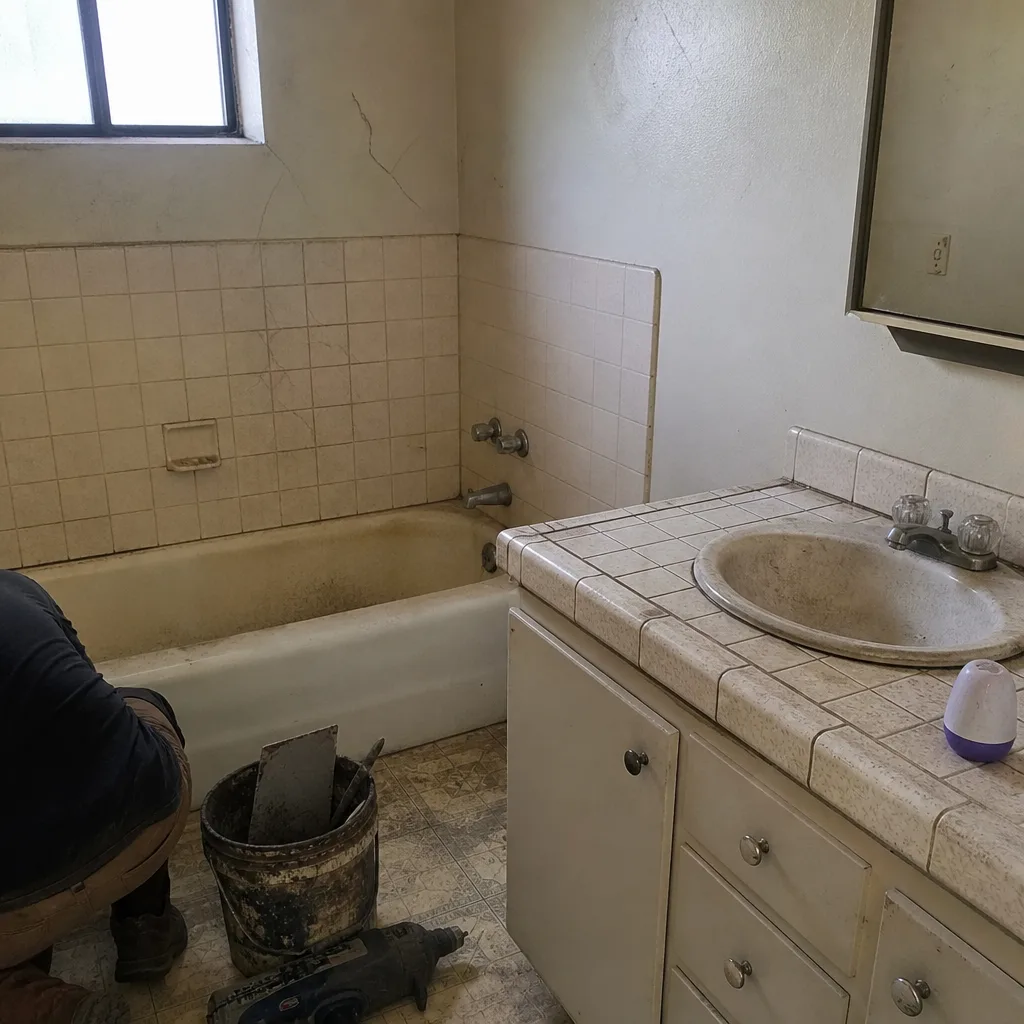 Before
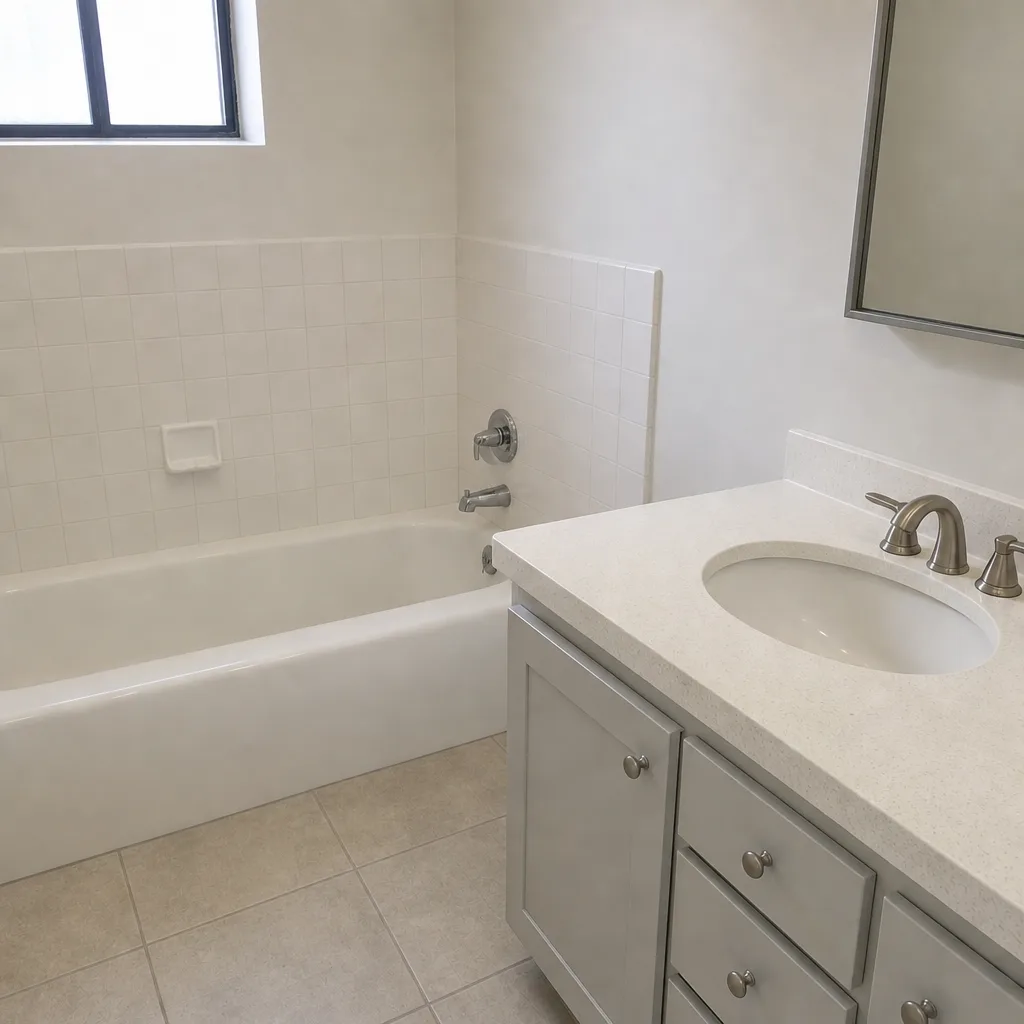 After
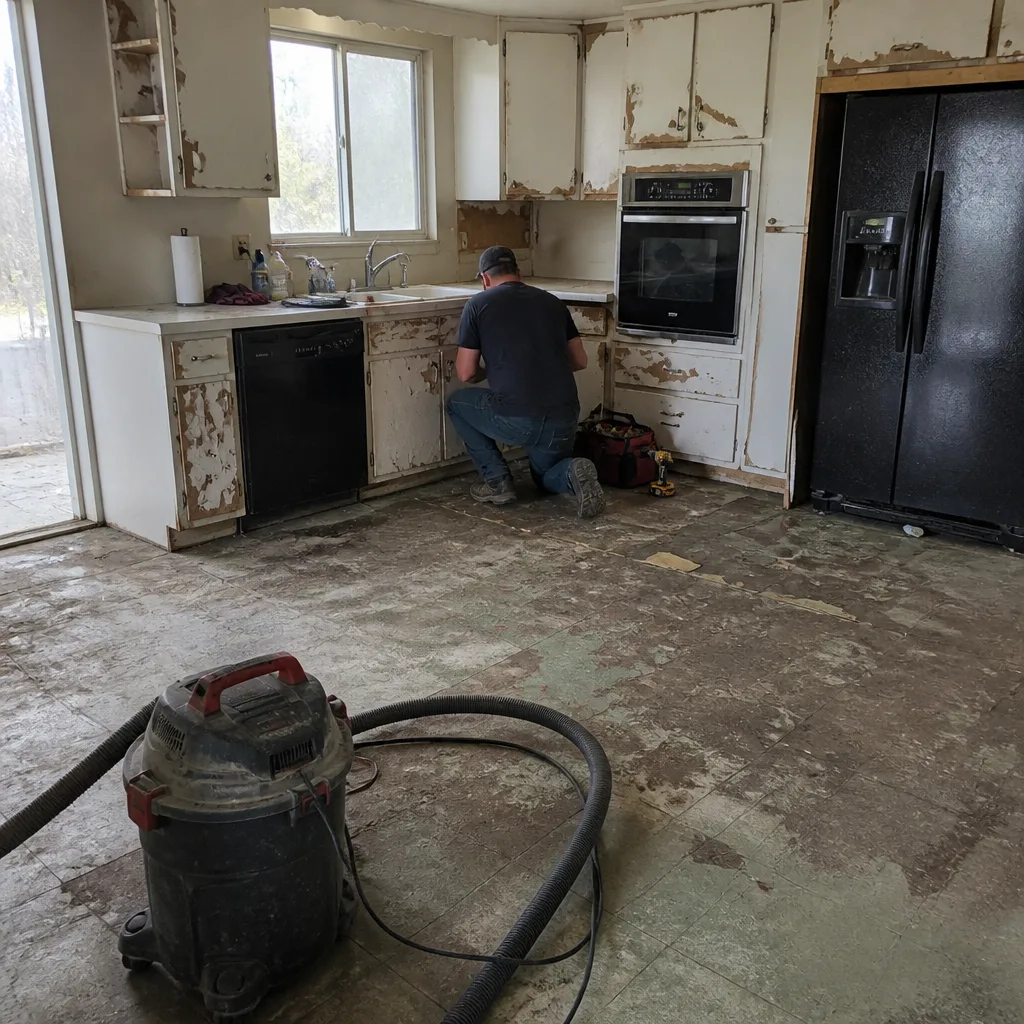 Before
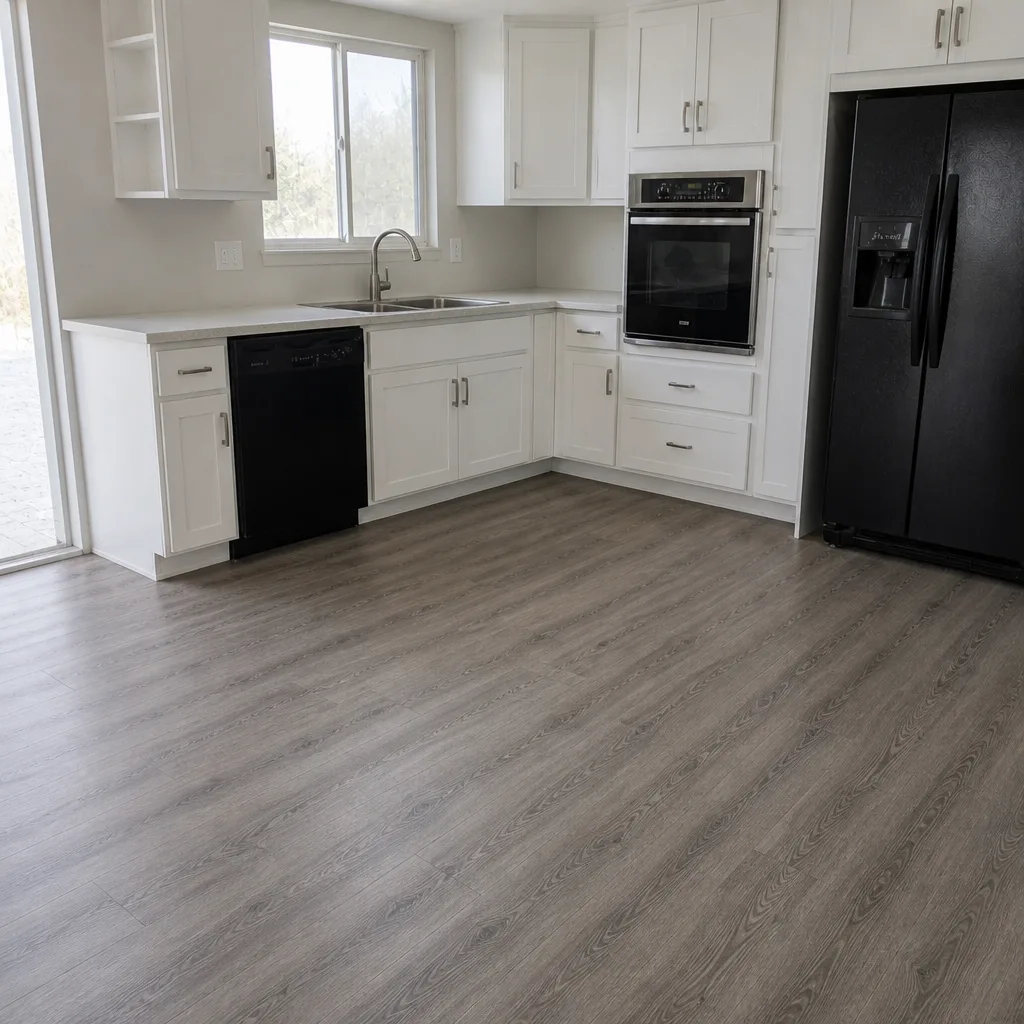 After
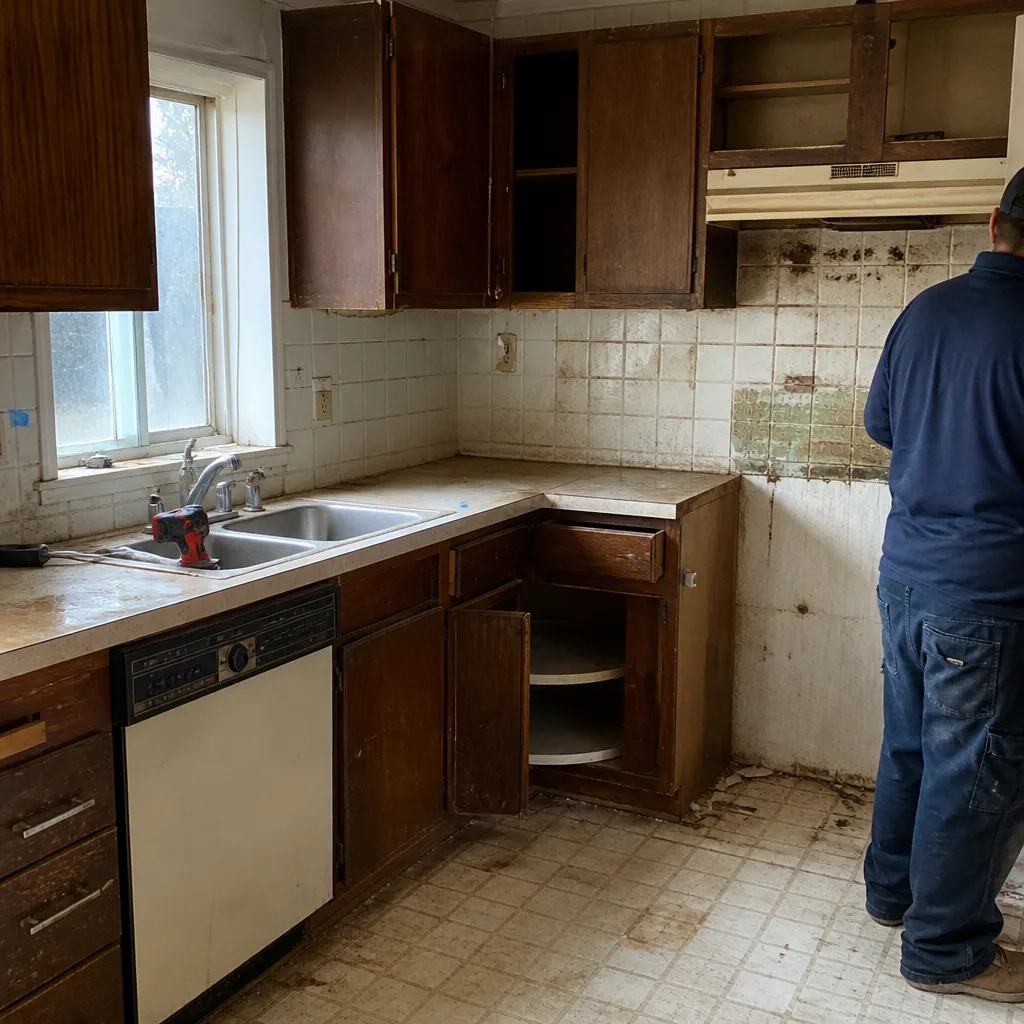 Before
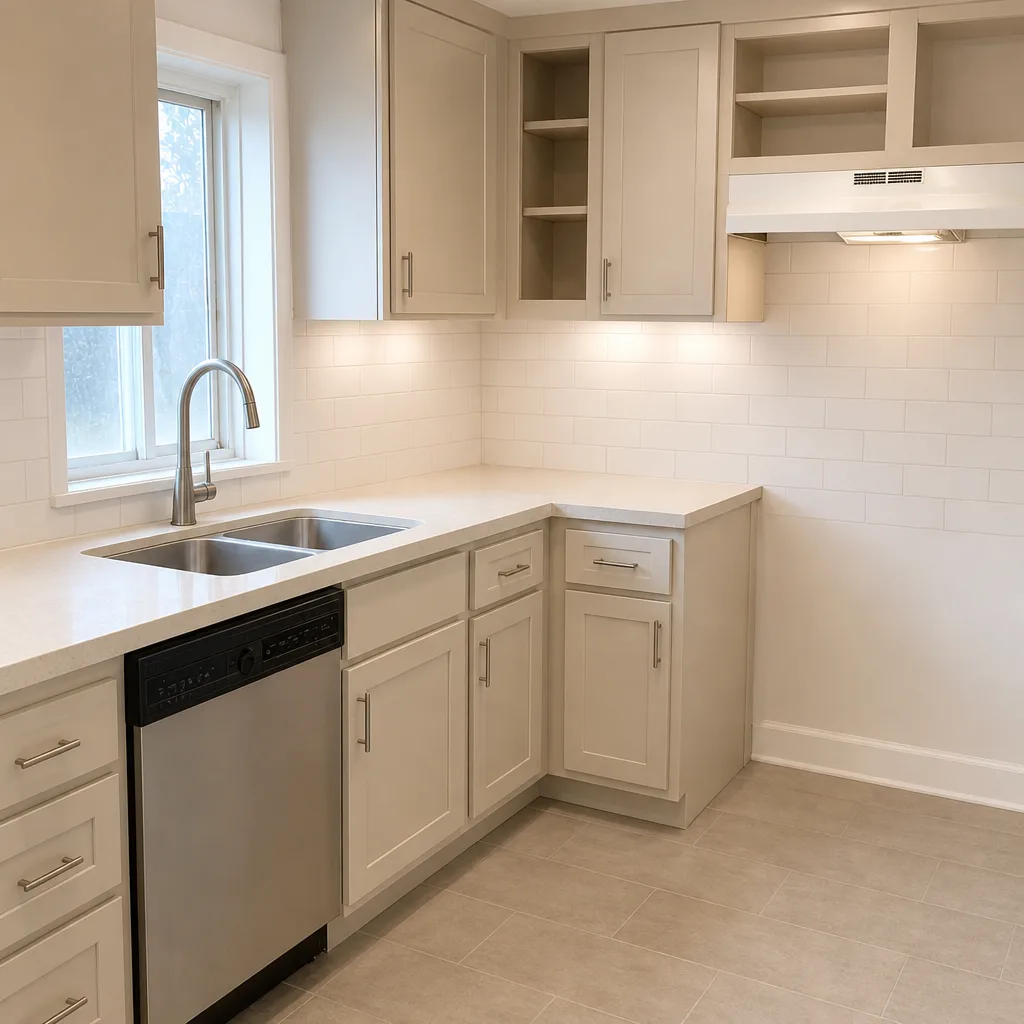 After
Frequently Asked Questions

The general contractor is responsible for coordinating handoffs, not either individual subcontractor. At Elmstead Remodeling Mesquite, single-point accountability is written into every project, so a problem at the counter-to-backsplash seam is our problem to solve, not a scheduling dispute for you to referee. The written price you receive before work starts is the price you’re held to, and the same applies to the warranty. Call (833) 620-6606 to talk through a specific problem.
A hairline crack that appears once a year and stays under a credit card wide is almost always seasonal movement and can be re-caulked as maintenance. A gap that keeps growing, or that appears along with a soft or stained grout line, is not seasonal – it means water is getting behind the tile. Caulk the seasonal ones; call on the growing or staining ones.
Usually not a manufacturing defect, but it is an installation accountability issue if the hardware and installation didn’t account for Mesquite’s humidity and temperature swing. Brand-name cabinet hardware (the type used in KraftMaid and Wellborn cabinetry, for example) has seasonal adjustment built in. If the cabinets are out of square beyond 1/16 inch across the diagonal, that’s a structural installation issue and should be documented and reported.
The 365-Day Done Right Promise covers the completed project for one year: if something isn’t done right, Elmstead Remodeling Mesquite makes it right. That includes cosmetic failures at joints and edges, and structural failures traced to installation – the two categories this guide walks through. It does not cover damage from misuse or from a fixture failing on its own, but it does cover the installation of that fixture if it was installed wrong. Call (833) 620-6606 with the specific problem and a photo, and we’ll tell you what’s covered.
Yes. Keep four things: the written price you were quoted, the final invoice, any change order signed during the project, and the clean-up photo taken before the crew left. Those four documents are what make a warranty claim fast and unambiguous. If you have them, the conversation is “here’s the photo, here’s the joint, here’s the date” – that’s a repairable problem. Without them, it becomes a debate.
Yes. Mesquite’s permitting goes through the city’s building department, and any change to electrical, plumbing, or the kitchen’s structural layout will require a permit and inspection. When we open a surface to fix a structural problem, we pull the permit and pass the inspection; if you’re troubleshooting a repair that involves opening the wall behind an appliance or moving a sink, ask the contractor to pull the permit up front. Our Bathroom Remodeling in Mesquite team fields the same permit questions on wet walls, and the principle is identical.
Key Takeaways
- Most kitchen remodeling problems happen at five handoff points, not at random.
- Cosmetic failures are sealable; structural failures require opening a surface – the fingertip test tells you which.
- Grout at a change of plane is the top cause of a cracked backsplash joint; flexible caulk is the fix.
- Mesquite’s seasonal swing binds cabinet hardware, and adjustment – not force – is the correct response.
- Documentation is your warranty: keep the written price, final invoice, change orders, and the clean-up photo.
The Bottom Line
Kitchen remodeling problems are predictable once you know where to look. The five handoff points – counter-to-backsplash, cabinet-to-ceiling, undermount sink to stone, appliance rough-in to finish, and floor-to-adjacent-room – account for most of what surfaces after a project closes. Learn to describe the problem in trade-specific language, distinguish cosmetic from structural, and keep your documentation. That combination turns a call-back into a real fix in one visit instead of two. If you’re troubleshooting a kitchen issue in Mesquite, our Elmstead Remodeling Mesquite home page has the full picture of how we run projects and what the written-price promise looks like in practice.
Contact
If you’re staring at a joint, seam, or transition that doesn’t look right and you want a straight answer on whether it’s cosmetic or something that needs opening up, call Elmstead Remodeling Mesquite at (833) 620-6606 for a free estimate. We’ll look at the actual failure, tell you what it needs, and give you a written price before any work starts. Live person answers the phone 24/7 – no voicemail, no bot, no waiting until Monday.
Written by the team at Elmstead Remodeling Mesquite.