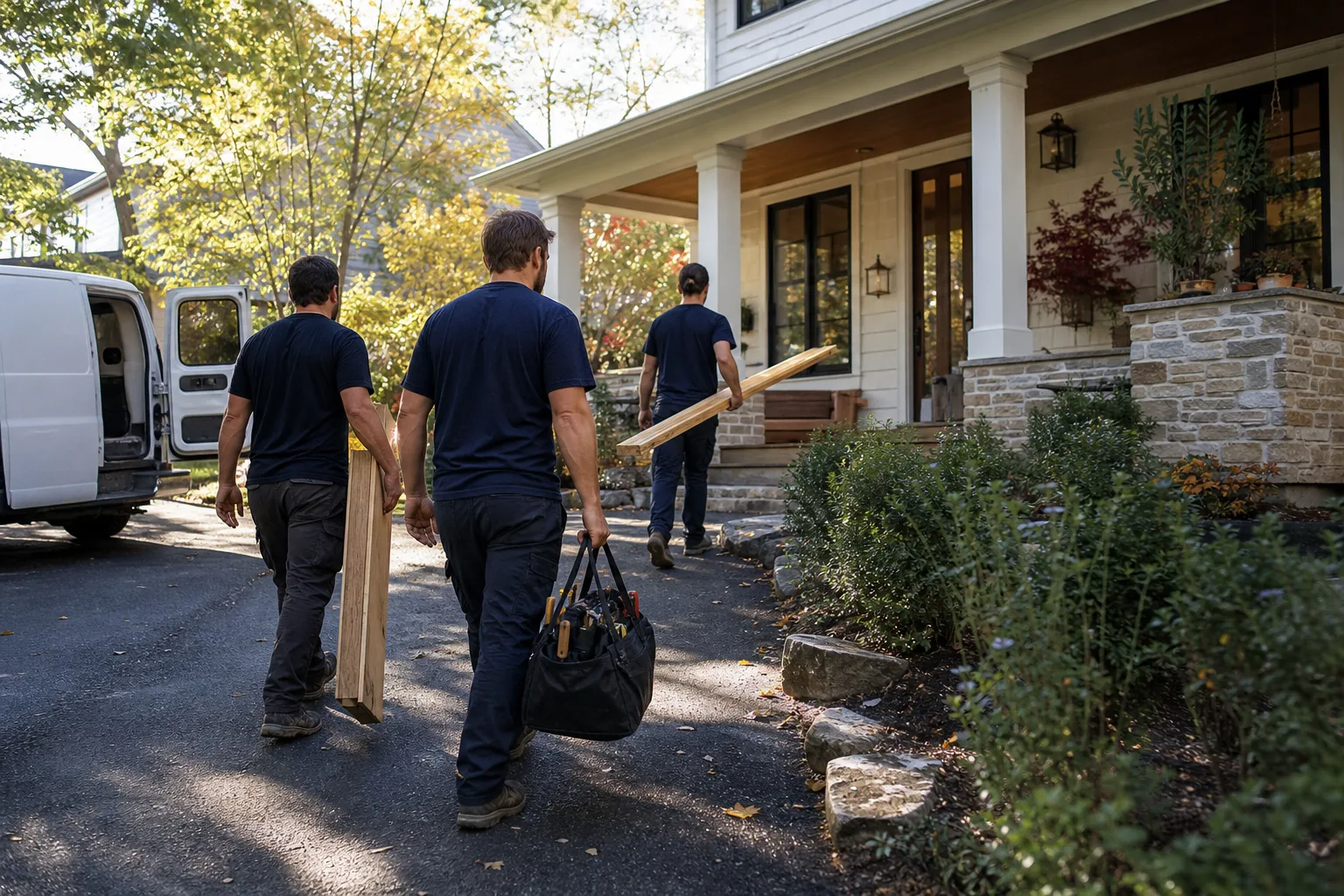
Last updated November 18, 2026







Free written scope consultation - allowances, timeline, and change-order rules on paper before a single trade is scheduled
DIY vs Professional General Contractor: What’s Safe to Do Yourself
A homeowner in Mesquite who installs their own recessed lighting without a permit may save around $400 on labor. That same homeowner may also discover, months later, that the electrical portion of their dwelling coverage is now in question, and that the unpermitted work has to be disclosed when the house goes on the market. The savings are real. So is the exposure. This guide isn’t a lecture about whether you’re handy enough to swing a hammer. It’s a plain-language map of where Nevada law draws the line, what your insurance policy actually says, and how one DIY phase can quietly raise the cost of every phase that follows. We’ll cover what owner-builders can legally do on their own primary residence in Mesquite, the sequencing traps that catch careful people, and a self-assessment checklist you can use before committing to any piece of a larger remodel.
Quick Answer
On your own primary residence in Nevada, you can legally act as an owner-builder for many projects, including cosmetic work, painting, flooring, landscaping, and some non-structural improvements, and you can pull permits in your own name for work you personally perform. You cannot legally perform work that Nevada reserves for licensed trades, such as electrical, plumbing, and gas line work, when it requires a permit or when it’s done for compensation. The dividing line isn’t your skill level. It’s the permit requirement, the trade licensing rule, and whether your homeowner’s insurance will still cover the result.
Styles & brands we work with
- Kitchen remodeling
- Bathroom remodeling
- Home additions & ADU
- Roofing
- Windows & doors
- Driveway & pavers
- Fence
Table of Contents
- What Nevada Law Actually Allows Owner-Builders to Do
- Tasks That Require a Licensed Trade Contractor Regardless of Skill
- The Insurance Question Almost Nobody Asks
- Sequencing Traps: How DIY in One Phase Costs More in the Next
- Tasks That Look Simple but Aren’t
- What Unpermitted Work Does to a Future Sale
- A Self-Assessment Checklist Before You Commit
- Mesquite-Specific Considerations: Heat, Dust, and Inspection Timing
What Nevada Law Actually Allows Owner-Builders to Do
Nevada recognizes the owner-builder exemption, which lets a homeowner perform work on their own primary residence without holding a contractor’s license. The key phrase is “own primary residence.” If you’re fixing up a rental, flipping a house, or doing work for a neighbor for pay, the exemption doesn’t apply and you’re operating as an unlicensed contractor. The state takes that seriously.
For your own home, the practical breakdown looks like this. These are the categories Mesquite homeowners can generally take on themselves, provided they follow local permitting rules:
- Painting and wall finishes – interior and exterior, including drywall patching and texture matching
- Flooring replacement – tile, luxury vinyl plank, laminate, and carpet, where no subfloor structural repair is needed
- Cabinet refacing and hardware – swapping doors, drawer fronts, and pulls without altering the cabinet box
- Landscaping and hardscaping – desert-appropriate planting, gravel, low walls under the permit threshold
- Cosmetic bathroom updates – swapping a vanity top, mirror, or faucet trim where no plumbing line is moved
- Fencing and gates – within height and setback rules
- Minor demolition – removing non-load-bearing finishes before a trade contractor arrives
What trips people up is the assumption that “I can do it myself” means “I can do it without a permit.” Those are two different questions in Nevada. You can be perfectly capable of installing a new water heater and still be required to have a licensed plumber pull the permit and perform the connection. The owner-builder exemption covers who may perform the work; it doesn’t waive the permit, the inspection, or the trade licensing requirement. When we quote a general contractor in Mesquite project, we walk through which permits the city requires before we start, precisely because this is where DIY plans go sideways.
Tasks That Require a Licensed Trade Contractor Regardless of Skill
Nevada licenses electricians, plumbers, and HVAC contractors as separate trades. Certain work in these categories must be performed by a licensed professional, full stop, no matter how experienced the homeowner is. This isn’t a gray area. It’s the law, and it’s the first thing your insurance adjuster will look at if something goes wrong.
Work that requires a licensed trade contractor:
- Any electrical work behind the wall – new circuits, panel changes, adding outlets, relocating switches, recessed lighting tied into existing wiring
- Plumbing rough-in and line changes – moving a drain, relocating a supply line, replacing a water heater, installing a new fixture where no rough-in exists
- Gas line work of any kind – running a new line to a range, dryer, or outdoor grill, and any repair to an existing gas line
- HVAC installation and refrigerant work – new systems, ductwork changes, and anything involving refrigerant handling
- Structural alterations – removing or modifying a load-bearing wall, cutting a beam, adding a header
- Waterproofing in wet areas – shower pan and wet-room waterproofing is one of the most failure-prone parts of a bathroom, and we use Schluter systems specifically because the manufacturer warranty depends on proper installation by a trained installer
There’s a reason these categories are licensed. Electrical mistakes cause fires. Gas mistakes cause explosions. Plumbing mistakes cause slow leaks that rot a subfloor over a year before anyone notices. In Mesquite, where summer temperatures regularly push past 110°F, an HVAC system installed incorrectly doesn’t just fail to cool efficiently; it can short-cycle and destroy the compressor within a single season. When we bring trade contractors onto a bathroom remodeling in Mesquite project, each one pulls their own permit and carries their own license, which is exactly the paper trail you want if you ever need to make a claim.
The Insurance Question Almost Nobody Asks
Here’s the conversation that doesn’t happen often enough. A homeowner completes a DIY electrical project. Two years later, a fire starts in that wall. The claim goes in. The adjuster investigates and finds unpermitted, unlicensed electrical work. The policy language in most standard homeowner policies excludes damage arising from work performed without required permits or by unlicensed persons. The dwelling coverage that was supposed to protect the house may not apply to the portion of damage attributable to that work.
The same logic applies to water. A DIY shower pan that wasn’t waterproofed correctly leaks slowly into the floor structure. By the time it’s discovered, you’re looking at subfloor replacement, mold remediation, and a claim that may run into the same exclusion. This isn’t a scare tactic. It’s what the policy actually says, and it’s why we recommend every homeowner read the “exclusions” section of their own policy before starting any project that touches electrical, plumbing, or waterproofing.
What you can do about it:
- Call your insurance agent before you start. Ask specifically: “If I do this myself and it causes damage, is it covered?” Get the answer in writing if you can.
- Pull the permit even when you’re allowed to skip it. Permitted work has an inspection record. That record is your proof of compliance if a claim ever happens.
- Keep receipts for materials and any licensed trade work. Documentation supports the claim.
- Use licensed trades for anything in the licensed-trade list above. This is the single biggest protection you have.
The peace of mind of a covered claim is worth more than the labor you save. When your Elmstead Remodeling Mesquite home project involves a trade contractor, we coordinate the permits so the paper trail is complete from day one.
Sequencing Traps: How DIY in One Phase Costs More in the Next
This is where we see the most expensive DIY mistakes in Mesquite, and they don’t show up on the day of the work. They show up two weeks later when the next trade arrives. A remodel is a sequence, and every phase depends on the one before it being done to a standard the next trade can build on.
Common sequencing traps:
- Painting before trim is set. If you paint the walls before the baseboard and casing are installed, you’ll be touching up every cut line. Worse, the trim carpenter now has to work around your fresh paint, and the caulk line won’t be clean. Paint goes after trim and after any drywall repair.
- Setting tile before plumbing rough-in is inspected. If the tile goes down before the plumbing inspection passes, and the inspector requires a change, the tile comes back up. That’s a full redo of materials and labor.
- Installing cabinets before the electrical rough-in is complete. The electrician needs open wall access for the dedicated circuits behind the range and the under-cabinet lighting. Once cabinets are hung, that access is gone.
- Hanging drywall before framing is inspected. Framing inspections happen with the wall open. Drywall covers everything, and if the inspector flags something, it comes back down.
- Laying flooring before the toilet and vanity are set. Flooring goes in after rough-in but before fixtures, and the sequence matters for how the flooring meets the flange and the cabinet toe kick.
In our experience, a homeowner who does the demolition and the painting themselves, in the correct sequence, saves real money and the project runs smoothly. A homeowner who does the tile before the plumbing inspection costs themselves more than they saved, and often delays the licensed trades by a week while the work is corrected. If you want to participate in a kitchen remodeling in Mesquite project, the safest DIY phases are demolition, painting, and cleanup. The riskiest are anything with a sequencing dependency.
Tasks That Look Simple but Aren’t
Some jobs look like weekend projects and turn into three-week problems. We’ve watched enough Mesquite homeowners start these and call us halfway through to know the pattern.
- Replacing a bathroom faucet. Sounds like twenty minutes. But if the shutoff valve under the sink is seized or the supply line is corroded, you’re now looking at a valve replacement, which means shutting off the house water and possibly soldering. That’s a licensed plumbing task.
- Installing a new shower valve. The trim kit is easy. The rough-in valve behind the wall is not. It requires opening the wall, cutting and sweating copper or working with PEX, and then waterproofing the wall back correctly with a Schluter or comparable system. Do it wrong and you have a slow leak inside the wall.
- Hanging a heavy mirror or floating shelf on drywall. One stud missed and the mirror comes down, taking drywall with it. In Mesquite’s newer construction, some interior walls are built with metal studs, which changes the anchoring approach entirely.
- Replacing a toilet. The install is straightforward. The flange repair underneath, if the old wax ring failed years ago, is not. And a toilet that rocks because the flange is broken will leak at the base.
- Adding a ceiling fan where there was a light. The fan needs a fan-rated box anchored to structure. A standard light box will not hold a moving fan, and the wiring may not support the load. This is electrical work, and it requires a permit.
Each of these is doable by a careful homeowner with the right tools and the right permit. The question is whether the downside of getting it wrong is worth the labor saved. A Toto toilet installed correctly will last decades. A Toto toilet installed on a bad flange will cost you a subfloor repair.
What Unpermitted Work Does to a Future Sale
Nevada requires sellers to disclose known material defects, and unpermitted work that affects the home’s value or safety is a material defect. When you sell a house in Mesquite, the buyer’s inspector will pull the permit history from the city. Unpermitted work shows up as a gap, and the buyer’s agent will ask about it. At best, you’re negotiating a credit. At worst, the sale falls through.
This is the part that doesn’t show up in the cost comparison most homeowners run. The $400 you saved on the lighting install becomes a $3,000 negotiation credit at sale, or a failed inspection during escrow. Permitted work has a record. A record is an asset. If you’re planning to stay in the home for decades, the disclosure issue may never matter. If you’re planning to sell within five years, it matters a lot.
A Self-Assessment Checklist Before You Commit
Before you take on any DIY phase of a larger remodel, work through this list honestly. If you answer “no” to more than two or three of these, the labor savings probably aren’t worth the risk on that phase.
- Do I know whether this task requires a permit in Mesquite? Call the city building department and ask. It takes five minutes and it settles the question.
- Is this task in a licensed-trade category? If yes, the answer is a licensed professional, regardless of your skill.
- Do I have the right tools? Not just the tool, but the right size, the right blade, the right safety equipment. A tile saw that isn’t rated for the tile thickness will chip every cut.
- Can I afford to redo this if it goes wrong? If a failed attempt means a full redo of materials plus a licensed trade call, is that in the budget?
- Does this task have a sequencing dependency on a later phase? If the electrician or plumber has to work around my work, will I make their job harder or the project slower?
- Have I checked my homeowner’s policy? Do I know what’s covered if this DIY phase causes damage?
- Have I done this specific task before? Not a similar task. This one. On this type of material.
If you work through this honestly, the picture usually gets clearer. Painting, demolition, landscaping, and cleanup are low-risk phases where participation makes sense. Electrical, plumbing, gas, structural, and waterproofing are the phases where the licensed trade is non-negotiable.
Mesquite-Specific Considerations: Heat, Dust, and Inspection Timing
Mesquite has a few local conditions that change the DIY calculus. The climate is a real factor in a way that it isn’t in, say, coastal California.
- Extreme summer heat. Exterior painting, roofing, and anything requiring extended outdoor work needs to be scheduled for early morning from May through September. Paint applied above 100°F can flash-dry and fail to bond. Concrete poured in the heat of the day cures too fast and cracks.
- Wind and dust. Mesquite sits in a windy corridor. Any exterior work that involves curing finishes or installing materials with adhesive needs to be scheduled around the wind forecast. Dust intrusion into fresh paint or a freshly installed floor is a real problem.
- Hard water. Mesquite’s water is mineral-heavy. Plumbing repairs need to account for scale buildup in older supply lines. A simple faucet swap can turn into a valve replacement if the shutoff is scaled shut.
- Inspection timing. Building department inspections are scheduled on business days. A DIY phase that misses an inspection window can delay the licensed trade work that follows by a week. Plan the sequence with the inspection calendar in mind.
When we do a whole-home remodeling project in Mesquite, the schedule is built around the inspection calendar and the weather window. If you’re doing part of the work yourself, those two constraints don’t go away. They just become yours to manage.
Common Mistakes to Avoid
- Skipping the permit to save time. The permit is the record that protects your insurance claim and your sale. Skip it and you’re trading a few weeks of paperwork for years of exposure. In Mesquite, the city can require you to open up finished walls to inspect unpermitted work, which turns a quick job into a major one.
- Doing electrical or plumbing “just this once.” Licensed trades are licensed because failures in these categories cause fires, floods, and injuries. There is no DIY exception that survives an insurance investigation.
- Starting tile before the plumbing inspection passes. This is the single most expensive sequence mistake we see. The tile comes back up, the cement board comes back up, and the waterproofing has to be redone. Months of delay.
- Painting before trim is set. You’ll be touching up every cut line and the caulk finish won’t be clean. Paint comes after trim and after drywall repair.
- Assuming “I can do it” means “it doesn’t need a permit.” The owner-builder exemption in Nevada covers who can perform the work, not whether the work needs to be permitted and inspected.
- Not calling the insurance agent first. The exclusions section of your policy is the document that decides whether you’re covered. Read it before you start, not after.
- Forgetting that pets and kids share the workspace. Mesquite families with children and pets need to plan for containment during demolition dust, paint fumes, and the open-wall phase of any remodeling project. A drop cloth at the door seam and a pet-safe finish choice are not optional details.
See the difference
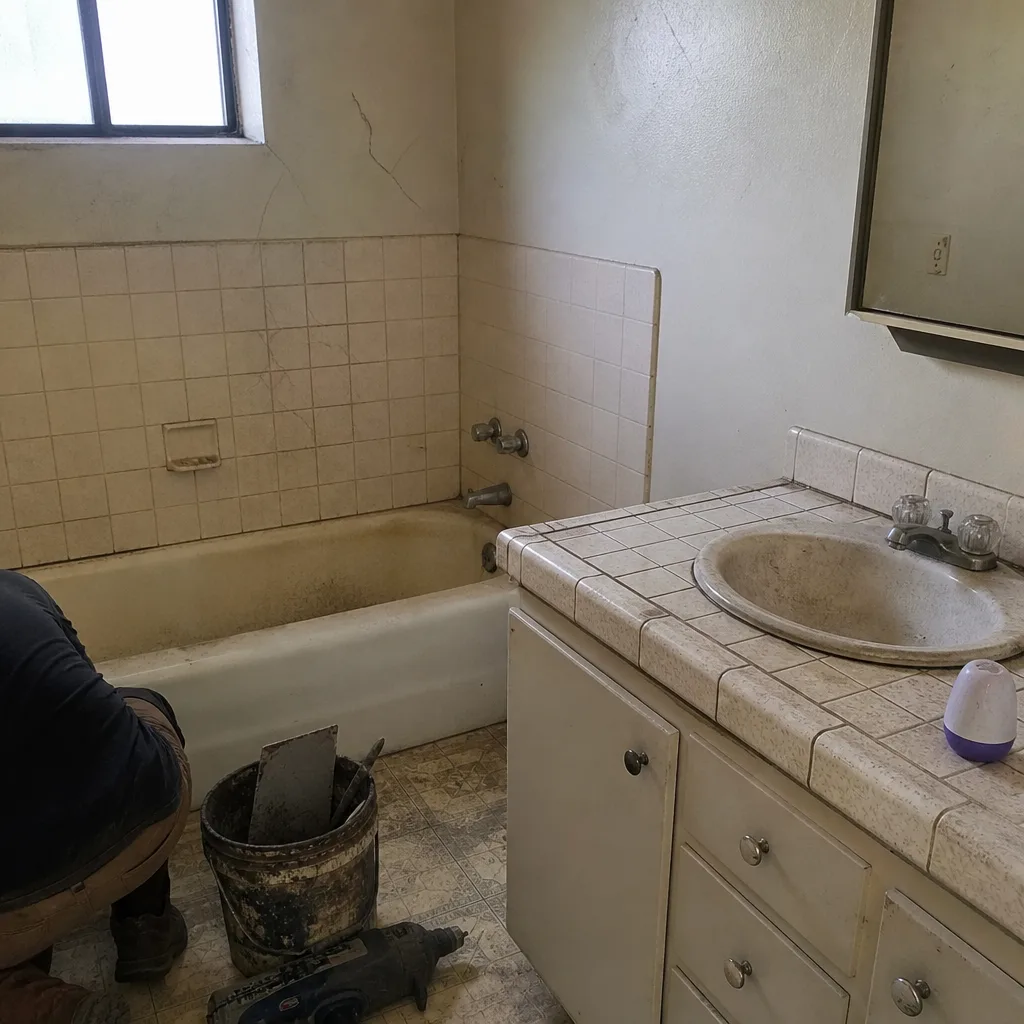 Before
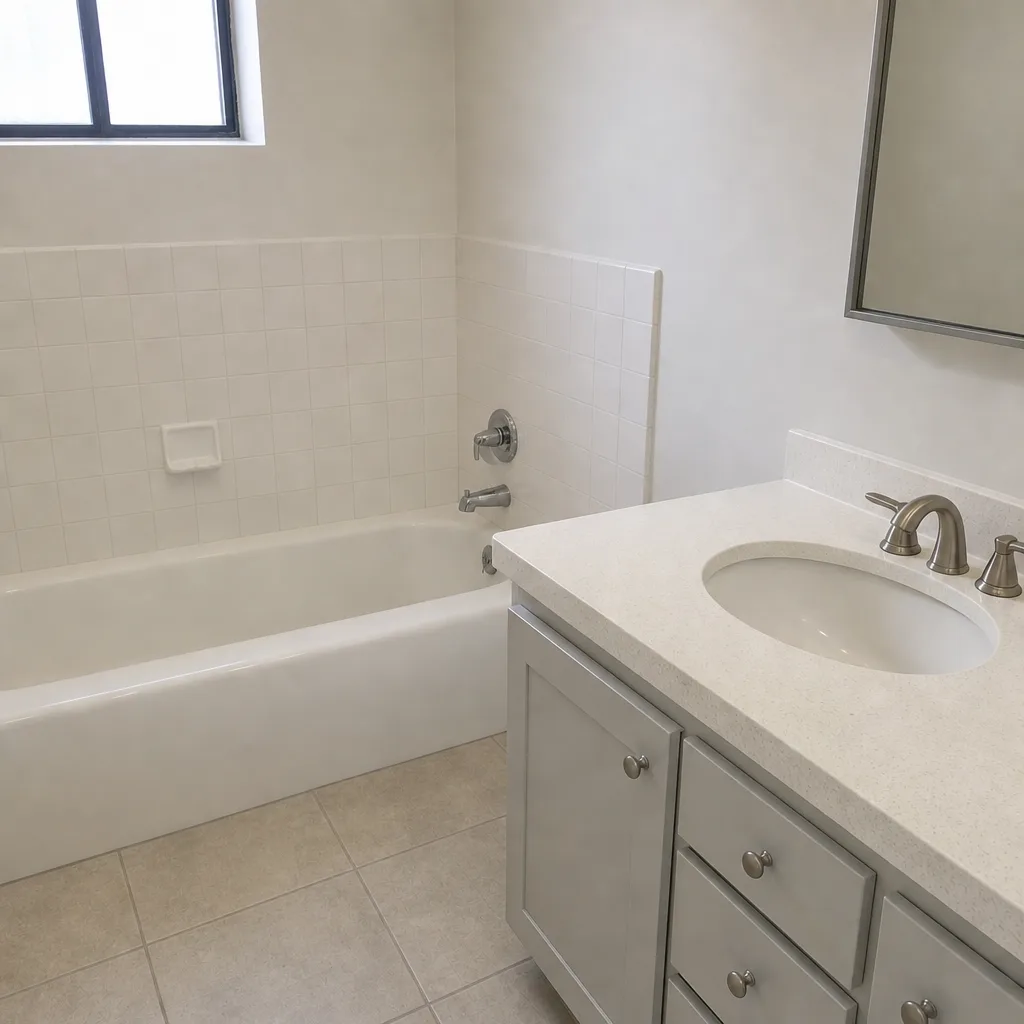 After
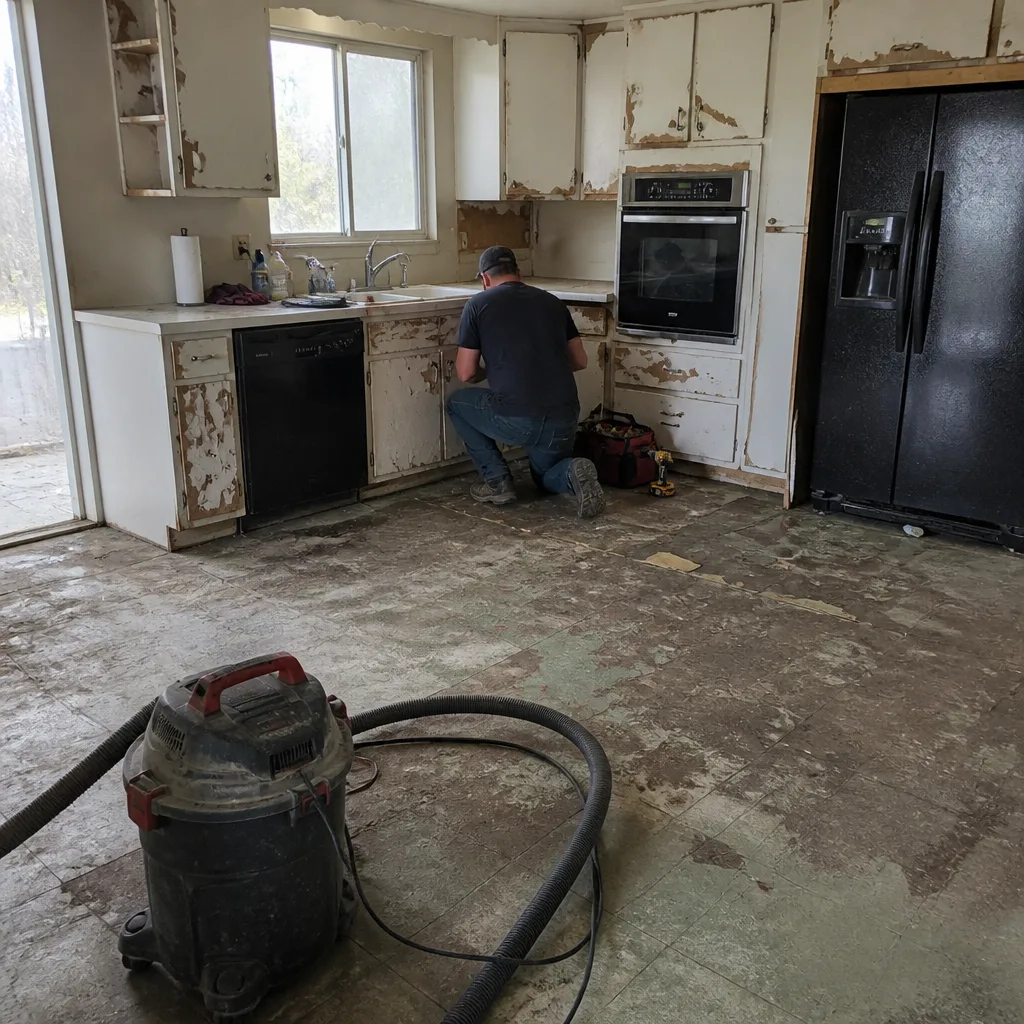 Before
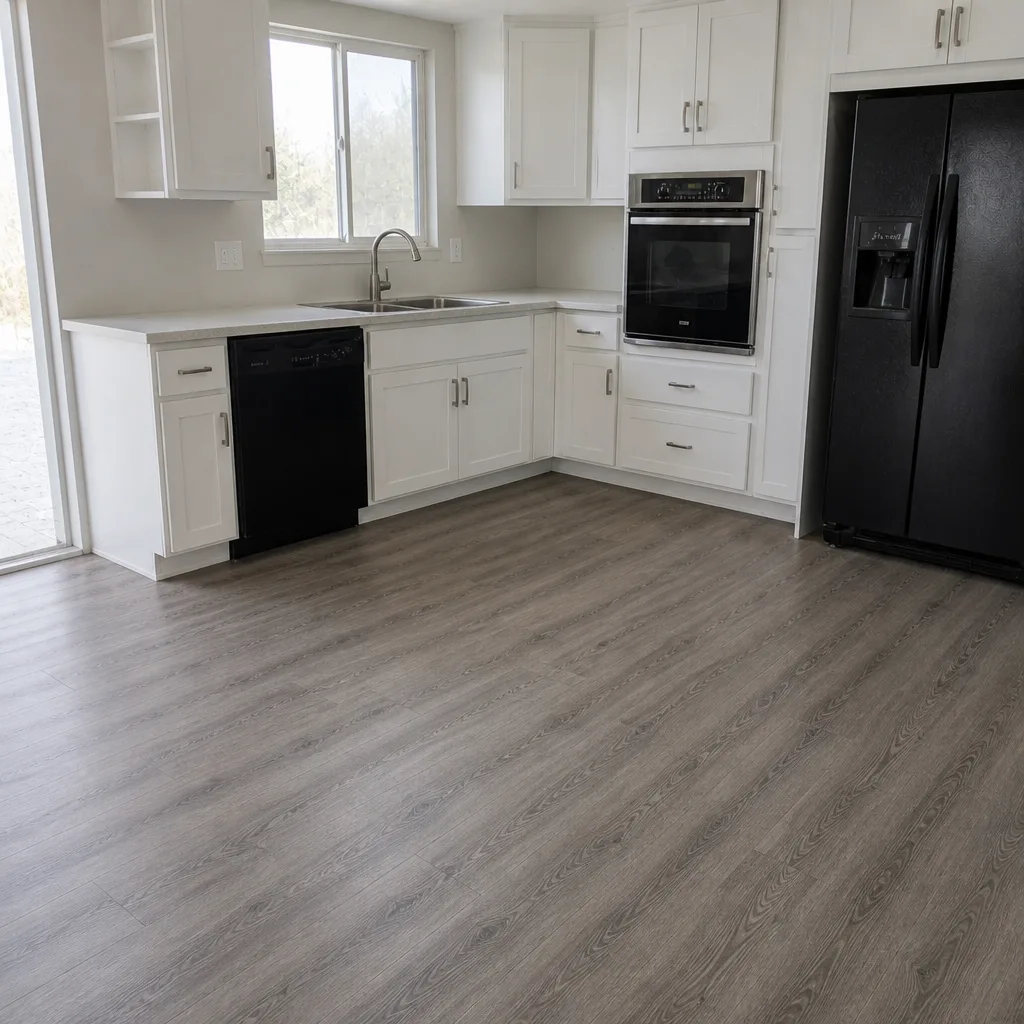 After
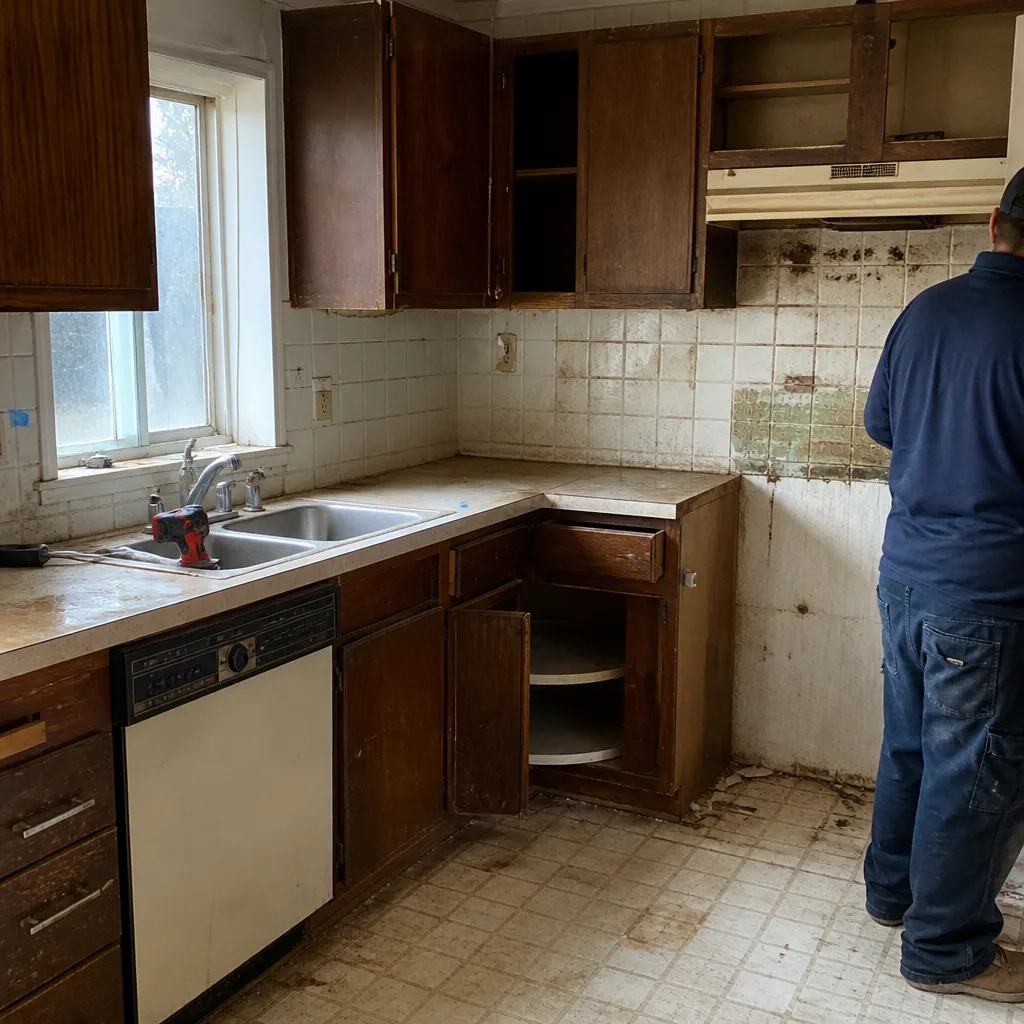 Before
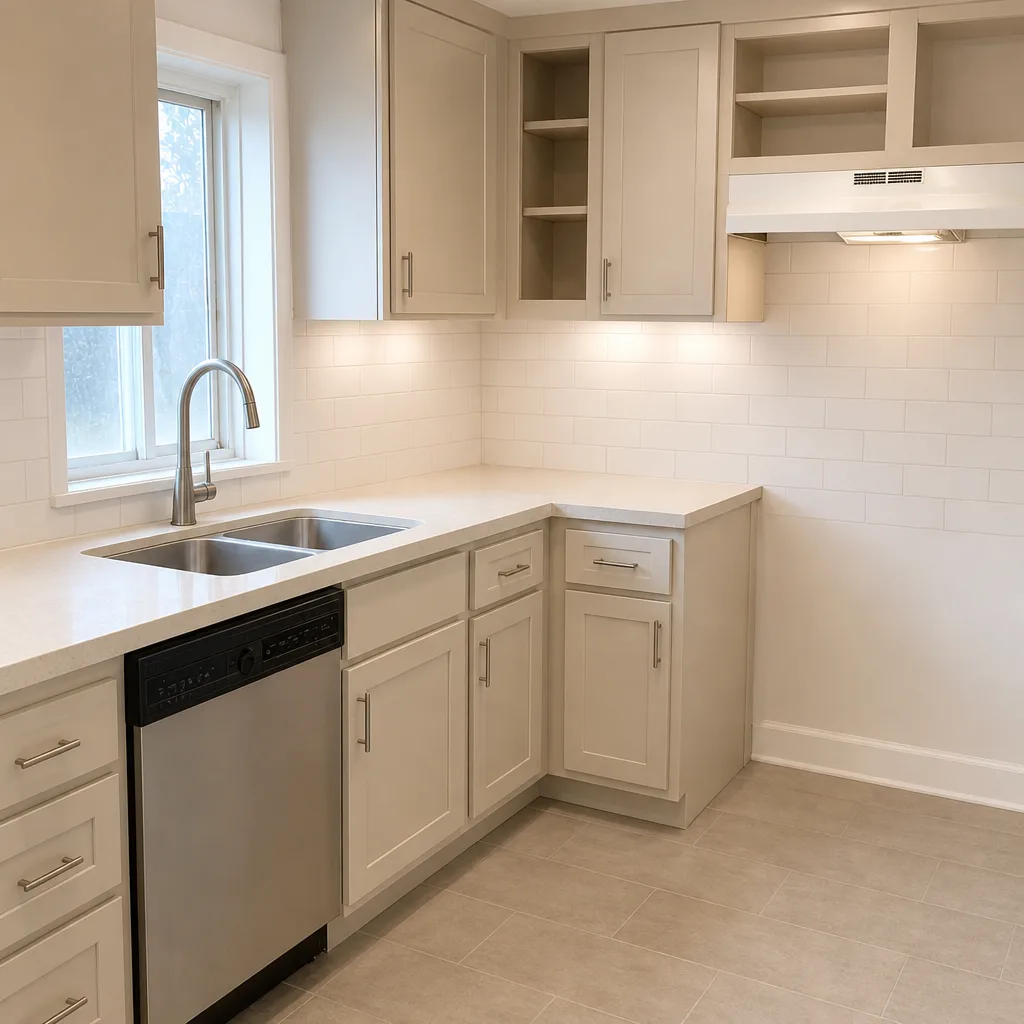 After
When to Call a Professional
Call a professional when the work is in a licensed-trade category, when a permit is required beyond the owner-builder exemption, when the work has a sequencing dependency on trades you don’t control, when your homeowner’s policy excludes the work, and when the downside of failure is structural, electrical, or water damage. If you’re planning to sell within five years, call before you touch anything that triggers a disclosure. And if a project involves more than one trade, call because coordinating inspections, sequencing, and the licensed trades is the part that makes a remodel run on schedule rather than weeks behind. Elmstead Remodeling Mesquite offers free estimates in Mesquite – call (833) 620-6606 to talk through which phases make sense for you to do yourself and which phases we should handle. We’ll give you a written price before any work starts, on every project.
Frequently Asked Questions

No, not the permitted electrical work. Nevada requires a licensed electrician for electrical work that requires a permit, including new circuits, panel changes, and relocating outlets or switches. The owner-builder exemption in Nevada applies to the structural and cosmetic categories, not to trade-licensed electrical work. Call (833) 620-6606 if you want to know whether a specific electrical project in your Mesquite home needs a licensed electrician.
Possibly not, depending on your policy language. Many standard homeowner policies exclude damage from work performed without required permits or by unlicensed persons. Call your insurance agent and ask the question in writing before you start. If the answer is “not covered,” the labor savings from DIY work on electrical or plumbing is not worth the exposure.
It depends on what you’re changing. Cosmetic updates like a new vanity top, mirror, or paint generally don’t require a permit. Moving a drain, relocating a supply line, adding an electrical circuit, or changing the shower pan assembly all require permits and licensed trades. Call the Mesquite building department to confirm for your specific project, then call us at (833) 620-6606 for a free estimate if you want to talk through which phases you can do yourself.
You’re required to disclose it as a known material defect, and the buyer’s inspector will find it in the permit history. At best you’re negotiating a credit, at worst the sale falls through. The cost of fixing an unpermitted project before sale is usually higher than permitting it correctly the first time.
For floor tile in a dry area, yes, many Mesquite homeowners do this successfully. For shower tile and wet areas, no. The waterproofing membrane behind the tile is the part that fails, and it fails out of sight. Proper wet-area waterproofing with a Schluter or comparable system requires training and the correct materials to earn the manufacturer warranty. The tile itself is not the hard part; the waterproofing is. Call us at (833) 620-6606 for a free estimate if you want to see what the right waterproofing setup looks like.
Demolition, painting (in the right sequence, after trim), cleanup, landscaping, and moving personal belongings out of the work area are all safe DIY phases. They save real money and they don’t create sequencing or insurance exposure. Anything in the licensed trades or anything with a waterproofing component should go to a licensed professional. We’re happy to talk through the boundary on your specific project – call (833) 620-6606 for a free estimate.
The Bottom Line
Your ability to swing a hammer isn’t the question. The question is what Nevada code permits, what your homeowner’s insurance policy covers, and whether your DIY phase creates a sequencing problem for every phase that follows. Where those three align, DIY is a real savings. Where they don’t, the labor you save is smaller than the exposure you create. In Mesquite, the split runs roughly along these lines: cosmetic, demolition, painting, landscaping, and cleanup are safe. Electrical, plumbing, gas, structural, and wet-area waterproofing are not. The permit is the record that protects your claim and your sale, so pull it even when you could skip it. And read the exclusions section of your insurance policy before you start, not after. If you’re not sure where your project falls, call Elmstead Remodeling Mesquite at (833) 620-6606 for a free estimate. We’ll walk through which phases make sense for you and give you a written price before any work starts.
Written by the team at Elmstead Remodeling Mesquite.