Last updated November 18, 2026
Free written scope consultation - allowances, timeline, and change-order rules on paper before a single trade is scheduled
DIY vs Professional Construction: The Mesquite Homeowner’s Decision Guide
Nevada requires a licensed contractor for any single project valued over $1,000 in labor and materials. A Mesquite homeowner crosses that threshold on a tile backsplash job before they’ve even purchased the tile. That single fact reshapes the usual DIY-versus-pro debate: in Mesquite, the question isn’t whether you’re handy enough. It’s which tasks Nevada law lets you take on, which tasks the desert climate turns against you, and which tasks put your family’s safety or your insurance coverage at real risk. This guide walks through all three, with the specific numbers and code details that decide the answer for most Mesquite homes.
Quick Answer
In Mesquite, you can legally do your own work on your own home, but the moment a project’s labor and materials exceed $1,000 and you hire someone, that person must hold a valid Nevada contractor’s license. For most interior and exterior projects above cosmetic touch-ups, hiring a licensed contractor is both the legal and the safer choice. A homeowner’s policy also treats DIY mistakes very differently from contractor-caused damage, especially on water and structural claims. The smart approach is a hybrid: handle demo, painting prep, and other low-risk labor yourself, and bring in a licensed pro for anything structural, electrical, plumbing, or finish-critical.
Styles & brands we work with
- Kitchen remodeling
- Bathroom remodeling
- Home additions & ADU
- Roofing
- Windows & doors
- Driveway & pavers
- Fence
Table of Contents
- Nevada’s $1,000 Rule: What It Actually Covers
- What the Mesquite Desert Does to DIY Work
- Desert-Specific DIY Viability, Task by Task
- The Insurance Gap: DIY Damage vs. Contractor Damage
- Family Safety: Dust, VOCs, and Lead
- How to Structure a Hybrid Project
- Common Mistakes to Avoid
- When to Call a Professional
- Frequently Asked Questions
Nevada’s $1,000 Rule: What It Actually Covers
Nevada’s contractor licensing law applies to any construction, alteration, repair, or improvement where the combined value of labor and materials exceeds $1,000. That’s a low bar. A bathroom vanity replacement with a new countertop and fixtures clears it. A tile backsplash does too, once you add up thinset, tile, grout, and the labor a handyman would charge. The threshold is not a suggestion. Hiring an unlicensed person to perform work above it is a code violation, and the homeowner can be left holding the liability when something fails.
Three things follow from that rule for a Mesquite homeowner:
- Doing your own work on your own residence is generally allowed. Owner-builder rules let a homeowner act as their own contractor on their primary residence, provided they follow local building permit requirements.
- Hiring help above $1,000 requires a licensed contractor. That includes the “handyman” a neighbor recommends. Ask for the license and verify it with the state before any work starts.
- Unpermitted work complicates a future sale. Clark County inspectors care about the paper trail. Mesquite homes that show unpermitted additions or conversions during a buyer’s inspection routinely lose negotiating room.
For a Mesquite family planning a full remodel, the licensing question mostly answers itself: a kitchen or bathroom of any real scope lands well past $1,000, so the licensed route is the only one that keeps the project clean on paper. When you’re ready to talk scope, our Elmstead Remodeling Mesquite home page lays out how we approach the work.
What the Mesquite Desert Does to DIY Work
The Mesquite climate is a quiet saboteur for amateur work. Summers push well past 100 degrees, UV is relentless, and humidity sits low enough that materials dry, shrink, and cure on a different schedule than they do in most of the country. A homeowner who learned tiling from a video filmed in a humid climate will find grout and thinset behaving badly here. Exterior paint and caulk fail faster under Mesquite’s UV load. Concrete poured in July needs a different approach than a spring pour to avoid curing too fast and cracking.
We’ve seen this play out across neighborhoods like Sun City Mesquite and the homes along the Oasis Golf Club, where south- and west-facing surfaces take the worst of it. A deck sealed in March with a product designed for cooler, wetter climates can start checking by the first hot week. Irrigation lines and hose bibs near foundation walls see big temperature swings between day and night in winter, and a DIY plumbing repair that ignores that swing can crack between seasons.
None of this means the desert makes DIY impossible. It means the margin for error shrinks. Materials that are forgiving in a mild climate become less forgiving here, and that matters most on the finish work that shows.
Desert-Specific DIY Viability, Task by Task
Here’s how common Mesquite project tasks sort out when you factor in heat, UV, low humidity, code, and family disruption. This is a judgment guide, not a substitute for a licensed assessment.
- Interior painting: DIY-friendly. Low risk, low cost, and you control the schedule around kids and pets.
- Demo and debris removal: DIY-friendly. Great place to save money on a hybrid project, with basic dust control.
- Cabinet hardware, shelving, closet systems: DIY-friendly. Cosmetic and reversible.
- Tile backsplash: Borderline. Legally pushes past $1,000 fast; desert heat shortens working time on thinset.
- Exterior painting and sealing: Hard on your own. UV and heat decide how the product cures; a mistimed application means premature failure.
- Deck building or repair: Bring in a pro. Structural attachment, footing depth, and desert-grade sealing all matter.
- Bathroom or kitchen remodel: Professional. Permits, water containment, and finish sequencing all apply.
- Any electrical panel, wiring, or gas line work: Professional, always. These are code-regulated and dangerous.
Two things stand out in that list for Mesquite families. First, the tasks safest for DIY are also the ones easiest to schedule around nap time and school pickup. Second, the tasks that look cosmetic (backsplash, exterior touch-ups) are exactly where desert conditions and the $1,000 line push you toward a pro. Our Bathroom Remodeling in Mesquite and Kitchen Remodeling in Mesquite pages show how a licensed crew handles the sequencing so materials don’t fight the climate.
The Insurance Gap: DIY Damage vs. Contractor Damage
This is the part most homeowners never think about until something goes wrong. A standard homeowner’s policy does not automatically cover faulty workmanship, and it treats DIY mistakes differently from contractor-caused damage. If a DIY plumbing repair leaks and damages a wall, the policy may cover the resulting water damage but can exclude the cost of redoing the faulty work. If a licensed contractor causes the damage, that contractor’s liability insurance is the first layer that responds, and your policy sits behind it. That difference matters most on the two claim types that get expensive fast: water and structural.
Concretely, in Mesquite:
- Water claims. A slow leak behind a DIY shower valve can run for weeks before it shows. By then you’re looking at subfloor and framing repair, not just drywall.
- Structural claims. A load-bearing wall removed without an engineer’s sign-off is a serious safety issue and often a coverage problem. Insurers ask who did the work.
- Paper trail. A licensed contractor leaves permits and inspection records. That documentation is what supports a claim and what a future buyer’s inspector looks for.
Before you start a project that touches water or structure, read your policy’s exclusions section. If the wording is unclear, a quick call to your agent is worth ten minutes. It’s one of the few places where a small administrative step changes your exposure significantly.
Family Safety: Dust, VOCs, and Lead
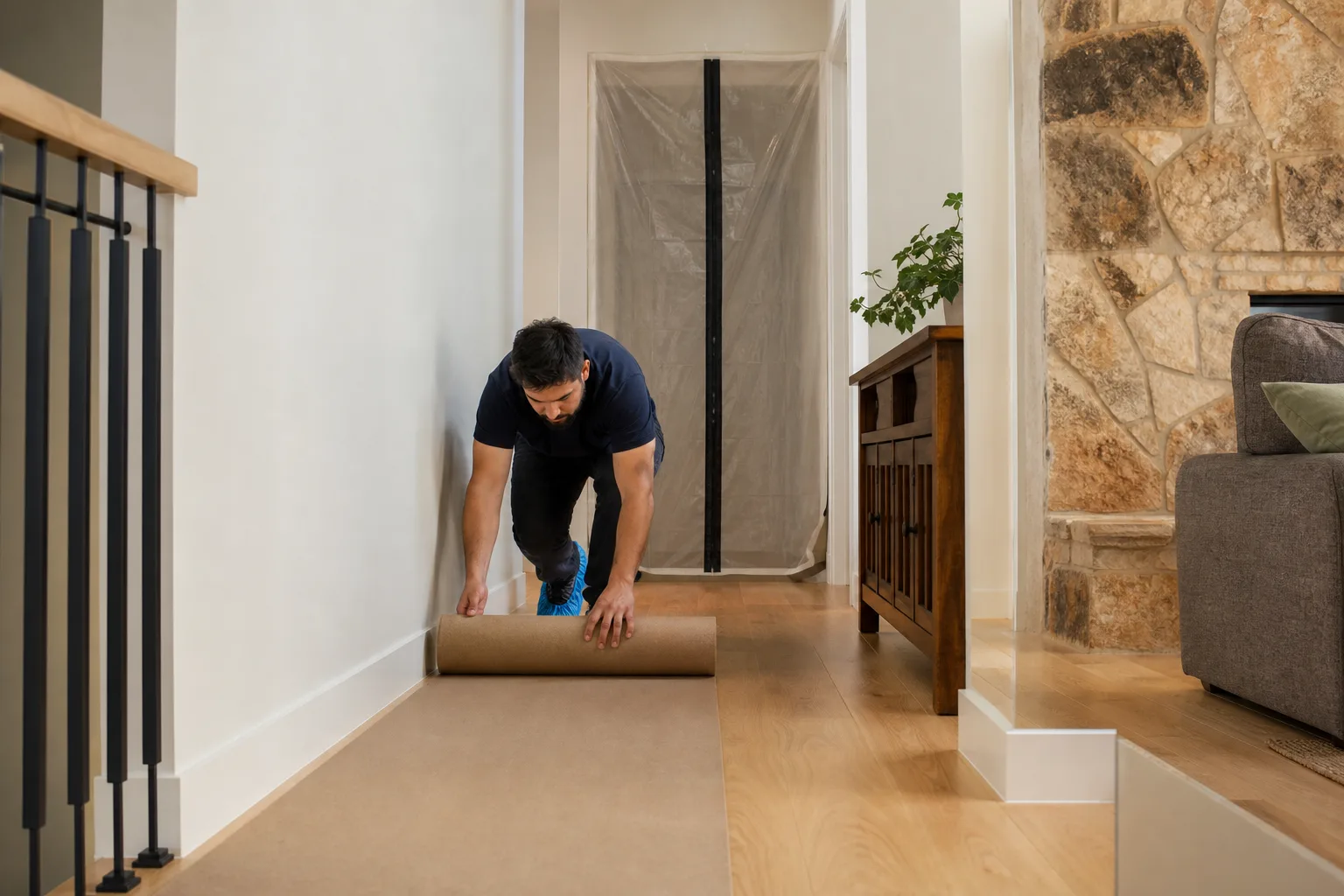
If there are children or pets in the house, the safety layer deserves its own attention. Demolition and cutting generate silica dust when you cut tile, stone, or concrete. Paint, adhesives, and finishes off-gas VOCs. Older Mesquite homes may carry lead paint on trim or doors. None of these are reasons to panic; they’re reasons to control the work zone. A professional crew brings containment you probably don’t own: plastic sheeting and sealed doorways, HEPA vacuums, negative-air setups on bigger jobs, and product choices made for occupied homes.
The Cedarwell Care Promise is how we run that layer on every project. Shoe covers and drop cloths go down on every visit. Quiet tools get scheduled during family rest hours where possible. Pet-safe product choices are made where there’s an option. And before the crew leaves, we photograph the clean-up so the home is left the way it was found. If you’re weighing DIY against a pro on a job that will stir up dust or fumes, ask yourself whether you own the containment gear and the time to run it properly. For an HVAC-adjacent project or a whole-home scope, our General Contractor in Mesquite team can walk through containment before work starts.
How to Structure a Hybrid Project
You don’t have to choose all-DIY or all-professional. A hybrid project lets you keep cost control while protecting the parts that carry legal and safety exposure. The key is a clean handoff written into the plan, not improvised on day one. Here’s the sequence that works:
- Draw the line at licensed work. Anything structural, electrical, plumbing, or gas stays with a licensed contractor. Agree on this before you buy a single material.
- Handle demo and prep yourself. Tearing out old cabinets, pulling flooring, and painting prep are low-risk and save real money on labor.
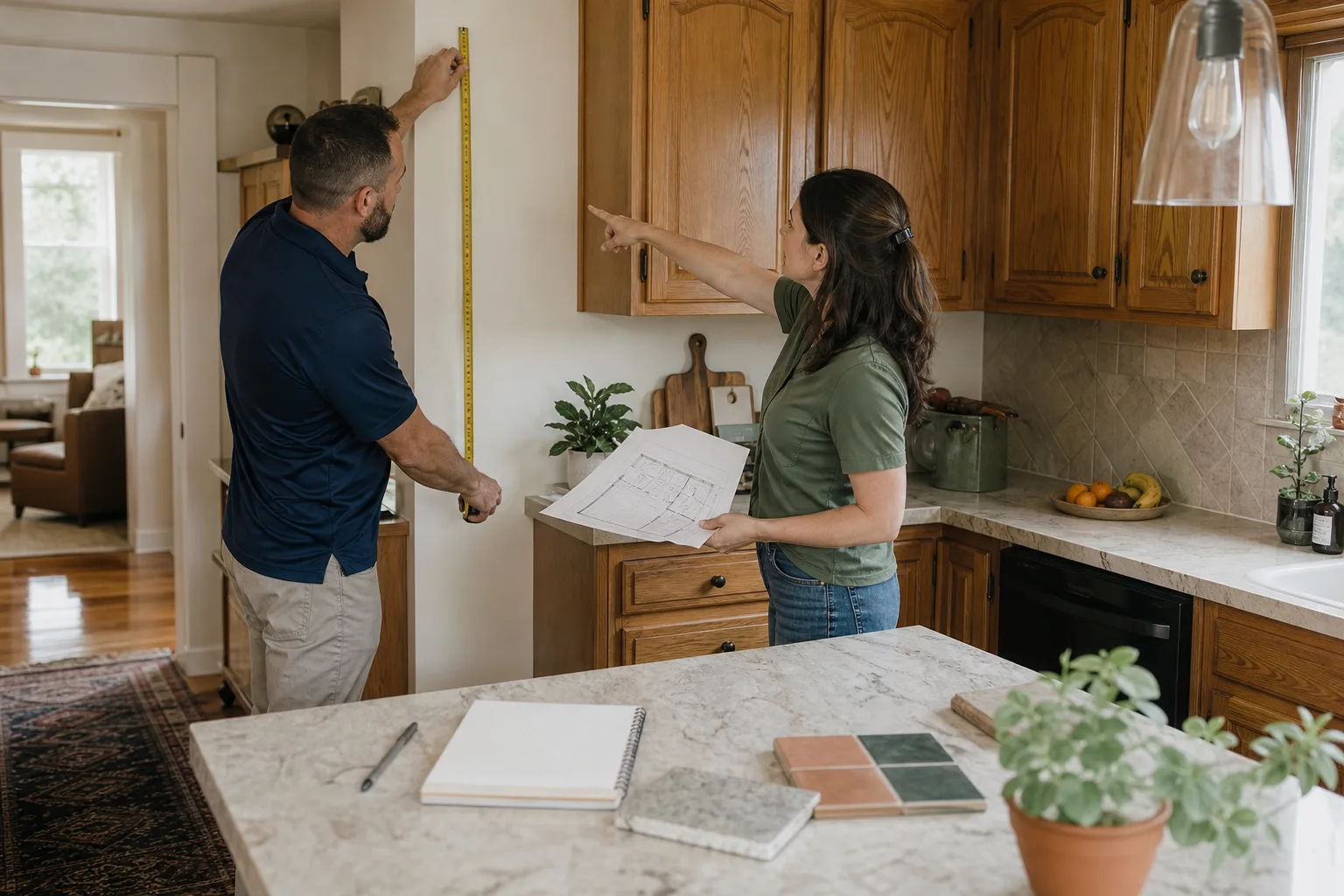
- Get a written scope for the contractor’s portion. The written price should name the tasks, materials, and sequence so there’s no overlap or gap between your work and theirs.
- Agree on the handoff day. Your demo needs to be done and the site clear before the crew arrives, or the schedule slips.
- Plan dust and access during demo. Seal doorways, cover vents, and schedule noisy work away from nap hours.
- Keep the paper trail. Save the permit, the written price, and the inspection records. They matter for claims and resale.
The mistake we see most is a homeowner starting demo before the contractor’s scope is locked. That creates a gap where the two work plans don’t line up, and the homeowner ends up paying for rework. The trade-off is worth saying out loud: DIY demo saves money on labor, but a licensed crew budgets for the disruption and the containment that a family with kids and pets actually needs. For a whole-home scope, the Elmstead Remodeling Mesquite home page covers how we plan around families.
Common Mistakes to Avoid
- Hiring an unlicensed “handyman” above $1,000. It’s a code violation in Nevada and leaves you exposed if the work fails. Verify the license with the state before anyone starts.
- Starting demo before the contractor’s scope is locked. This is where hybrid projects go sideways. The written plan should exist before the first cabinet comes out.
- Cutting a load-bearing wall without engineering. In Mesquite homes, this is often pitched as a “quick opening” and turns into a structural claim. Don’t do it without a licensed assessment.
- Ignoring the UV and heat factor on exterior work. A deck sealed in the wrong month will fail early. Desert conditions decide the schedule.
- Assuming insurance will cover DIY mistakes. Read the exclusions first, especially on water and structural claims.
- Running a remodel with no dust containment around kids and pets. Silica and VOCs need sealed zones and HEPA filtration, not a box fan in the doorway.
- Skipping the clean-up and handoff. A job that ends with debris and dust in the living room costs you more in stress than it saved in labor.
When to Call a Professional
Call a licensed contractor when the project crosses any of four lines: it will exceed $1,000 in labor and materials; it touches structure, electrical, plumbing, or gas; it will generate meaningful dust or fumes in an occupied home; or the finish needs to hold up in Mesquite’s climate for more than a season. Those four lines cover most bathroom and kitchen remodels, additions, and exterior projects. For anything inside them, the licensed route protects your code standing, your insurance position, and your family’s daily life during the work. Elmstead Remodeling Mesquite offers free estimates in Mesquite. Call (833) 620-6606 and we’ll walk through your project, write a price before any work starts, and tell you honestly which portions you can handle yourself.
Frequently Asked Questions
You need a licensed contractor for any single project valued over $1,000 in labor and materials. That’s the Nevada threshold, and most bathroom, kitchen, and exterior projects clear it quickly. If you’re doing the work yourself on your own residence, owner-builder rules generally apply, but hiring unlicensed help above the threshold is a code violation. Call (833) 620-6606 for an exact scope and quote.
You can do portions of it, but the core work needs a licensed contractor once the project passes $1,000. Demo, painting prep, and hardware installation are reasonable DIY tasks. Tile, plumbing, electrical, and water containment are where the code, insurance, and safety exposure stack up. Our Bathroom Remodeling in Mesquite team can separate the two for your specific project.
Often only partially, and sometimes not at all. Most policies exclude faulty workmanship and may exclude the cost of redoing the failed work itself. Water and structural claims get the most scrutiny because insurers want to know who did the work. A licensed contractor’s liability insurance responds first when they cause damage, which is a real reason to hire licensed above the threshold.
Both the unlicensed worker and, in many cases, the homeowner carry exposure. The state can pursue the unlicensed contractor, and the homeowner is left with work that may not pass inspection, may not be covered by insurance, and may complicate a future sale. Verify a contractor’s license with the state before any work begins. Call (833) 620-6606 if you want to talk through a project that’s already started.
Yes, meaningfully. Extreme heat, high UV, and low humidity change how paint, caulk, thinset, grout, and sealants cure. Materials that behave in a mild climate can fail here, and exterior work scheduled in the wrong month fails early. It’s one of the strongest reasons to bring in a pro on any exterior or finish-critical task.
Yes, and a hybrid project is often the smartest cost move. Keep demo, painting prep, and low-risk labor yourself, and hand structural, electrical, plumbing, and finish work to a licensed contractor. Lock the written scope before demo starts so the two work plans line up. Call (833) 620-6606 for a free estimate on the contractor’s portion.
The Bottom Line
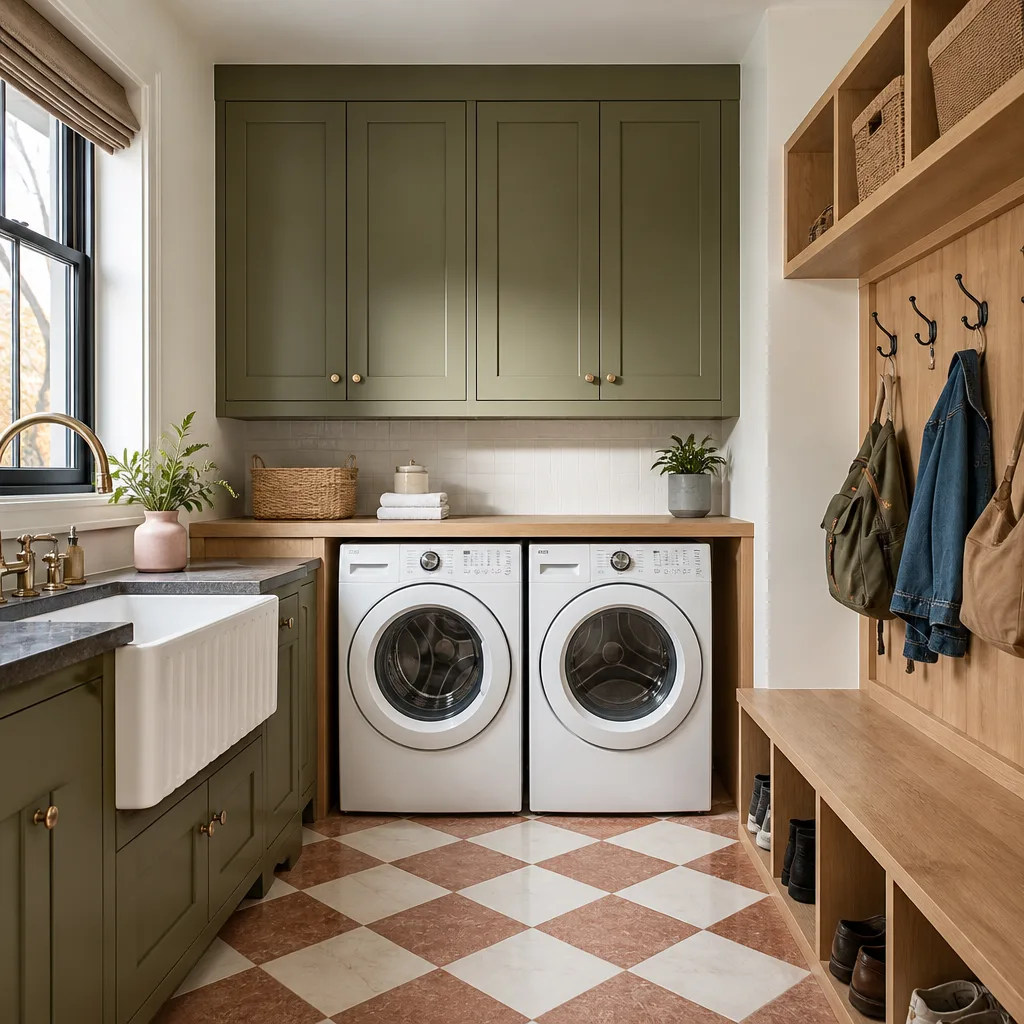
The DIY-versus-pro question in Mesquite isn’t really about skill. It’s about the $1,000 licensing line, the desert climate’s effect on materials, the insurance gap on water and structural claims, and the safety containment a family with kids and pets needs. Handle the low-risk labor yourself if you want to save on cost, but bring in a licensed contractor for anything structural, water-related, electrical, or finish-critical. The hybrid route controls cost without crossing into unlicensed territory, and it keeps your code standing and your coverage intact. If you’re unsure where your project sits, call (833) 620-6606 for a free estimate and a written price before any work starts.
Written by the team at Elmstead Remodeling Mesquite.
See the difference
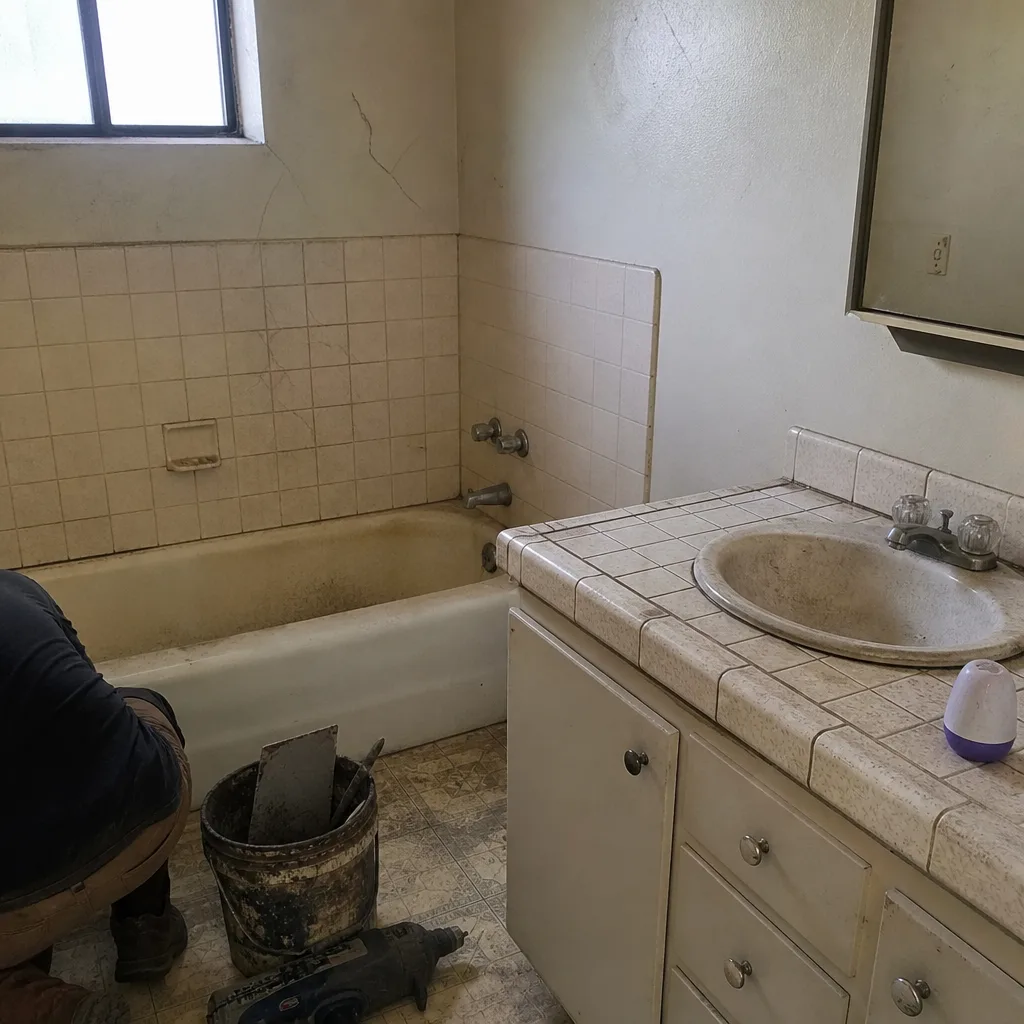 Before
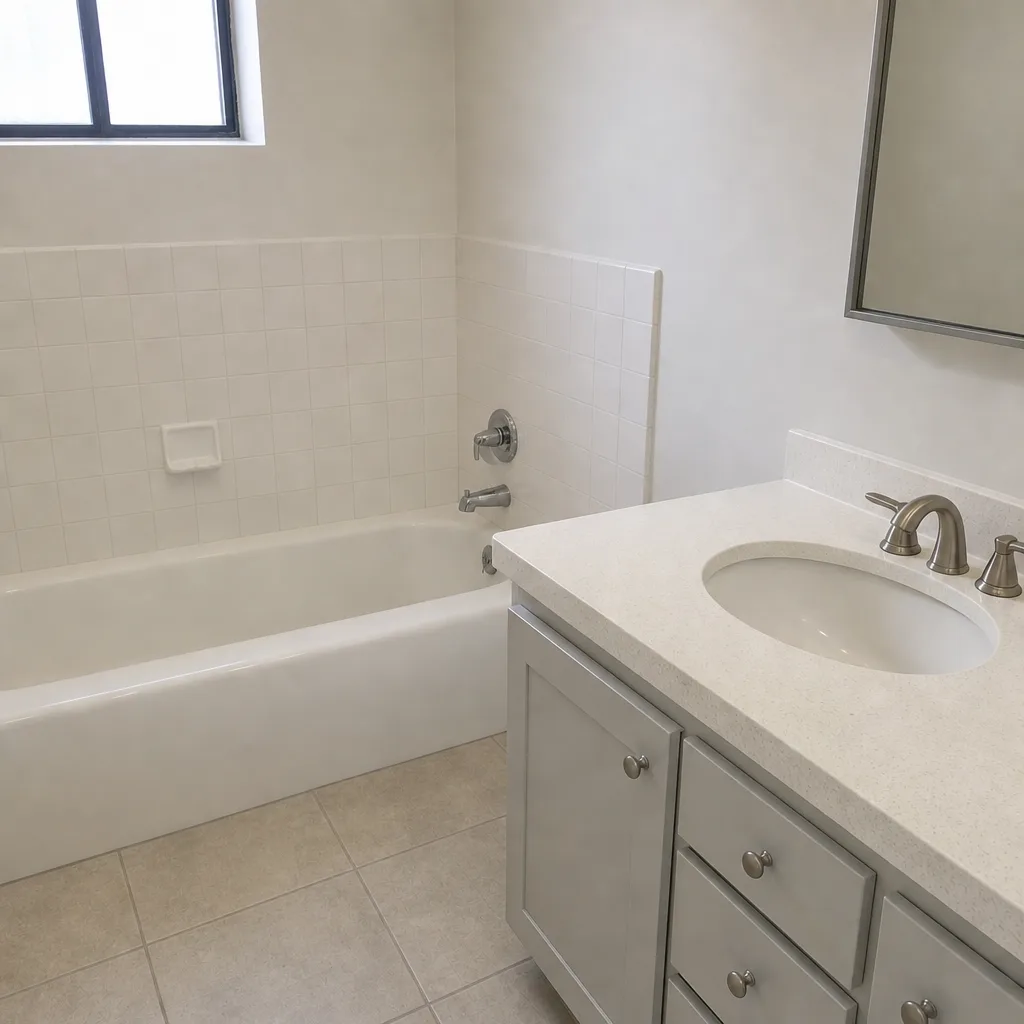 After
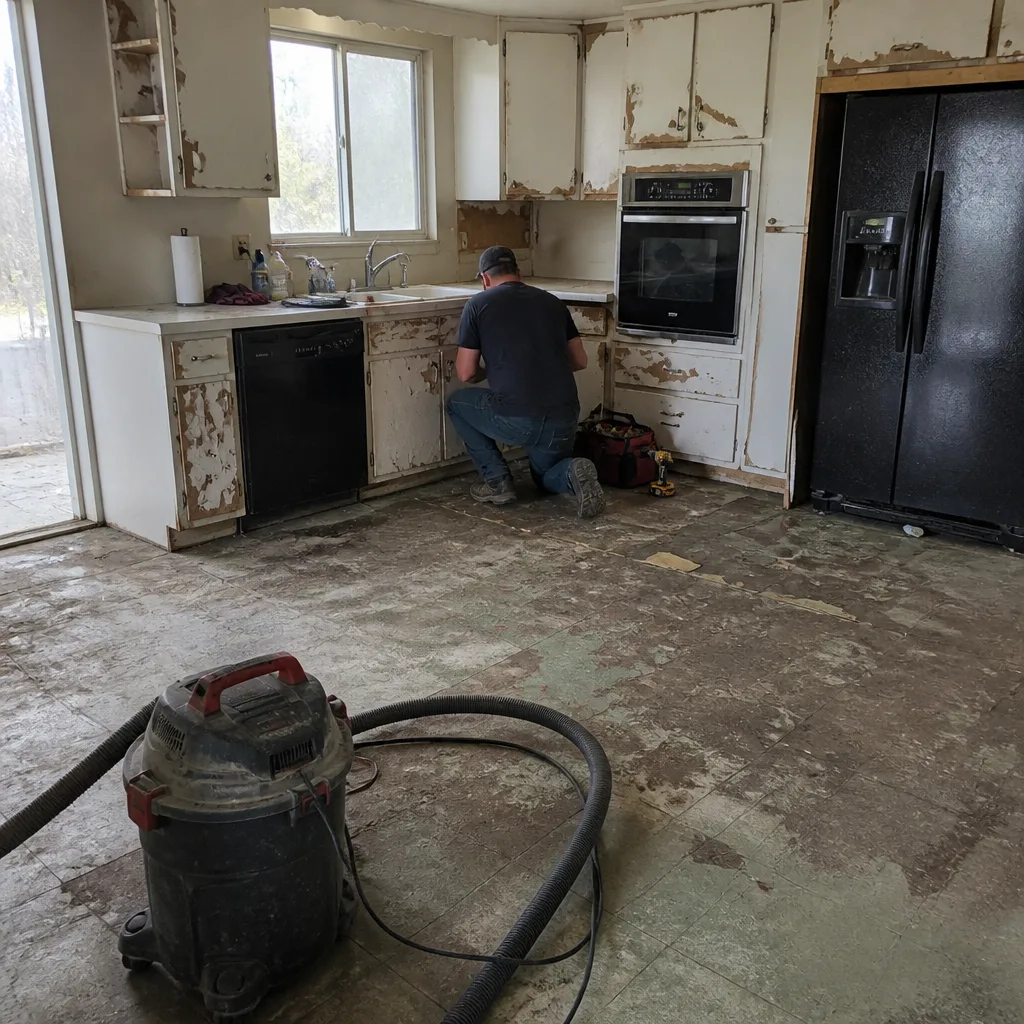 Before
 After
 Before
 After